
Peter van Eyck
1911–1969 · German-American actor
Biography
Peter van Eyck (born Götz von Eick; Pomerania, 1911 – Männedorf, Switzerland, 1969) was a German and American actor who divided his career between Hollywood, where he was often cast as a Nazi or some other unpleasant character, and West German cinema, where he became a leading man. He matters because he embodies a generation of European performers who built careers in the United States before returning to European filmmaking.
Born into an aristocratic family in Pomerania, a region that passed to Poland after 1945, he studied music in Berlin. In 1931 he left Germany for Paris, London, Tunis, Algiers and Cuba before settling in New York. There he played piano in a bar and wrote for revues and cabarets, and he worked for Irving Berlin and for Orson Welles's Mercury Theatre company. He later went to Hollywood, where he drove a truck until Billy Wilder helped him find radio work and, later, small film parts.
In 1943 he became a US citizen and was drafted into the army. After the Second World War he returned to Germany in film-related control duties and stayed until 1948. His first German film was Hallo, Fräulein! (1949). His international breakthrough came with a role in The Wages of Fear, directed by Henri-Georges Clouzot. He also appeared in episodes of American television series such as Alfred Hitchcock Presents.
In Germany he became a popular leading man with a much wider range, and he appeared in several of the Dr. Mabuse thrillers of the 1960s. His international work included The Longest Day and The Spy Who Came In from the Cold, and his final film was The Bridge at Remagen (1969). He was briefly married to the actress Ruth Ford in the 1940s, and with his second wife, Inge von Voris, he had two daughters, Kristina, also an actress, and Claudia. He died in 1969 of septicaemia, caused by a minor injury that went untreated.
Key films
- The Wages of Fear (1953): Bimba, the role that brought him international recognition under Clouzot's direction.
- Mr. Arkadin (1955): Thaddeus, in Orson Welles's thriller.
- The Thousand Eyes of Dr. Mabuse (1960): Henry B. Travers, in one of the German series' best-known entries.
- The Longest Day (1962): Lieutenant Colonel Ocker, within the ensemble cast of the Normandy landings film.
- The Spy Who Came In from the Cold (1965): Hans-Dieter Mundt, an antagonist in the adaptation of John le Carré's novel.
Trivia
A link to Sally Bowles
According to the sources, during his time in Berlin he had a brief relationship with Jean Ross, a cabaret singer who inspired the character of Sally Bowles.
A Ritchie Boy
He completed training at Camp Ritchie and is considered one of the Ritchie Boys, the soldiers trained there during the war.
On Cinematopedia
 The Wages of Fear1953
 The Longest Day1962
 The Spy Who Came in from the Cold1965
 Five Graves to Cairo1943
 The Bridge at Remagen1969
 Mr. Arkadin1955
 Shalako1968
 The Thousand Eyes of Dr. Mabuse1960
 Attack!1956
 Action in the North Atlantic1943
 Hitler's Madman1943
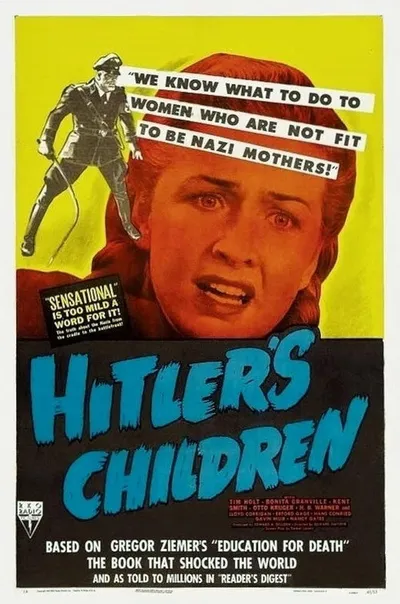 Hitler's Children1943
- Five Graves to Cairo 1943 · cast
- Action in the North Atlantic 1943 · cast
- Hitler's Madman 1943 · cast
- Hitler's Children 1943 · cast
- Address Unknown 1944 · cast
- The Impostor 1944 · cast
- The Orplid Mystery 1950 · cast
- Heart of the Casbah 1952 · cast
- The Wages of Fear 1953 · cast
- Alarm in Morocco 1953 · cast
- Night People 1954 · cast
- Flesh and the Woman 1954 · cast
- Mr. Arkadin 1955 · cast
- A Bullet for Joey 1955 · cast
- Attack! 1956 · cast
- Run for the Sun 1956 · cast
- Retour de manivelle 1957 · cast
- Burning Fuse 1957 · cast
- Anyone Can Kill Me 1957 · cast
- The Glass Tower 1957 · cast
- Rosemary 1958 · cast
- The Snorkel 1958 · cast
- Doctor Crippen Lives 1958 · cast
- The Rest Is Silence 1959 · cast
- The Black Chapel 1959 · cast
- Abschied von den Wolken (Rebel Flight to Cuba in the United States) 1959 · cast
- The Thousand Eyes of Dr. Mabuse 1960 · cast
- Sweetheart of the Gods 1960 · cast
- World in My Pocket 1961 · cast
- The Longest Day 1962 · cast
- The Brain 1962 · cast
- Station Six-Sahara 1962 · cast
- The Devil's Agent 1962 · cast
- Scotland Yard vs. Dr. Mabuse 1963 · cast
- Seduction by the Sea 1963 · cast
- And So to Bed 1963 · cast
- An Alibi for Death 1963 · cast
- The Secret of Dr. Mabuse 1964 · cast
- The River Line 1964 · cast
- The Spy Who Came in from the Cold 1965 · cast
- The Dirty Game 1965 · cast
- Duel at Sundown 1965 · cast
- Requiem for a Secret Agent 1966 · cast
- Living It Up 1966 · cast
- Shalako 1968 · cast
- Code Name: Red Roses 1968 · cast
- The Bridge at Remagen 1969 · cast
Original Cinematopedia text based on Wikipedia (es) and Wikipedia (en) and Wikidata.