
Peggy Ashcroft
1907–1991 · English actress of stage and screen
Biography
Peggy Ashcroft (Edith Margaret Emily Ashcroft; Croydon, 1907-1991) was one of the leading actresses of the English stage across more than six decades. She is remembered mainly for her Shakespearean work and for helping to build the permanent companies that shaped postwar British theatre, though her late film and television career brought her international recognition, including an Academy Award for A Passage to India.
Born in Croydon to a middle-class family, she was set on acting from an early age despite opposition from her teachers and mother. She enrolled at the Central School of Speech and Drama at sixteen, where its focus on diction did not suit her, and she found more guidance in Stanislavski's writings. She made her professional debut at the Birmingham Repertory Theatre while still a student and graduated in 1927. Her first notable West End role came in 1929, in Jew Süss, and the same year she married the actor Rupert Hart-Davis, a marriage that ended in divorce.
During the 1930s she worked at the Old Vic and became admired as Juliet in John Gielgud's West End production. Her marriage to the director Theodore Komisarjevsky, which began in 1934, shaped her approach to discipline in acting. Her first film, The Wandering Jew (1933), was followed by few screen roles for many years, as she gave cinema little priority. She joined Gielgud's companies, which foreshadowed the ensembles of the postwar period.
After the war she devoted herself to the Shakespeare Memorial Theatre, the forerunner of the Royal Shakespeare Company, of which she was a founding member in 1961 and which she later ran. She also took on modern dramatists such as Ibsen, Chekhov and Pinter. Her move to film and television came late, in the 1980s, with A Passage to India and The Jewel in the Crown, which brought her wider fame.
Her legacy lies in British theatre, in the ensembles she helped establish and in a restrained, rigorous style of acting. Her final screen work was widely noticed, and she is now regarded as a central figure of twentieth-century English acting.
Key films
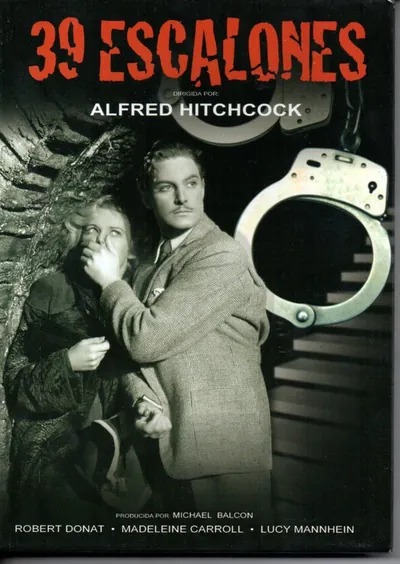
- The 39 Steps (1935), directed by Alfred Hitchcock, in a supporting role in one of his early British thrillers.
- The Nun's Story (1959), directed by Fred Zinnemann, as Mother Mathilde in a drama about religious vocation.
- Secret Ceremony (1968), directed by Joseph Losey, alongside Elizabeth Taylor and Mia Farrow.
- Sunday, Bloody Sunday (1971), directed by John Schlesinger, as Mrs Greville in a drama about relationships in London.
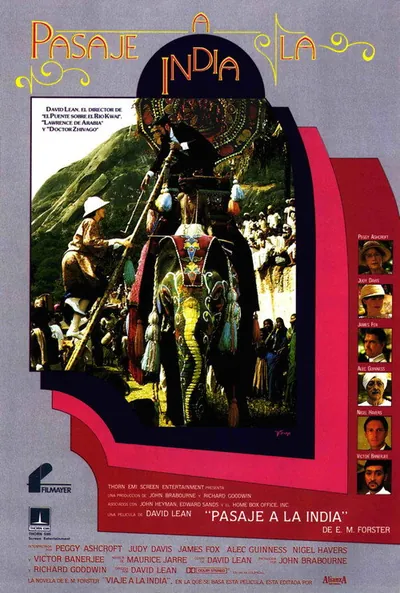
- A Passage to India (1984), directed by David Lean, as Mrs Moore, the role that earned her the Academy Award for Best Supporting Actress.
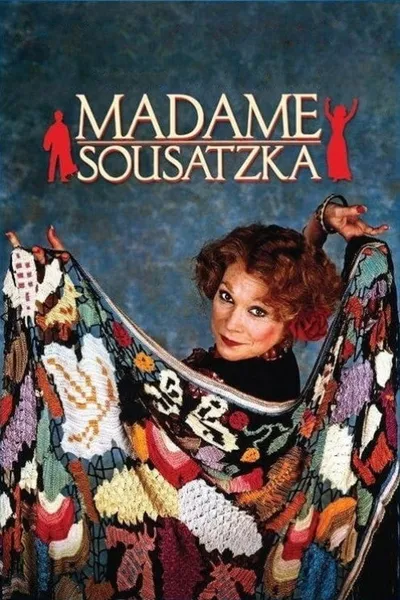
- Madame Sousatzka (1988), directed by John Schlesinger, as Lady Emily.
Trivia
A late Oscar
She won the Academy Award for Best Supporting Actress for A Passage to India after decades of relatively little screen work.
Five Shakespeare heroines
During her 1932-33 season at the Old Vic she played five Shakespearean heroines alongside roles in other plays.
On Cinematopedia
 A Passage to India
 The Nun's Story
 The 39 Steps
 Sunday Bloody Sunday
 The Pedestrian
 Madame Sousatzka
 Secret Ceremony
 Joseph Andrews
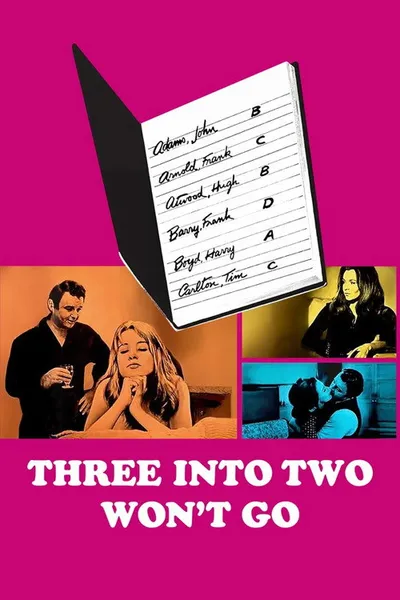 Three Into Two Won't Go
 She's Been Away
Original Cinematopedia text based on Wikipedia (es) and Wikipedia (en) and Wikidata.