
Paul Muni
1895–1967 · American stage and film actor, Academy Award winner
Biography
Paul Muni (Lemberg, Austro-Hungarian Empire, 1895 – Montecito, United States, 1967) was an American stage and film actor of Hollywood's golden age. Trained in the Yiddish theatre, he became one of the most prestigious performers at Warner Bros. in the 1930s. He won one Academy Award for Best Actor and was nominated four more times. His specialty was transformation: through makeup and costume he took on characters far removed from himself, which is why his name is tied to the biographical films of that decade.
He was born Meshilem Meier Weisenfreund in Lemberg, then part of Galicia in the Austro-Hungarian Empire. In 1902 his family emigrated to the United States and settled in Chicago. His parents were both actors in the Yiddish theatre, and the young Muni joined their company. At twelve he played an eighty-year-old man on stage, an early sign of the gift for character work that would define him. Maurice Schwartz recruited him for his Yiddish Art Theater. Later he moved to Broadway, where his first role was also his first in English.
Fox signed him in 1929, and his debut film, The Valiant, earned him an Oscar nomination even though the picture did poorly at the box office. Unhappy with the parts on offer, he went back to the stage. In 1932 he returned to Hollywood for Scarface, playing the gangster Tony Camonte, and for I Am a Fugitive from a Chain Gang, which brought another nomination. Warner Bros. offered him a long-term contract and gave him unusual say over his roles. He won the Oscar in 1936 for The Story of Louis Pasteur and was nominated again for The Life of Emile Zola. Historical figures dominated this period, in films such as The Good Earth and Juarez.
His preparation was famously thorough. Before shooting he studied the real people he portrayed, read whatever he could find and examined photographs to copy their mannerisms. Off the set he had a reputation as an eccentric, and his wife Bella, an actress from the Yiddish theatre to whom he was married until his death, was known for pressing directors to reshoot scenes. Disillusioned with Hollywood, he left his contract unrenewed and concentrated on the stage. In 1955 he won a Tony Award for his role as Henry Drummond in Inherit the Wind, one of his greatest successes away from the screen.
Eyesight problems gradually forced him to step back from acting. His final film was The Last Angry Man (1959), which brought another Oscar nomination. He died in Montecito in 1967. He is remembered today as a meticulous performer and a landmark of screen character acting, and he has a star on the Hollywood Walk of Fame.
Key films
- Scarface (1932): the gangster lead in a film that defined the genre of the period.
- I Am a Fugitive from a Chain Gang (1932): a performance that earned him an Oscar nomination and boosted his Hollywood profile.
- The Story of Louis Pasteur (1936): the biographical film that won him the Academy Award for Best Actor.
- The Life of Emile Zola (1937): another historical figure, with a further Oscar nomination.
- The Good Earth (1937): a Chinese peasant in the adaptation of Pearl Buck's novel.
- The Last Angry Man (1959): his final film, which brought him another Oscar nomination.
Trivia
A makeup legend
His makeup skill was so striking that film historian Robert Osborne compared him to Lon Chaney, the silent-era master of disguise.
A reply about his background
When producer Irving Thalberg offered him the Chinese peasant role in The Good Earth, Muni retorted that he was about as Chinese as President Herbert Hoover.
On Cinematopedia
 The Life of Emile Zola1937
 The Good Earth1937
 The Story of Louis Pasteur1936
 I Am a Fugitive from a Chain Gang1932
 Scarface1932
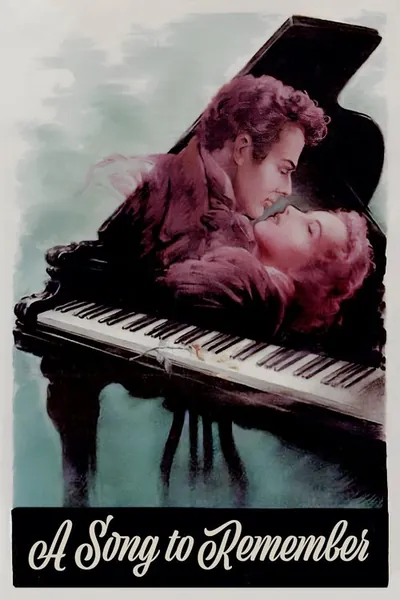 A Song to Remember1945
 The Valiant1929
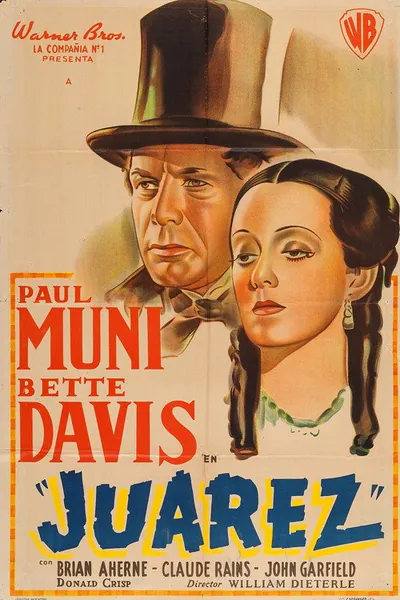 Juarez1939
 Stage Door Canteen1943
 The Last Angry Man1959
 Black Fury1935
 Angel on My Shoulder1946
- The Valiant 1929 · cast
- I Am a Fugitive from a Chain Gang 1932 · cast
- Scarface 1932 · cast
- Black Fury 1935 · cast
- Bordertown 1935 · cast
- The Story of Louis Pasteur 1936 · cast
- The Life of Emile Zola 1937 · cast
- The Good Earth 1937 · cast
- Juarez 1939 · cast
- Commandos Strike at Dawn 1942 · cast
- Stage Door Canteen 1943 · cast
- A Song to Remember 1945 · cast
- Angel on My Shoulder 1946 · cast
- Stranger on the Prowl 1952 · cast
- The Last Angry Man 1959 · cast
Original Cinematopedia text based on Wikipedia (es) and Wikipedia (en) and Wikidata.