
Paul Bern
1889–1932 · American film director, screenwriter and producer of German birth
Biography
Paul Bern (born Paul Levy in Wandsbek in 1889, died in Beverly Hills in 1932) was a director, screenwriter and producer at Metro-Goldwyn-Mayer, where he worked as an assistant to Irving Thalberg. He is best remembered for launching Jean Harlow's career, marrying her in July 1932, and for his death by gunshot two months later.
Born into a Jewish family, he moved to New York as a child. He tried acting and then worked in theatre, including as a stage manager on Broadway, before settling in Hollywood in the early 1920s. He began as a film editor, moved on to writing scripts and directing for United Artists and Paramount, and eventually became a full-time producer at MGM. He is credited on films such as Anna Christie and was involved in Grand Hotel, released six days after his death, which won the Best Picture Oscar; the award went only to Thalberg, as Bern was not credited.
His death has inspired competing accounts. A coroner ruled it a suicide, citing a note found at the scene. Decades later, producer Samuel Marx argued that Dorothy Millette, his former common-law partner, had killed him before drowning herself two days later. Today his name is linked mainly to his role in Harlow's career and to the controversy surrounding his final days.
Key films
- Anna Christie (1930), produced by Bern, starring Greta Garbo.
- Grand Hotel (1932), co-produced by Bern, though he was not credited.
- Susan Lenox (1931), one of Bern's screenwriting credits at MGM.
- Red-Headed Woman (1932), a Jean Harlow film on which he worked as a writer.
- Lily of the Dust (1924), one of his early screenwriting efforts.
Trivia
An unexpected godfather
Bern was godfather to Barbara La Marr's son, Don Gallery, and Jean Harlow was the boy's godmother.
A case reopened
In 1960, a Playboy article by Ben Hecht questioned the suicide verdict and prompted the Los Angeles district attorney to reopen the case, which he later closed again.
On Cinematopedia
 Anna Christie1930
 The Dove1927
 Susan Lenox: Her Fall and Rise1931
 Red-Headed Woman1932
 A Blind Bargain1922
 The Marriage Circle1924
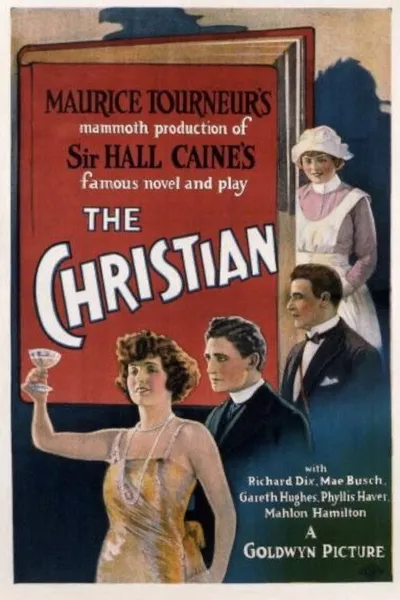 The Christian1923
 Name the Man1924
 The Wanters1923
 The Dressmaker from Paris1925
 Head over Heels1922
 Lost and Found on a South Sea Island1923
- A Blind Bargain 1922 · editing
- Head over Heels 1922 · director
- The Christian 1923 · screenplay, editing
- The Wanters 1923 · screenplay
- Lost and Found on a South Sea Island 1923 · screenplay
- The Marriage Circle 1924 · screenplay
- Name the Man 1924 · screenplay
- Lily of the Dust 1924 · screenplay
- The Dressmaker from Paris 1925 · director
- The Dove 1927 · screenplay
- The Beloved Rogue 1927 · screenplay
- Anna Christie 1930 · producer
- Susan Lenox: Her Fall and Rise 1931 · producer
- Red-Headed Woman 1932 · producer
Original Cinematopedia text based on Wikipedia (en) and Wikidata.