
Otto Wernicke
1893–1965 · German actor
Biography
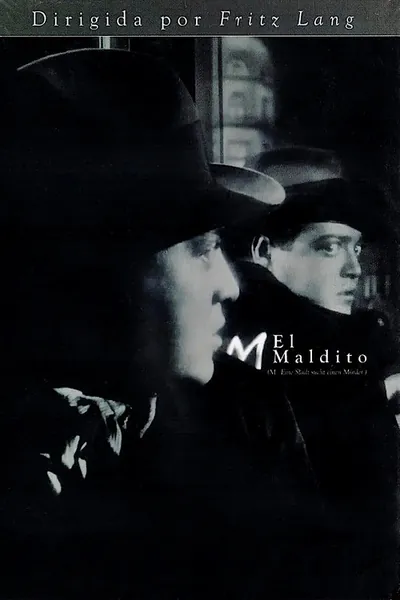
Otto Wernicke was a German actor whose career spanned the late silent era and the 1950s. He is best remembered for playing police inspector Karl Lohmann in M and The Testament of Dr. Mabuse, both directed by Fritz Lang, two landmark titles of early 1930s German crime cinema.
Born in Osterode am Harz in 1893, he worked steadily in German dramas, comedies and adventure films. Because he was married to a Jewish woman, he could only keep working under the Nazi regime thanks to a special exemption from the Reich Chamber of Culture. In 1943 he played Captain Edward J. Smith in Titanic, an early version that mixed fictional characters and subplots with the real sinking, a formula later repeated in many adaptations. Soon afterwards he was placed on the Gottbegnadeten-Liste, a list of artists regarded as essential to Nazi culture, and he appeared in the propaganda epic Kolberg (1945).
After the war he continued in German films, taking supporting roles such as in The Captain from Köpenick (1956). His legacy rests largely on the policemen he played in Lang's work, figures still mentioned when people discuss Weimar-era cinema.
Key films
- M (1931), directed by Fritz Lang: Inspector Karl Lohmann, the role he is best remembered for.
- The Testament of Dr. Mabuse (1933), directed by Fritz Lang: he returns as Inspector Lohmann.
- Titanic (1943), directed by Herbert Selpin and Werner Klingler: Captain Edward J. Smith, in one of the earliest versions of the sinking with fictional subplots.
- Kolberg (1945), directed by Veit Harlan: a part in the large-scale Nazi propaganda production.
- The Captain from Köpenick (1956), directed by Helmut Käutner: a supporting role in the postwar period.
Trivia
An exemption for his marriage
Because he was married to a Jewish woman, he could only keep working in Nazi Germany thanks to a special dispensation from the Reich Chamber of Culture.
On Goebbels's list
After his role in Kolberg he was added to the Gottbegnadeten-Liste, a list of artists considered crucial to Nazi culture that Joseph Goebbels compiled for Hitler's approval.
On Cinematopedia
 M1931
 Titanic1943
 The Testament of Dr. Mabuse1933
 Kolberg1945
 The Captain from Köpenick1956Ohm Krüger1941Ohm Krüger1941S.A.-Mann Brand1933S.A.-Mann Brand1933
 The Bartered Bride1932Homecoming1941Homecoming1941
 The Great King1942
 Sky Without Stars1955The Tunnel1933The Tunnel1933
- M 1931 · cast
- The Bartered Bride 1932 · cast
- The Testament of Dr. Mabuse 1933 · cast
- S.A.-Mann Brand 1933 · cast
- The Tunnel 1933 · cast
- Hangmen, Women and Soldiers 1935 · cast
- The Castle in Flanders 1936 · cast
- Maria Ilona 1939 · cast
- Ohm Krüger 1941 · cast
- Homecoming 1941 · cast
- Friedemann Bach 1941 · cast
- The Great King 1942 · cast
- Titanic 1943 · cast
- Kolberg 1945 · cast
- Long Is the Road 1948 · cast
- Love and Blood 1951 · cast
- Sky Without Stars 1955 · cast
- The Captain from Köpenick 1956 · cast
Original Cinematopedia text based on Wikipedia (en) and Wikidata.