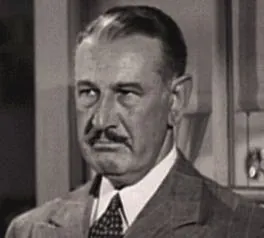
Morgan Wallace
1881–1953 · American character actor
Biography
Morgan Wallace (born Maier Weill, 1881-1953) was an American character actor who worked in both silent and sound films. He built his reputation on the stage before Hollywood studios signed stage-trained performers like him for the talkies.
Born in Lompoc, California, to a family of Jewish descent, he attended the University of California and trained with a Shakespearean repertory company before founding his own stock company in Bangor, Maine. His screen work began in 1914 with comedies by Charlie Chaplin filmed at Keystone. After a period of military service and a long run of Broadway work, he returned to film and, from 1930, built a far more durable career as a supporting player. He moved easily between upright citizens, prosperous businessmen and urbane villains, and appears in films such as Grand Hotel and Fury. In 1933 he was one of the founders of the Screen Actors Guild.
He was never under long-term contract to a single studio, a situation that may have owed something to his prominence in the union. During World War II he managed USO camp shows. He is best remembered today for his two W. C. Fields comedies, especially It's a Gift, and for his menacing international figure in Charlie Chan at the Olympics. He died in Tarzana, California, in 1953.
Key films
- Grand Hotel (1932), as a chauffeur in the all-star ensemble.
- Fury (1936), as Fred Garrett in Fritz Lang's drama.
- The Maltese Falcon (1931), as a district attorney in an early adaptation of Dashiell Hammett's novel.
- Union Pacific (1939), as a senator in Cecil B. DeMille's western.
Trivia
Keystone debut
He appears in Charlie Chaplin comedies from 1914, including Tillie's Punctured Romance, where he is uncredited as a thief.
Member number three
He was one of the founders of the Screen Actors Guild in 1933 and was listed as member number 3.
The kumquats
In It's a Gift he repeatedly asks W. C. Fields's grocer for 'Kumquats!', one of the most quoted lines of his work.
On Cinematopedia
 Grand Hotel1932
 Gaslight1944
 Fury1936
 Tillie's Punctured Romance1914
 The Merry Widow1934
 Orphans of the Storm1921
 Union Pacific1939
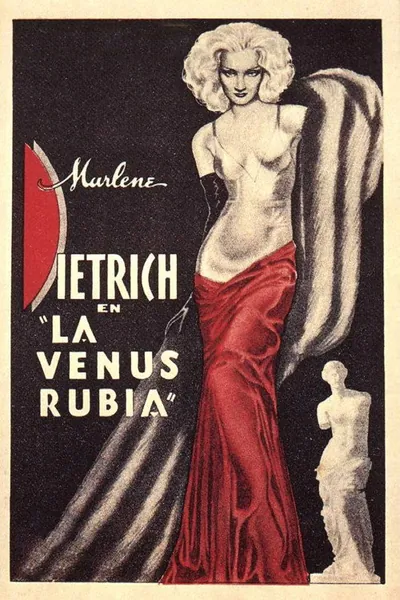 Blonde Venus1932
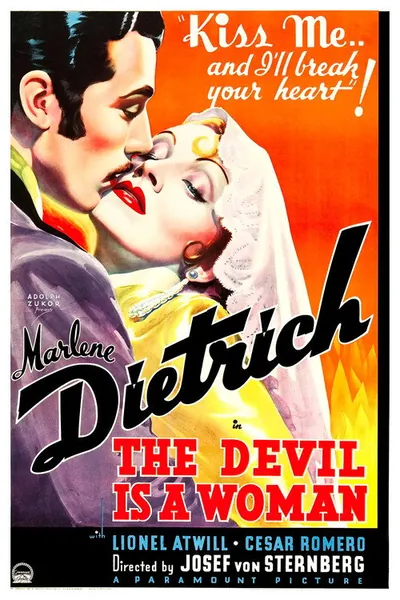 The Devil Is a Woman1935
 It's a Gift1934
 Up the River1930
 The Song of Songs1933
- Tillie's Punctured Romance 1914 · cast
- Orphans of the Storm 1921 · cast
- Dream Street 1921 · cast
- One Exciting Night 1922 · cast
- Torment 1924 · cast
- Up the River 1930 · cast
- The Maltese Falcon 1931 · cast
- Safe in Hell 1931 · cast
- Grand Hotel 1932 · cast
- Blonde Venus 1932 · cast
- If I Had a Million 1932 · cast
- Hell's House 1932 · cast
- Lady and Gent 1932 · cast
- The Song of Songs 1933 · cast
- Bombshell 1933 · cast
- The Merry Widow 1934 · cast
- It's a Gift 1934 · cast
- We Live Again 1934 · cast
- The Devil Is a Woman 1935 · cast
- Dante's Inferno 1935 · cast
- $1,000 a Minute 1935 · cast
- Fury 1936 · cast
- Human Cargo 1936 · cast
- Charlie Chan at the Olympics 1937 · cast
- Union Pacific 1939 · cast
- My Little Chickadee 1940 · cast
- I Love You Again 1940 · cast
- Honky Tonk 1941 · cast
- Gaslight 1944 · cast
- Dick Tracy 1945 · cast
Original Cinematopedia text based on Wikipedia (en) and Wikidata.