
Mikis Theodorakis
1925–2021 · Greek composer for film, theatre and song, and political activist
Biography
Mikis Theodorakis (Chios, 1925 – Athens, 2021) was a Greek composer whose output exceeded a thousand works, including songs, song cycles, symphonies and film scores. He is best known abroad for Zorba the Greek and its famous dance, but his career reached far beyond that single film. He was also one of the most visible public figures in twentieth-century Greece, both as an artist and as a political voice, especially in his opposition to the military junta.
Raised in several provincial towns, he began composing before receiving formal training, and gave his first concert at seventeen in Tripoli. During the Second World War he joined the resistance, and his left-wing commitments later brought arrest, imprisonment and mistreatment during the Greek Civil War. He studied at the Athens Conservatoire before moving to Paris in 1954, where he worked with Olivier Messiaen and Eugène Bigot. There he wrote the ballet Antigone and won international recognition, including a prize at the Moscow festival in 1957.
When he returned to Greece in 1960, he turned toward popular Greek music and the modern poetry of writers such as Yannis Ritsos, Giorgos Seferis and Odysseas Elytis, setting their work in a way that brought it to wide audiences. His score for Zorba the Greek (1964) made him known around the world, and later he wrote music for politically charged films such as Z and State of Siege, which reflected his opposition to authoritarian rule.
After the colonels seized power in 1967, he was imprisoned and exiled, and his songs were banned. Freed and then sent into exile in Paris in 1970, he continued to compose and to campaign against the regime. After the junta fell he came back to Greece in 1974, combining his artistic work with a parliamentary career, and he later served as a minister. He pressed for better relations with Turkey, opposed nuclear energy and the Iraq war, and joined protests against austerity during the debt crisis.
In 2003 he drew criticism for remarks about Jews, which he later sought to clarify. He is remembered for his enduring songs and for the protest music that gave voice to resistance in Greece. He died in Athens in 2021, aged 96, and until his death was regarded as the best-known living Greek composer.
Key films
- Zorba the Greek (1964): the score that made him internationally known, with its dance now closely associated with Greece.
- Z (1969): music for Costa-Gavras's political thriller about a murdered politician.
- State of Siege (1972): score for Costa-Gavras's political drama.
- Serpico (1973): music for Sidney Lumet's police drama starring Al Pacino.
- Electra (1962): one of his early significant collaborations with Greek cinema.
- The Trojan Women (1971): music for the film adaptation of Euripides' tragedy.
Trivia
Anthem in Israel
His The Ballad of Mauthausen, based on poems by Iakovos Kambanellis, was reportedly adopted as a national song in Israel.
Golden Globe nomination
His score for Zorba the Greek earned a Golden Globe nomination, and he won a BAFTA for Z.
On Cinematopedia
 Z1969
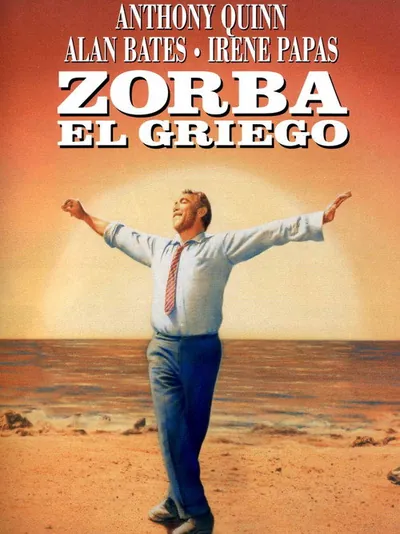 Zorba the Greek1964
 Serpico1973
 Electra1962
 State of Siege1972
 Iphigenia1977
 The Battle of Sutjeska1973
 The Trojan Women1971
 Letters from Marusia1976
 Phaedra1962
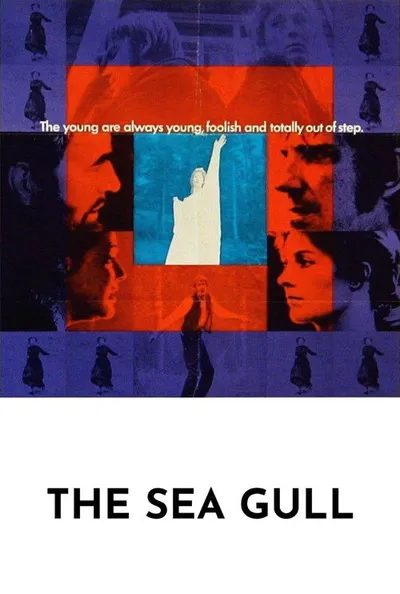 The Sea Gull1968
 Ill Met by Moonlight1957
- Ill Met by Moonlight 1957 · music
- Shadow of the Cat 1961 · music
- Electra 1962 · music
- Phaedra 1962 · music
- Five Miles to Midnight 1962 · music
- Zorba the Greek 1964 · music
- They're a Weird Mob 1966 · music
- The Day the Fish Came Out 1967 · music
- The Sea Gull 1968 · music
- Z 1969 · music
- Punisher 1969 · music
- The Trojan Women 1971 · music
- State of Siege 1972 · music
- Serpico 1973 · music
- The Battle of Sutjeska 1973 · music
- Letters from Marusia 1976 · music
- Iphigenia 1977 · music
Original Cinematopedia text based on Wikipedia (es) and Wikipedia (en) and Wikidata.