
Mikhail Romm
1901–1971 · Soviet film director, screenwriter and pedagogue
Biography
Mikhail Ilyich Romm (1901-1971) was a Soviet film director and screenwriter, and one of the most influential teachers at the Moscow film school. Born in Irkutsk, in Siberia, his career spans the Revolution, the Stalinist purges and the thaw that followed, and his work often reflects the tensions of those years. He also held an official place in Soviet cinema, receiving the title People's Artist of the USSR in 1950.
Romm spent his youth in the Red Army during the Russian Civil War, first as a signalman and later as an inspector on a special commission dealing with army numbers. After that he studied sculpture with Anna Golubkina and graduated in 1925, working as a sculptor and translator. Between 1928 and 1930 he researched film theory, and from 1931 he joined the Mosfilm studio, first as an assistant and then as a screenwriter. In 1934 he co-signed a collective letter to Stalin from people in the film industry, a gesture that placed him firmly within official circles.
His first film was Boule de Suif (1934), a silent adaptation of Guy de Maupassant's story. He then began ambitious projects, including a version of The Queen of Spades that he never finished, and The Thirteen (1936), shot in the Turkmen desert as a Soviet remake of John Ford's The Lost Patrol. His commissioned state films followed, among them Lenin in October (1937), made quickly for the twentieth anniversary of the revolution, and Lenin in 1918 (1939). During and after the war he made documentaries and historical films, such as Girl No. 217 (1945), and won several Stalin Prizes.
He taught from 1938 and led the actors and producers department at VGIK from 1948, becoming a professor in 1962. His students included Andrei Tarkovsky, Grigori Chukhrai, Vasily Shukshin, Nikita Mikhalkov, Alexander Mitta and Elem Klimov, among many others. His best-regarded work beyond official commissions was Nine Days in One Year (1962), about young nuclear physicists, and the documentary Triumph Over Violence (1965), known as Ordinary Fascism, about the Third Reich, which by most accounts drew an exceptionally large audience for a historical documentary. He also wrote books and articles on film theory and published memoirs.
Romm died in Moscow in 1971. His legacy is divided between his state-commissioned films, which remain debated because of his ties to the regime, and his role as a teacher to several generations of Soviet filmmakers.
Key films
- Lenin in October (1937): an official reconstruction of the Bolshevik revolution, made quickly on state commission.
- The Thirteen (1936): a Soviet remake of The Lost Patrol, shot in the Turkmen desert.
- Nine Days in One Year (1962): a drama about young nuclear physicists and one of his most valued titles.
- Ordinary Fascism (1965): a documentary about the Third Reich that reached a very large audience.
- Girl No. 217 (1945): a postwar film that earned him one of his Stalin Prizes.
Trivia
An interrupted career
In 1936 Romm began a version of The Queen of Spades with music by Sergei Prokofiev, but the project was halted in 1938 on the orders of the head of the film industry.
A documentary with a large audience
Ordinary Fascism is often cited as his best-known work outside official cinema, and according to the sources it drew one of the largest audiences of any historical documentary.
On Cinematopedia
 Lenin in October1937
 Lenin in 19181939
 Nine Days in One Year1962
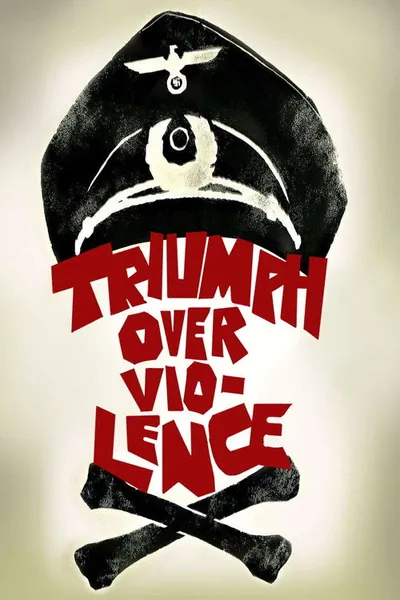 Triumph Over Violence1965
 The Thirteen1937Girl No. 2171945Girl No. 2171945The Russian Question1948The Russian Question1948Boule de Suif1934Boule de Suif1934Admiral Ushakov1953Admiral Ushakov1953A Weary Road1956A Weary Road1956Attack from the Sea1953Attack from the Sea1953Dream1943Dream1943
- The Conveyor of Death 1933 · screenplay
- Boule de Suif 1934 · director, screenplay
- Lenin in October 1937 · director
- The Thirteen 1937 · director, screenplay
- Lenin in 1918 1939 · director
- Dream 1943 · director, screenplay
- Girl No. 217 1945 · director, screenplay
- The Russian Question 1948 · director, screenplay
- Secret Mission 1950 · director
- Admiral Ushakov 1953 · director
- Attack from the Sea 1953 · director
- A Weary Road 1956 · screenplay
- Murder on Dante Street 1956 · director, screenplay
- A Lesson in History 1957 · director
- Nine Days in One Year 1962 · director, screenplay
- Triumph Over Violence 1965 · director, screenplay, cast
Original Cinematopedia text based on Wikipedia (es) and Wikipedia (en) and Wikidata.