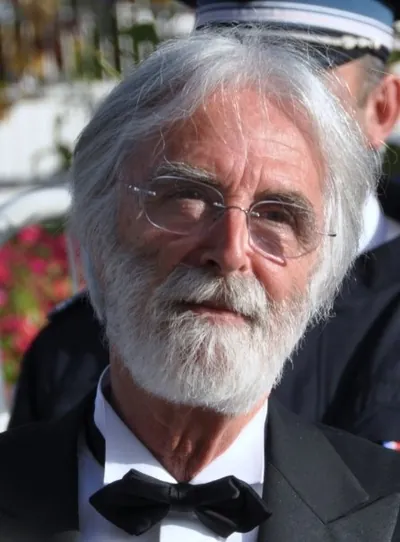
Michael Haneke
b. 1942 · Austrian film director, screenwriter and teacher of German birth
Biography
Michael Haneke (born 23 March 1942 in Munich) is a German-born Austrian director and screenwriter, known for a cold, unsettling cinema that examines violence, estrangement and the fault lines of modern society. His films often provoke debate, and he has become one of the most discussed figures of European art cinema, with two Palme d'Or wins at Cannes and an Academy Award for Best Foreign Language Film.
He is the son of the German actor and director Fritz Haneke and the Austrian actress Beatrix Degenschild. After his parents divorced, he was raised in Wiener Neustadt by his mother's family. As a young man he hoped to act but failed an entrance examination for acting school, and he went on to study philosophy, psychology and drama at the University of Vienna. After leaving university he worked as a film critic and, from 1967 to 1970, as an editor and dramaturg at the broadcaster Südwestfunk. He also staged plays in Germany, Berlin, Munich and Vienna, and made his television directing debut in 1974.
His cinema took shape with the trilogy made up of The Seventh Continent (1989), Benny's Video (1992) and 71 Fragments of a Chronology of Chance (1994), studies of isolated bourgeois lives and of the links between consumerism, violence and the media. Funny Games (1997) brought him wider attention, and in 2001 The Piano Teacher, with Isabelle Huppert, won the Grand Prix at Cannes. He then worked with Juliette Binoche on Code Unknown (2000) and Caché (2005), which earned him the Cannes prize for best director and several European honours.
His style relies on slow pacing, long takes, silence and ellipsis. He rejects conventional suspense and spectacular violence: when violence appears it is often brief, unscored and unexplained, and his films aim to unsettle viewers and make them answerable for what they watch, without offering neat answers. For this reason he is often linked to Brechtian distance and to the legacy of Antonioni.
The White Ribbon (2009) gave him a second Palme d'Or and the Golden Globe for best foreign language film. Amour (2012) brought a further Palme d'Or and the Academy Award for Best Foreign Language Film. In 2013 he received the Prince of Asturias Award for the Arts. He has also directed opera since 2006, including productions of Mozart's Don Giovanni and Così fan tutte, and has taught film directing at the Film Academy Vienna since 2002, where he stresses actor direction as the basis of a scene's credibility. His legacy is that of an author who turned discomfort into a method and who remains a reference point for European art cinema.
Key films
- The Seventh Continent (1989): the first film of the trilogy, anticipating his cold style and his view of bourgeois life.
- Funny Games (1997): a family is tortured by two young men at their holiday home, in a reflection on media violence.
- The Piano Teacher (2001): Isabelle Huppert plays a repressed piano teacher; the film won the Grand Prix at Cannes.
- Caché (2005): a Parisian couple receives anonymous videotapes that expose a buried past of collective guilt; it won the Cannes prize for best director.
- The White Ribbon (2009): in a northern German village in 1913, a series of strange incidents reveals an authoritarian community; Palme d'Or winner.
- Amour (2012): an elderly couple faces the wife's illness; Palme d'Or and Oscar for Best Foreign Language Film.
Trivia
Early trilogy
His first films, The Seventh Continent, Benny's Video and 71 Fragments of a Chronology of Chance, form a trilogy about cold bourgeois societies and collective alienation.
Two Palmes d'Or
The White Ribbon and Amour won the Palme d'Or at Cannes in 2009 and 2012, and Amour also took the Academy Award for Best Foreign Language Film.
On Cinematopedia
 Amour2012
 The White Ribbon2009
 Caché2005
 The Piano Teacher2001
 Funny Games1997
 Benny's Video1992
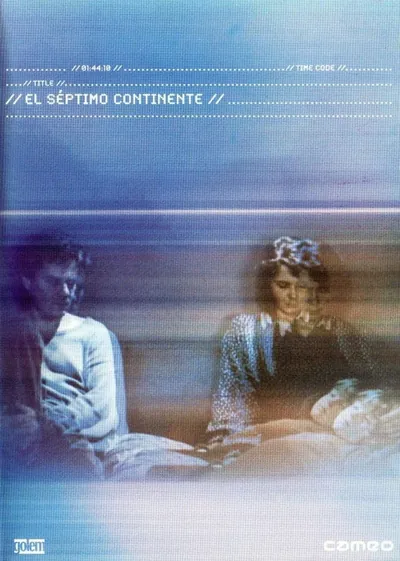 The Seventh Continent1989
 Code Unknown2000
 Venus Beauty Institute1999
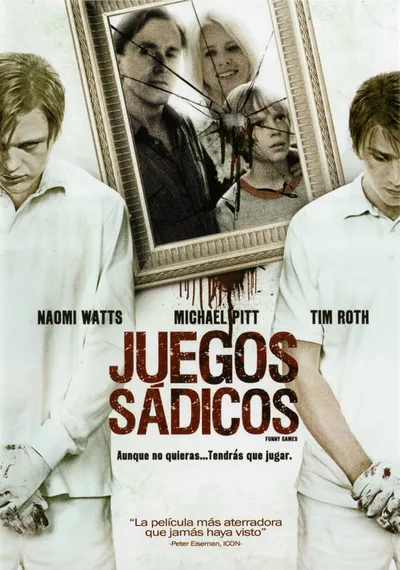 Funny Games2007
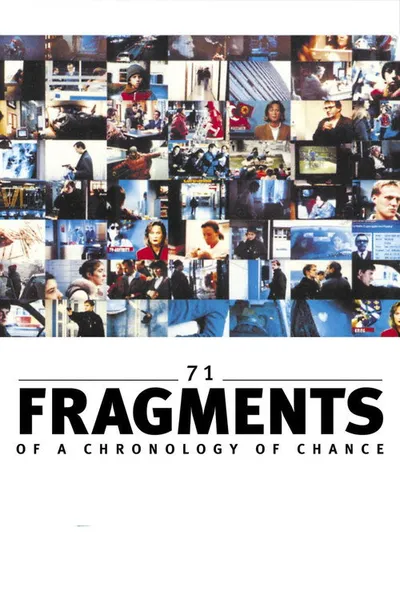 71 Fragments of a Chronology of Chance1994
 Lumière and Company1995
- The Seventh Continent 1989 · director, screenplay
- Benny's Video 1992 · director, screenplay
- 71 Fragments of a Chronology of Chance 1994 · director, screenplay
- Lumière and Company 1995 · director
- Funny Games 1997 · director, screenplay
- Venus Beauty Institute 1999 · screenplay
- Code Unknown 2000 · director, screenplay, cast
- The Piano Teacher 2001 · director, screenplay
- Time of the Wolf 2003 · director, screenplay
- Caché 2005 · director, screenplay
- Funny Games 2007 · director, screenplay
- The White Ribbon 2009 · director, screenplay
- Same Same But Different 2009 · screenplay
- Amour 2012 · director, screenplay
- Happy End 2017 · director, screenplay
Original Cinematopedia text based on Wikipedia (es) and Wikipedia (en) and Wikidata.