
Michael Gambon
1940–2023 · British actor of Irish birth, known for theatre, television and film
Biography
Michael Gambon (19 October 1940 – 27 September 2023) was an Irish-born actor whose career spanned six decades across the stage, television and film. He is closely associated with the National Theatre company founded under Laurence Olivier, with major Shakespearean roles, and with a long working relationship with Harold Pinter. Wider international fame came late, through his portrayal of Albus Dumbledore in the Harry Potter films.
Born in the Cabra district of Dublin during the Second World War, Gambon moved with his family to London as a child, when his father, an engineer, sought work in the rebuilding of the city. His father arranged for him to become a British subject, a step that later bore on his official honours. He was raised in a strict Catholic household and left school at fifteen to train as an engineering technician, a trade he practised for some years and which left him with a lasting interest in antiques and classic cars.
His entry into acting was unconventional. At twenty-four he wrote to Micheál Mac Liammóir, who ran Dublin's Gate Theatre, enclosing a CV describing an invented stage career, and he was taken on. He made his professional debut in 1962 in Othello. Laurence Olivier soon recruited him for the new National Theatre company, where he worked with directors such as William Gaskill and John Dexter. After several years at the Old Vic, Olivier advised him to gain more experience in regional repertory, and in 1967 he joined the Birmingham Repertory, where he played leading Shakespearean parts.
His breakthrough came in 1974 with Alan Ayckbourn's The Norman Conquests, and he became a regular interpreter of Harold Pinter's work, forming a close friendship with the playwright. He was praised for The Life of Galileo in 1980 and for Arthur Miller's A View from the Bridge in 1988. On television, his performance in The Singing Detective (1986) earned a BAFTA, and he later played Inspector Maigret in a series adapted from Georges Simenon's novels. On screen he often played imposing villains with a watchful presence, appearing in The Cook, the Thief, His Wife & Her Lover, directed by Peter Greenaway, The Insider, directed by Michael Mann, and Sleepy Hollow, directed by Tim Burton.
His widest recognition came with Dumbledore, a role he took over after Richard Harris's death and kept through the last six films of the series. He later appeared in The King's Speech and Victoria & Abdul. In 2015 he announced his retirement from the stage because of memory problems, though he continued to take short roles. His legacy rests on a long career in British theatre, his many awards and his ability to move between Shakespeare and family comedy with the same seriousness.
Key films
- Othello (1965): film debut, directed by Laurence Olivier, in a supporting role.
- The Cook, the Thief, His Wife & Her Lover (1989): leading role as the violent gangster Albert Spica in Peter Greenaway's film.
- The Insider (1999): supporting role opposite Al Pacino and Russell Crowe in the drama about a real tobacco industry case.
- Harry Potter and the Prisoner of Azkaban (2004): first of the Dumbledore films, followed by Harry Potter and the Deathly Hallows: Part 2 (2011), which made him an international name.
- The King's Speech (2010): supporting role in the film about King George VI, which won several Academy Awards.
Trivia
Failed audition for James Bond
In the late 1960s he auditioned to replace George Lazenby as James Bond, but producer Albert R. Broccoli turned him down, reportedly because he was little known and his look did not suit the role.
An invented CV
His first chance at Dublin's Gate Theatre came after he sent a letter with a CV describing a theatre career that was entirely imaginary.
On Cinematopedia
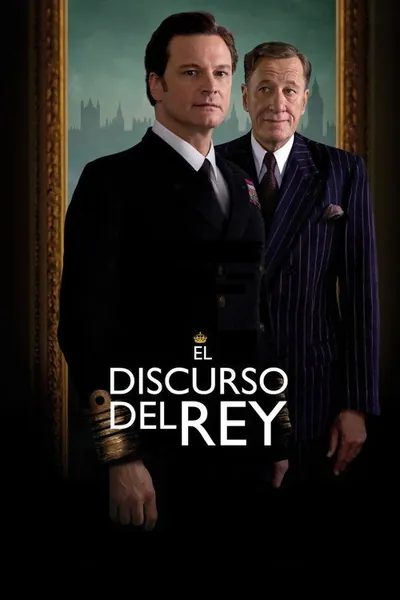 The King's Speech2010
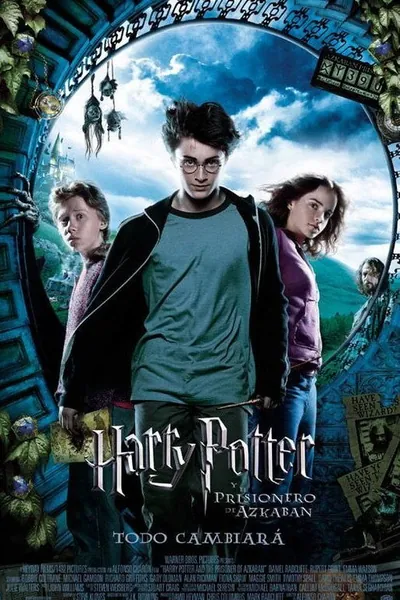 Harry Potter and the Prisoner of Azkaban2004
 Harry Potter and the Goblet of Fire2005
 Harry Potter and the Deathly Hallows – Part 22011
 Harry Potter and the Half-Blood Prince2009
 Harry Potter and the Order of the Phoenix2007
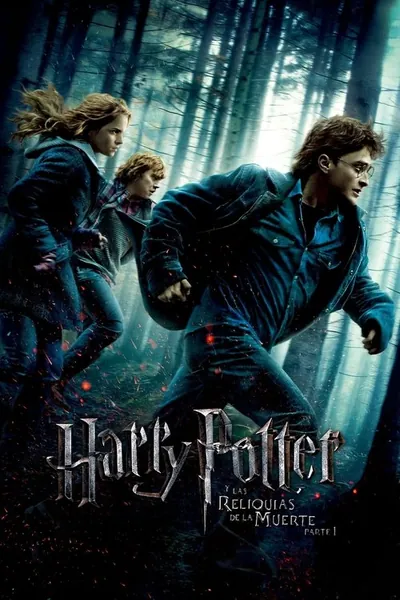 Harry Potter and the Deathly Hallows – Part 12010
 Sleepy Hollow1999
 The Insider1999
 Gosford Park2001
 The Book of Eli2010
 Paddington2014
- Othello 1965 · cast
- Nothing But the Night 1972 · cast
- The Beast Must Die 1974 · cast
- A Dry White Season 1989 · cast
- The Cook, the Thief, His Wife & Her Lover 1989 · cast
- The Rachel Papers 1989 · cast
- Mobsters 1991 · cast
- Toys 1992 · cast
- The Browning Version 1994 · cast
- A Man of No Importance 1994 · cast
- Two Deaths 1995 · cast
- Mary Reilly 1996 · cast
- The Wings of the Dove 1997 · cast
- Dancing at Lughnasa 1998 · cast
- Sleepy Hollow 1999 · cast
- The Insider 1999 · cast
- Plunkett & Macleane 1999 · cast
- The Last September 1999 · cast
- Gosford Park 2001 · cast
- Charlotte Gray 2001 · cast
- Christmas Carol: The Movie 2001 · cast
- Ali G Indahouse 2002 · cast
- Open Range 2003 · cast
- Sylvia 2003 · cast
- The Actors 2003 · cast
- Deep Blue 2003 · cast
- Harry Potter and the Prisoner of Azkaban 2004 · cast
- Sky Captain and the World of Tomorrow 2004 · cast
- The Life Aquatic with Steve Zissou 2004 · cast
- Layer Cake 2004 · cast
- Being Julia 2004 · cast
- Harry Potter and the Goblet of Fire 2005 · cast
- The Good Shepherd 2006 · cast
- Amazing Grace 2006 · cast
- The Omen 2006 · cast
- Harry Potter and the Order of the Phoenix 2007 · cast
- The Good Night 2007 · cast
- Brideshead Revisited 2008 · cast
- Harry Potter and the Half-Blood Prince 2009 · cast
- The King's Speech 2010 · cast
- Harry Potter and the Deathly Hallows – Part 1 2010 · cast
- The Book of Eli 2010 · cast
- Harry Potter and the Deathly Hallows – Part 2 2011 · cast
- Quartet 2012 · cast
- Paddington 2014 · cast
- Unity 2015 · cast
- Hail, Caesar! 2016 · cast
- Kingsman: The Golden Circle 2017 · cast
- Paddington 2 2017 · cast
- Victoria & Abdul 2017 · cast
- Viceroy's House 2017 · cast
- Johnny English Strikes Again 2018 · cast
- The Death & Life of John F. Donovan 2018 · cast
- King of Thieves 2018 · cast
- Judy 2019 · cast
Original Cinematopedia text based on Wikipedia (es) and Wikipedia (en) and Wikidata.