
Mauro Fiore
b. 1964 · American cinematographer of Italian birth
Biography
Mauro Fiore (born November 15, 1964, in Marzi, Calabria) is an Italian-American cinematographer who won the Academy Award for Best Cinematography for Avatar (2009), directed by James Cameron. Working mainly on action films and large-scale spectacles, he has become one of the most recognisable camera artists in Hollywood over the last two decades.
Fiore moved to the United States with his family in 1971 and grew up in Palatine, Illinois. He first considered a career in sociology, but photography and art soon took over. He earned a degree from Columbia College Chicago in 1987, then moved to Los Angeles and studied at the AFI Conservatory, where he met Janusz Kamiński and Phedon Papamichael.
His early work was closely tied to Kamiński, with whom he began on modest productions and gradually moved up to higher-profile projects. He worked as a grip, camera operator and second unit photographer on The Lost World: Jurassic Park and Amistad, both from 1997. He was the director of photography on Kamiński's directorial debut, Lost Souls (2000), and his first major feature as cinematographer was Get Carter (2000), starring Sylvester Stallone.
His most sustained partnership was with Antoine Fuqua, beginning with Training Day (2001) and leading to six more films with the director. During the same period he also shot The Island for Michael Bay (2005) and two films for Joe Carnahan, Smokin' Aces (2006) and The A-Team (2010). On Avatar he used a camera system known as the simulcam, which recorded live action together with computer-generated characters and environments in real time.
He has since alternated large franchise productions with smaller titles, including Dark Phoenix (2019), Spider-Man: No Way Home (2021) and The Killer (2024). He is reportedly set to return with Cameron for the fourth and fifth Avatar films, after Russell Carpenter took over on the second and third. His legacy rests on action photography built around heavy use of digital imagery.
Key films
- Training Day (2001): the first major result of his partnership with Antoine Fuqua, with a gritty, nocturnal look that carries much of the film's tone.
- The Island (2005): one of his films for Michael Bay, with a polished style built around chases.
- Avatar (2009): the film that earned him the Oscar for Best Cinematography through its virtual capture system developed with Cameron.
- Spider-Man: No Way Home (2021): one of his recent entries in a major superhero franchise.
Trivia
The simulcam on Avatar
For Avatar, Fiore and Cameron used a device called the simulcam, which recorded live action and virtual camera computer-generated footage in real time.
Handover on the Avatar saga
Fiore was replaced by Russell Carpenter on the second and third films of the series, though his return for the fourth and fifth installments has been announced.
On Cinematopedia
 Avatar2009
 Spider-Man: No Way Home2021
 Training Day2001
 X-Men: Dark Phoenix2019
 The Island2005
 The Equalizer2014
 Real Steel2011
 The A-Team2010
 Madame Web2024
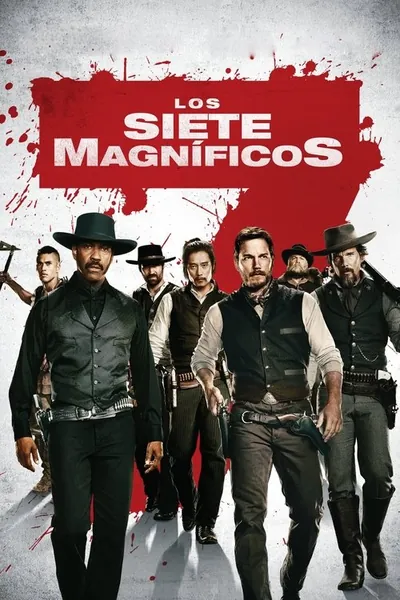 The Magnificent Seven2016
 Tears of the Sun2003
 Smokin' Aces2006
- Get Carter 2000 · cinematography
- Training Day 2001 · cinematography
- Driven 2001 · cinematography
- Highway 2002 · cinematography
- Tears of the Sun 2003 · cinematography
- The Island 2005 · cinematography
- Smokin' Aces 2006 · cinematography
- The Kingdom 2007 · cinematography
- Avatar 2009 · cinematography
- The A-Team 2010 · cinematography
- Real Steel 2011 · cinematography
- Runner Runner 2013 · cinematography
- The Equalizer 2014 · cinematography
- Southpaw 2015 · cinematography
- The Magnificent Seven 2016 · cinematography
- X-Men: Dark Phoenix 2019 · cinematography
- Spider-Man: No Way Home 2021 · cinematography
- Infinite 2021 · cinematography
- Madame Web 2024 · cinematography
- Heart of the Beast 2026 · cinematography
Original Cinematopedia text based on Wikipedia (en) and Wikidata.