
Maurice Costello
1877–1950 · American vaudeville and film actor and director
Biography
Maurice Costello (Pittsburgh, 1877 - Los Angeles, 1950) was one of the earliest leading men of American cinema. Alongside his vaudeville career, he also directed films, and he is remembered as one of the figures who shaped acting in front of the camera during the silent era.
The son of Irish immigrants, he grew up in Pittsburgh in a strongly Irish household after his father died when Maurice was only five months old. Before settling into film, he worked in vaudeville. For years he was credited with a role in Adventures of Sherlock Holmes (1905), but that attribution is now considered doubtful, and his documented film debut dates from 1908.
His career was closely tied to Vitagraph, one of the first stable film production companies, where he worked opposite Florence Turner. He appeared in Shakespeare adaptations such as Anthony and Cleopatra and A Midsummer Night's Dream, as well as A Tale of Two Cities (1911). He had a reputation for refusing to help build sets, insisting he was hired only as an actor, and some writers have called him the father of screen acting, a label that reflects admiration more than formal history.
The arrival of sound ended his run as a leading man, as it did for many silent stars. He kept working in small roles and bit parts until his death. His daughters Dolores and Helene Costello also became actresses, and he was the grandfather of John Drew Barrymore and great-grandfather of Drew Barrymore. Today he is remembered as a member of the first generation of film stars and as the man who gave a young Moe Howard, later of the Three Stooges, small parts at Vitagraph.
Key films
- Anthony and Cleopatra (1908), a Shakespeare adaptation from his early years at Vitagraph.
- A Midsummer Night's Dream (1909), another Shakespeare adaptation from the same period.
- A Tale of Two Cities (1911), one of his best-known pictures, based on the Dickens novel.
- The Crimson Stain Mystery (1916), a mystery title of the period in which he appears as an actor.
Trivia
An early discovery
Costello gave a teenage Moe Howard small parts at Vitagraph after the young man ran errands for the studio's actors. Howard appeared in several of the company's productions, though many of them were lost in a fire that swept the studios in 1910.
An actor who would not build sets
Costello refused to help build sets, although this was common practice at the time, insisting he had been hired only as an actor. That attitude helped lead some writers to regard him as a forerunner of screen acting.
On Cinematopedia
 Mr. Smith Goes to Washington1939
 Foreign Correspondent1940
 Reap the Wild Wind1942
 The Glass Key1942
 Du Barry Was a Lady1943
 The Power of the Press1928
 Extremities1986
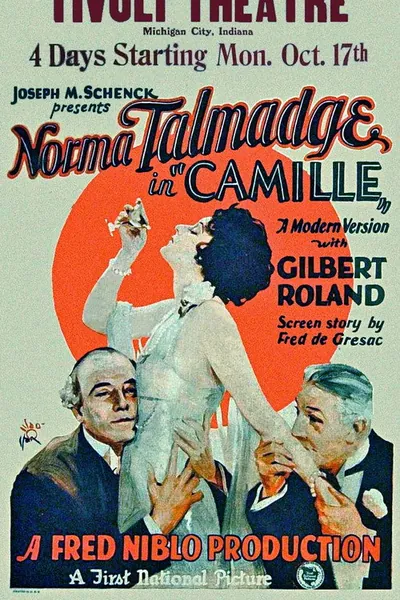 Camille1927
 The Crimson Stain Mystery1916
 H. M. Pulham, Esq.1941
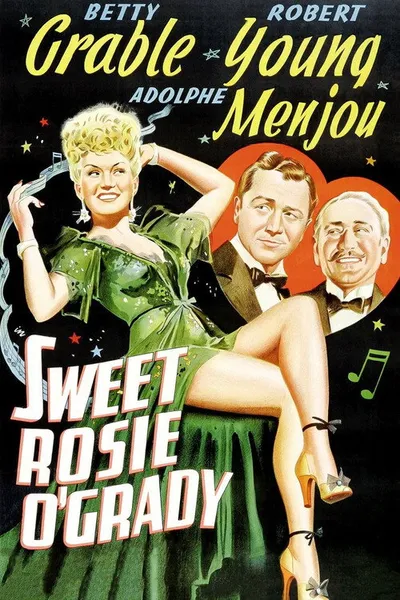 Sweet Rosie O'Grady1943
 The Climax1944
- The Crimson Stain Mystery 1916 · cast
- The Glimpses of the Moon 1923 · cast
- Camille 1927 · cast
- The Power of the Press 1928 · cast
- Comet over Broadway 1938 · cast
- Mr. Smith Goes to Washington 1939 · cast
- Foreign Correspondent 1940 · cast
- H. M. Pulham, Esq. 1941 · cast
- Lady from Louisiana 1941 · cast
- Reap the Wild Wind 1942 · cast
- The Glass Key 1942 · cast
- Cairo 1942 · cast
- Du Barry Was a Lady 1943 · cast
- Sweet Rosie O'Grady 1943 · cast
- The Climax 1944 · cast
- Extremities 1986 · cast
Original Cinematopedia text based on Wikipedia (es) and Wikipedia (en) and Wikidata.