
Mario Monicelli
1915–2010 · Italian film director and screenwriter
Biography
Mario Monicelli (Rome, 16 May 1915 - Rome, 29 November 2010) was an Italian film director and screenwriter and one of the leading figures of the commedia all'italiana, the Italian-style comedy that defined much of his country's cinema from the late 1950s. Over a career of more than half a century he mixed humour with a bitter, critical view of Italian society. He received six Academy Award nominations over his career and was awarded the Golden Lion at the Venice Film Festival in 1991 for lifetime achievement.
Born in Rome into a well-off family with roots in Mantua, he was raised in Rome, Viareggio and Milan. His father, the journalist Tomaso Monicelli, criticised the fascist regime and was eventually blacklisted; the family's difficulties in those years shaped the director's outlook, and he later said he could understand his father's decision to take his own life in 1946. As a student in Milan he wrote film criticism for a short-lived magazine that the regime shut down. His first short film, made in 1934 with Alberto Lattuada and Alberto Mondadori, was followed by the silent I ragazzi della via Paal, which won a prize in Venice. Between 1939 and 1942 he wrote a large number of screenplays and worked as an assistant director.
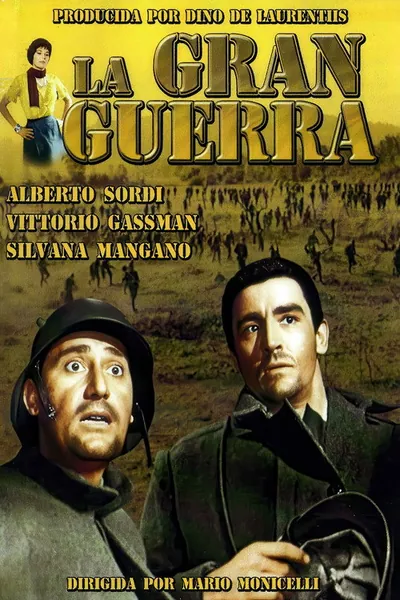
He made his official directing debut in 1949 with Totò cerca casa, co-directed with Steno, and the pair made eight films in four years, including Cops and Robbers (1951). From 1953 he directed on his own while continuing to write screenplays. Big Deal on Madonna Street (1958) revealed the comic talent of Vittorio Gassman and Marcello Mastroianni and is often seen as the start of the commedia all'italiana. The Great War (1959) followed a year later and is generally considered his finest work; it won the Golden Lion and earned an Oscar nomination. Its portrait of Italy in the First World War avoided rhetoric and combined tragedy with a sharp, comic sense of history.
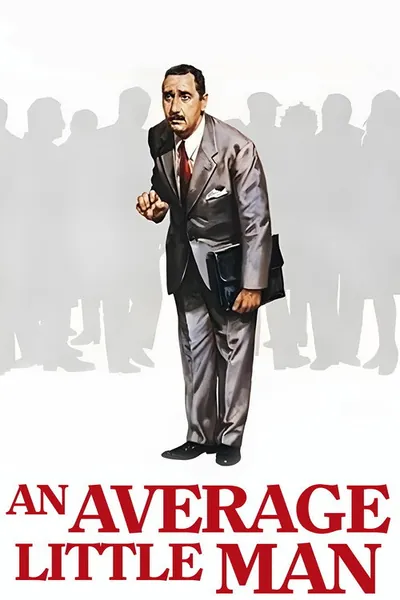
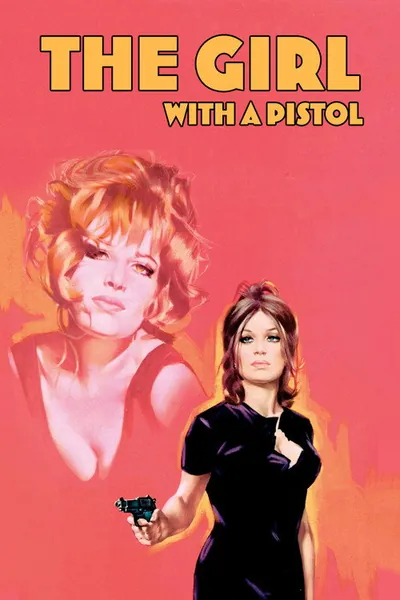
Monicelli moved between registers. The Organizer (1963) and The Girl with a Pistol (1968), both Oscar-nominated, show his interest in social criticism and in the customs of southern Italy. Brancaleone, with Gassman's macaronic Latin dialogue, turned a poor medieval knight into comedy. My Friends (1975), with Ugo Tognazzi and Philippe Noiret, was one of Italy's most successful films and left phrases still quoted today. An Average Little Man (1977), starring Alberto Sordi, leaned towards drama and is often regarded as closing the era of the commedia all'italiana. Caro Michele won the Silver Bear for Best Director in Berlin, and Il Marchese del Grillo (1981), also with Sordi, earned him a third Silver Bear there.
His final works included Let's Hope It's a Girl (1986), Parenti serpenti (1992) and Dear Goddamned Friends (1994). His last feature, The Roses of the Desert (2006), was made when he was 91. He also worked in television and theatre and appeared occasionally as an actor. He died in Rome in 2010 after throwing himself from a hospital window while being treated for prostate cancer. His work remains a reference for Italian comedy and for its sharp view of the country's history and society.
Key films
- The Great War (1959), directed and co-written by Monicelli, with Gassman and Alberto Sordi; an unsentimental view of the First World War.
- Big Deal on Madonna Street (1958), the film that shaped the commedia all'italiana and introduced Gassman and Mastroianni.
- The Organizer (1963), a portrait of labour struggle and humanitarian socialism, Oscar-nominated.
- Brancaleone (1966), a medieval comedy with Gassman's macaronic Latin.
- My Friends (1975), one of the most popular Italian comedies, with Ugo Tognazzi and Philippe Noiret.
- An Average Little Man (1977), a drama starring Alberto Sordi that marks a turn towards pessimism.
Trivia
A name turned into a language
The line 'la supercazzola' from My Friends became a familiar Italian expression, and a programming language called 'monicelli' was created using a syntax based on quotes from his films.
A censored comedy
Toto and Carolina (1955) went through three rounds of revisions by the censors, who considered that casting Totò as a policeman amounted to mocking the police.
On Cinematopedia
 The Great War1959
 An Average Little Man1977
 Big Deal on Madonna Street1958
 Let's Hope It's a Girl1986
 Boccaccio '701962
 Under the Tuscan Sun2003
 The Organizer1963
 For Love and Gold1966
 My Friends1975
 I nuovi mostri1977Cops and Robbers1951Cops and Robbers1951
 The Girl with the Pistol1968
- The Paul Street Boys 1935 · director, screenplay
- Down with Misery 1945 · screenplay
- The Black Eagle 1946 · screenplay
- The Captain's Daughter 1947 · screenplay
- The Opium Den 1947 · screenplay
- Les Misérables 1948 · screenplay
- The Wolf of the Sila 1949 · screenplay
- A Dog's Life 1950 · director, screenplay
- The Brigand Musolino 1950 · screenplay
- Toto Looks for a House 1950 · director, screenplay
- The Knight Has Arrived! 1950 · director, screenplay
- A Night of Fame 1950 · director, screenplay
- The Iron Swordsman 1950 · screenplay
- The Bride Can't Wait 1950 · screenplay
- I'm in the Revue 1950 · screenplay
- Cops and Robbers 1951 · director, screenplay
- Toto and the King of Rome 1951 · director, screenplay
- Double Cross 1951 · screenplay
- Appointment for Murder 1951 · screenplay
- O.K. Nerone 1951 · screenplay
- Toto in Color 1952 · screenplay
- Toto and the Women 1952 · director, screenplay
- Five Paupers in an Automobile 1952 · screenplay
- Cats and Dogs 1952 · screenplay
- The Unfaithfuls 1953 · director, screenplay
- Neapolitan Turk 1953 · screenplay
- Perdonami! 1953 · screenplay
- Giuseppe Verdi 1953 · screenplay
- Woe to the Vanquished 1954 · screenplay
- A Hero of Our Times 1955 · director, screenplay
- Beautiful But Dangerous 1955 · screenplay
- Forbidden 1955 · director, screenplay
- Toto and Carolina 1955 · director, screenplay
- Donatella 1956 · director, screenplay
- Fathers and Sons 1957 · director, screenplay
- Doctor and the Healer 1957 · director, screenplay
- Big Deal on Madonna Street 1958 · director, screenplay
- Angel in a Taxi 1958 · screenplay
- The Great War 1959 · director, screenplay
- The Passionate Thief 1960 · director, screenplay
- On the Tiger's Back 1961 · screenplay
- Boccaccio '70 1962 · director
- The Organizer 1963 · director, screenplay
- High Infidelity 1964 · director
- Shivers in Summer 1964 · screenplay
- Casanova 70 1965 · director, screenplay
- For Love and Gold 1966 · director, screenplay
- Sex Quartet 1966 · director
- Our Husbands 1966 · screenplay
- Caprice Italian Style 1967 · director
- The Girl with the Pistol 1968 · director
- Oh, Grandmother's Dead 1969 · director, screenplay
- Brancaleone at the Crusades 1970 · director, screenplay
- Man and Wife 1970 · director, screenplay
- Lady Liberty 1971 · director, screenplay
- We Want the Colonels 1973 · director, screenplay
- Come Home and Meet My Wife 1974 · director, screenplay
- My Friends 1975 · director
- Caro Michele 1976 · director
- Goodnight, Ladies and Gentlemen 1976 · director, screenplay
- An Average Little Man 1977 · director, screenplay
- I nuovi mostri 1977 · director
- Lovers and Liars 1979 · director, screenplay
- I'm Photogenic 1980 · cast
- Hurricane Rosy 1980 · director, screenplay
- The Marquis of Grillo 1981 · director, screenplay
- Camera d'albergo 1981 · director, screenplay
- All My Friends Part 2 1982 · director, screenplay
- Bertoldo, Bertoldino, and Cascacenno 1984 · director, screenplay
- The Two Lives of Mattia Pascal 1985 · director, screenplay
- Let's Hope It's a Girl 1986 · director, screenplay
- The Rogues 1987 · director, screenplay
- Dark Illness 1990 · director, screenplay
- Rossini! Rossini! 1991 · director
- Dearest Relatives 1992 · director, screenplay
- Dear Goddamned Friends 1994 · director, screenplay
- Facciamo paradiso 1995 · director, screenplay
- The Cyclone 1996 · cast
- Under the Tuscan Sun 2003 · cast
- The Roses of the Desert 2006 · director, screenplay
Original Cinematopedia text based on Wikipedia (es) and Wikipedia (en) and Wikidata.