
Manoel de Oliveira
1908–2015 · Portuguese film director and screenwriter
Biography
Manoel de Oliveira (Porto, 1908 - Porto, 2015) was a Portuguese film director and screenwriter, widely regarded as the most prestigious filmmaker in his country and the best known abroad. His career spanned almost a century, from the silent era into the digital age, which made him one of the few filmmakers active in both periods. As a young man he also acted, and once established as a director he rarely left his films without a brief appearance on screen.
He was born into a well-off family: his father ran textile businesses and founded Portugal's first light bulb factory. He was educated by Jesuits, who had been expelled after the republic was proclaimed, and spent a few years in La Guardia, in Galicia. For much of his life he combined filmmaking with work in the family companies. After discovering Walther Ruttmann's city symphony, he made Working on the Douro River in 1931, a documentary about labour along the river that reflected the influence of Robert Flaherty and Soviet documentaries. His first feature-length fiction film came in 1942 with Aniki-Bóbó, a portrait of a gang of street children in Porto played by non-professional actors. The film failed commercially, and its merit was recognised only over time.
In 1956 he made The Artist and the City in colour, and in 1963 Rite of Spring, which brought him his first international recognition. From then on his style grew more static, built on long takes, theatrical staging and dense dialogue. These traits drew both criticism and devoted admirers. Salazar's dictatorship constantly restricted his career; he was even detained by the PIDE, and until 1974 he could make only twelve films, mostly documentaries. After the Carnation Revolution, Benilde or the Virgin Mother (1975), based on José Régio, opened his period of acclaim. He then adapted Camilo Castelo Branco in Doomed Love (1979), Agustina Bessa-Luís several times, and Paul Claudel in The Satin Slipper (1985), which won the Golden Lion in Venice.
In the 1990s and 2000s he kept up a remarkably high pace, with Non, or the Vain Glory of Command (1990), Abraham's Valley (1993) and Eccentricities of a Blond Girl (2009) among his works. In 2002 he received the World Award of Arts. In 2012 he was hospitalised with a lung condition, yet that same year he premiered O Gebo e a Sombra in Venice. He died in Porto on 2 April 2015, aged 106. His legacy is that of a director who approached literature and Portugal's past with a distinctive language and who regarded cinema as a serious cultural form.
Key films
- Working on the Douro River (1931): documentary on river labour in Porto, his first film and an early sign of his outlook.
- Aniki-Bóbó (1942): his first feature-length fiction, with non-professional child actors on the streets of Porto.
- Past and Present (1972): social satire that set the standard for his later work and brought him international recognition.
- Non, or the Vain Glory of Command (1990): a fresco of Portuguese history, typical of his theatrical and reflective style.
- Abraham's Valley (1993): an adaptation of Agustina Bessa-Luís that reflects his lasting interest in Portuguese literature.
- The Strange Case of Angélica (2010): a ghostly tale, a project he had carried for decades, shot in his hundredth year.
Trivia
A booed premiere
When Working on the Douro River was shown at the International Congress of Film Critics in Lisbon, most of the Portuguese audience booed it, while foreign critics such as Luigi Pirandello praised it.
A failure the years corrected
Aniki-Bóbó was a commercial failure on release. Oliveira said he was criticised for showing children who lied, cheated and stole, which he felt was more like adult behaviour.
On Cinematopedia
 To Each His Own Cinema2007
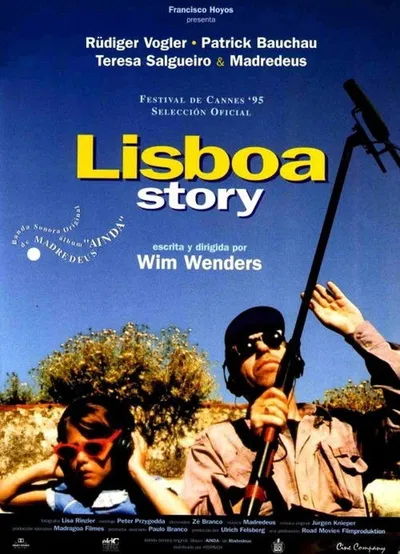 Lisbon Story1994
 Abraham's Valley1993
 I'm Going Home2001
 A Talking Picture2003The Song of Lisbon1933The Song of Lisbon1933
 The Convent1995
 Belle Toujours2006
 Aniki-Bóbó1942Rite of Spring1963Rite of Spring1963A Caixa1994A Caixa1994
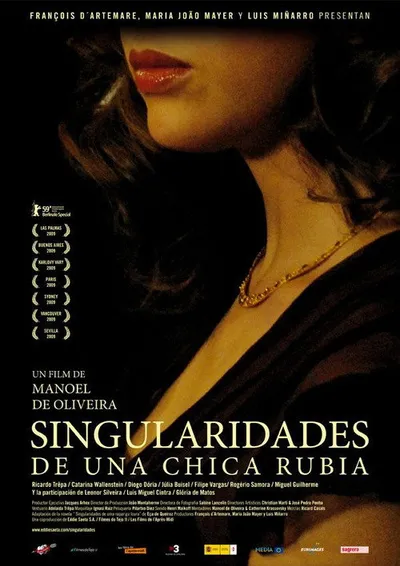 Eccentricities of a Blonde-Haired Girl2009
- Douro, Faina Fluvial 1931 · director
- The Song of Lisbon 1933 · cast
- Aniki-Bóbó 1942 · director, screenplay, editing
- Rite of Spring 1963 · director, cinematography, screenplay, editing, producer
- The Green Years 1963 · cast
- Past and Present 1972 · director, screenplay, editing
- Benilde or the Virgin Mother 1975 · director, screenplay, editing
- Cinématon 1978 · cast
- Ill-Fated Love 1978 · director, screenplay, cast
- Francisca 1981 · director, screenplay
- Visit or Memories and Confessions 1982 · director, screenplay, editing, cast
- The Satin Slipper 1985 · director, screenplay
- My Case 1986 · director, screenplay, editing
- The Cannibals 1988 · director, screenplay
- No, or the Vain Glory of Command 1990 · director, screenplay, editing, cast
- The Divine Comedy 1991 · director, screenplay, editing
- Day of Despair 1992 · director, screenplay, editing
- Abraham's Valley 1993 · director, screenplay, editing
- Lisbon Story 1994 · cast
- A Caixa 1994 · director, screenplay, editing
- The Convent 1995 · director, screenplay
- Party 1996 · director, screenplay
- Voyage to the Beginning of the World 1997 · director, screenplay, cast
- Marcello Mastroianni: I Remember 1997 · cast
- Anxiety 1998 · director, screenplay, cast
- The Letter 1999 · director, screenplay
- Word and Utopia 2000 · director, screenplay
- I'm Going Home 2001 · director, screenplay
- Porto of My Childhood 2001 · director, screenplay, cast
- The Uncertainty Principle 2002 · director, screenplay
- A Talking Picture 2003 · director, screenplay
- The Fifth Empire 2004 · director, screenplay
- Magic Mirror 2005 · director, screenplay
- Belle Toujours 2006 · director, screenplay
- To Each His Own Cinema 2007 · director
- Christopher Columbus: The Enigma 2007 · director, screenplay, cast
- Eccentricities of a Blonde-Haired Girl 2009 · director, screenplay
- The Strange Case of Angelica 2010 · director, screenplay
- Gebo and the Shadow 2012 · director, screenplay
Original Cinematopedia text based on Wikipedia (es) and Wikipedia (en) and Wikidata.