
Luc Besson
b. 1959 · French filmmaker, screenwriter and producer
Biography
Luc Besson (born 18 March 1959 in Paris) is a French filmmaker, screenwriter and producer, and one of the most recognisable names in French cinema since the 1980s. He is best known for action films, science fiction and visually striking dramas, and for EuropaCorp, the production and distribution company he co-founded in 2000. His importance lies both in the films he has directed and in the many productions he has written or produced, a double role that has made him as much a film businessman as an author.
Besson's parents worked as scuba-diving instructors for Club Med, and he spent much of his childhood travelling with them to holiday resorts in Italy, Yugoslavia, Greece and Bulgaria. The family returned to France when he was about ten. At seventeen he suffered a diving accident that ended his time underwater, and he began to see that writing and images interested him more than the marine biology he had once planned to study. After visiting a film set he decided to become a filmmaker. At eighteen he returned to Paris, took odd jobs around the industry and worked as an assistant to directors including Claude Faraldo and Patrick Grandperret. He made three short films, a commissioned documentary and several commercials. After around three years in the United States he came back to Paris and set up his own company, first called Les Films du Loup and later renamed Les Films du Dauphin.
His first features as a director arrived in the early 1980s. Le Dernier Combat (1983), a post-apocalyptic story with almost no dialogue, won several prizes at fantasy film festivals, and Subway (1985), a stylish urban thriller with Christopher Lambert and Isabelle Adjani, brought him wider attention in France. Both films are often cited as early examples of the Cinéma du look, a highly visual style that critics associated with the period from the 1980s into the early 1990s. The critic Raphaël Bassan coined the term in a 1989 essay, grouping Besson with Jean-Jacques Beineix and Leos Carax. Besson, like several of the filmmakers placed under that label, was uneasy with it, and he argued that the real change was happening inside the industry, through films made better and more persuasive for audiences.
The Big Blue (1988), a film about free diving, marked a turning point. It opened the Cannes Film Festival that year and received very divided reviews, but younger audiences embraced it and kept going back, and it became a cult favourite in France. La Femme Nikita (1990), in which Anne Parillaud plays a young criminal trained by the secret services as an assassin, was so successful in the United States that John Badham made an American version, The Assassin, in 1993. Before that, in 1991, Besson had directed Atlantis, a documentary about the sea that was admired for its underwater photography.
Léon: The Professional (1994), starring Jean Reno, is one of his most widely seen collaborations. Reno has appeared in several of Besson's films since the early 1980s, and the film also introduced Natalie Portman in the role of a young girl who falls in with a hitman. Éric Serra has composed the music for most of Besson's films, beginning with a score for his first short. The Fifth Element (1997), a science fiction production starring Bruce Willis and Milla Jovovich, was then the most expensive film made outside the Hollywood system, with a budget of around 80 million dollars. It took more than 263 million at the box office and was well received at Cannes. It earned seven César nominations and three wins, including Best Director for Besson, and a BAFTA for special visual effects.
After Joan of Arc (1999), a historical film about the Maid of Orléans, Besson wanted his own studio. In 2000 he co-founded EuropaCorp with Pierre-Ange Le Pogam, a colleague he had worked with since 1985. The company aimed to compete with the major American studios while keeping French directors and technicians working in France, often on English-language films with international stars. As a writer and producer, Besson became closely associated with fast-moving action series. The Taxi films began in 1998, and The Transporter series ran from 2002 to 2008, written in part with the American screenwriter Robert Mark Kamen. Kamen also worked with him on Taken (2008), starring Liam Neeson, whose sequels became major hits.
Arthur and the Minimoys (2006), which combined live action and animation, adapted a children's fantasy series that Besson had written himself. The English version featured voices including Madonna, Snoop Dogg and David Bowie. In 2009 he released Home with Yann-Arthus Bertrand, a film built from aerial footage that drew attention to ecological problems and the depletion of natural resources. It was made free to watch thanks to the sponsorship of the PPR group, and EuropaCorp agreed not to profit from its distribution. Besson has also shown a long-standing interest in young people in the French suburbs, which led to Banlieue 13 and to a foundation set up to support them.
The following decade was uneven. Lucy (2014), with Scarlett Johansson, became the most successful French film ever made, earning about 469 million dollars worldwide and returning Besson to the international spotlight after a series of disappointments. Valerian and the City of a Thousand Planets (2017), with a budget of around 180 million dollars, failed to recoup its cost. His next film, Anna (2019), deepened the financial crisis at his company, which was eventually sold to a creditor. Besson also closed the free, no-degree school for screenwriters and directors he had founded in 2012. He later made Dogman (2023), which competed for the Golden Lion in Venice, and in 2025 he released Dracula: A Love Tale, which he directed, wrote and produced and which became the most successful French film of that year.
His personal life has drawn public attention. He has been married four times, first to Anne Parillaud, with whom he had a daughter, and most recently to Virginie Silla. His marriage to Milla Jovovich, which began during the making of The Fifth Element, ended in divorce in 1999. In 2018 the Dutch-Belgian actress Sand Van Roy, who appeared in Valerian, accused him of rape. Besson denied the allegations. French prosecutors dropped the case in 2019 for lack of evidence, and a judge dismissed it after a second investigation in 2021. In June 2023 the Court of Cassation, France's highest court, acquitted him, and in early 2025 Belgian courts also declared her complaint inadmissible. Several other women described inappropriate sexual behaviour without pressing charges, and the investigating judge did not use their statements.
Critical opinion of his career has been mixed. Some writers describe him as the most Hollywood of French filmmakers and point to repeated formulas in his action films, while others praise his ability to revitalise genre cinema and to spot new talent. His legacy rests on a few enduring films, including The Fifth Element, Léon and Lucy, and on EuropaCorp, which became a model of transnational production with a strong base of European crews and actors. Besson remains active as a writer and producer, and his career shows how a filmmaker can build a personal body of work inside a demanding commercial industry.
Key films
- The Big Blue (1988): a story of free divers that reflects Besson's fascination with the sea and became a French cult film.
- La Femme Nikita (1990): the young criminal trained by secret services, which inspired an American remake.
- Léon: The Professional (1994): the hitman played by Jean Reno, and the film that introduced Natalie Portman.
- The Fifth Element (1997): the science fiction spectacle that earned Besson the César for Best Director.
- Lucy (2014): the Scarlett Johansson thriller that became the most successful French film ever made.
- Taken (2008): the first film in the action franchise starring Liam Neeson, written with Robert Mark Kamen.
Trivia
A budget record
The Fifth Element cost around 80 million dollars, making it the most expensive film made outside Hollywood at the time.
A discovery
Léon: The Professional marked the discovery of Natalie Portman, introducing her to a wide audience.
On Cinematopedia
 Léon: The Professional1994
 The Fifth Element1997
 Lucy2014
 Taken2008
 The Transporter2002
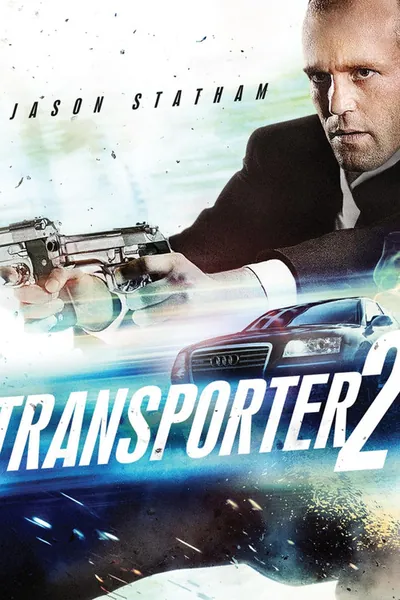 Transporter 22005
 La Femme Nikita1990
 Taxi1998
 Taxi 22000
 Valerian and the City of a Thousand Planets2017
 The Family2013
 The Messenger: The Story of Joan of Arc1999
- The Last Battle 1983 · director, screenplay, producer
- Subway 1985 · director, screenplay, producer, cast
- Kamikaze 1986 · screenplay, producer
- The Big Blue 1988 · director, screenplay, producer, cast
- La Femme Nikita 1990 · director, screenplay, producer
- Atlantis 1991 · director, cinematography, screenplay, producer
- Cold Moon 1991 · producer
- Point of No Return 1993 · screenplay
- Léon: The Professional 1994 · director, screenplay
- The Fifth Element 1997 · director, screenplay
- Nil by Mouth 1997 · producer
- Taxi 1998 · screenplay, producer
- The Messenger: The Story of Joan of Arc 1999 · director, screenplay, producer
- Taxi 2 2000 · screenplay, producer, cast
- The Dancer 2000 · screenplay, producer
- Wasabi 2001 · screenplay, producer
- Kiss of the Dragon 2001 · screenplay, producer
- Yamakasi - Les Samouraïs des temps modernes 2001 · screenplay
- 15 August 2001 · producer
- The Transporter 2002 · screenplay, producer
- Taxi 3 2003 · screenplay, producer
- Fanfan the Tulip 2003 · screenplay, producer
- High Tension 2003 · producer
- Michel Vaillant 2003 · screenplay, producer
- Les Côtelettes 2003 · producer
- District 13 2004 · screenplay, producer
- Taxi 2004 · screenplay, producer
- Crimson Rivers II: Angels of the Apocalypse 2004 · screenplay, producer
- Transporter 2 2005 · screenplay, producer
- Revolver 2005 · screenplay, producer
- Angel-A 2005 · director, screenplay, producer
- Unleashed 2005 · screenplay, producer
- The Three Burials of Melquiades Estrada 2005 · producer
- In His Hands 2005 · producer
- Arthur and the Minimoys 2006 · director, screenplay, producer
- Bandidas 2006 · screenplay, producer
- Tell No One 2006 · producer
- Golden Door 2006 · producer
- Love and Other Disasters 2006 · producer
- April in Love 2006 · producer
- Taxi 4 2007 · screenplay, producer
- Hitman 2007 · producer
- Frontier(s) 2007 · producer
- The Secret 2007 · producer
- Taken 2008 · screenplay, producer
- Transporter 3 2008 · screenplay, producer
- Home 2009 · producer
- Arthur and the Revenge of Maltazard 2009 · director, screenplay, producer
- District 13: Ultimatum 2009 · screenplay, producer
- Human Zoo 2009 · producer
- From Paris with Love 2010 · screenplay, producer, cast
- The Extraordinary Adventures of Adèle Blanc-Sec 2010 · director, screenplay, producer
- 22 Bullets 2010 · producer
- Arthur 3: The War of the Two Worlds 2010 · director, screenplay, producer
- Colombiana 2011 · screenplay, producer
- The Source 2011 · producer
- The Lady 2011 · director, producer
- Taken 2 2012 · screenplay, producer
- Lockout 2012 · screenplay, producer
- Blind Man 2012 · producer
- The Family 2013 · director, screenplay, producer
- Lucy 2014 · director, screenplay, editing
- 3 Days to Kill 2014 · screenplay, producer
- Brick Mansions 2014 · screenplay, producer
- The Homesman 2014 · producer
- Taken 3 2015 · screenplay, producer
- The Transporter Refueled 2015 · screenplay, producer
- Nine Lives 2016 · producer
- Shut In 2016 · producer
- The Warriors Gate 2016 · screenplay, producer
- Valerian and the City of a Thousand Planets 2017 · director, screenplay, producer
- Renegades 2017 · screenplay, producer
- Taxi 5 2018 · screenplay, producer
- Anna 2019 · director, screenplay, producer
- Arthur, Curse 2022 · screenplay, producer
- DogMan 2023 · director, screenplay, producer
- Weekend in Taipei 2024 · screenplay, producer
- Dracula: A Love Tale 2025 · director, screenplay, producer
Original Cinematopedia text based on Wikipedia (es) and Wikipedia (en) and Wikidata.