
Loretta Young
1913–2000 · American actress
Biography
Loretta Young (born Gretchen Michaela Young; Salt Lake City, 1913 - Santa Monica, 2000) was an American actress whose career spanned more than seven decades, from childhood appearances in silent films to later success on television. She moved from the silent era into the studio system of classic Hollywood and later headlined a long-running prime-time series, one of the few hosted by a woman at the time.
Born in Salt Lake City, she moved with her family to Hollywood when she was about three. She and her sisters Polly Ann and Elizabeth Jane, known as Sally Blane, worked as child actresses, and Gretchen was the most successful of them. Her first, uncredited role came at the age of three. She appeared as Gretchen Young in Sirens of the Sea (1917) and was billed as Loretta Young from 1928, in The Whip Woman and Laugh, Clown, Laugh opposite Lon Chaney. The following year she was named one of the WAMPAS Baby Stars.
Her most productive period came in the 1940s, when she made as many as eight films a year. In Orson Welles's The Stranger (1946), she played a small-town woman who unknowingly marries a Nazi war criminal. The next year she won the Academy Award for Best Actress for The Farmer's Daughter, a political comedy in which she learned a Swedish accent. That same year she shared the screen with Cary Grant and David Niven in The Bishop's Wife. A second Oscar nomination followed for Come to the Stable (1949). Her last theatrical film was It Happens Every Thursday (1953).
That year she moved to television with a half-hour anthology series, which became The Loretta Young Show on NBC. Each episode opened with Young walking onto a living room set in a high-fashion gown and closed with a brief reflection, often a Bible passage or a famous quotation. The program ran in prime time for eight years and earned three Primetime Emmy Awards. After retiring, she devoted herself to charity work with her friend Jane Wyman, and returned briefly to the screen in two television movies in the 1980s.
Her legacy rests on a strong run of 1940s films, her Academy Award, two stars on the Hollywood Walk of Fame, and a career that crossed silent cinema, classic Hollywood and television. She died of ovarian cancer in Santa Monica at the age of 87.
Key films
- The Farmer's Daughter (1947): Academy Award for Best Actress in a political comedy that required a Swedish accent.
- The Bishop's Wife (1947): Romantic comedy opposite Cary Grant and David Niven.
- Come to the Stable (1949): Academy Award nomination for her role as Sister Margaret.
- The Call of the Wild (1935): Opposite Clark Gable and Jack Oakie, in the Jack London adaptation directed by William Wellman.
- The Crusades (1935): As Berengaria, Princess of Navarre, in Cecil B. DeMille's historical epic.
Trivia
A failed adoption
Mae Murray, the star of her first film, wanted to adopt the young Gretchen. Her mother refused, but allowed her to live with Murray for two years.
A film held up by censors
Born to Be Bad (1934), in which she co-starred with Cary Grant, was rejected twice by the Hays Office, which enforced film morality, before it was finally approved.
On Cinematopedia
 The Bishop's Wife1947
 The Farmer's Daughter1947
 The Sheik1921
 The Stranger1946
 Come to the Stable1949
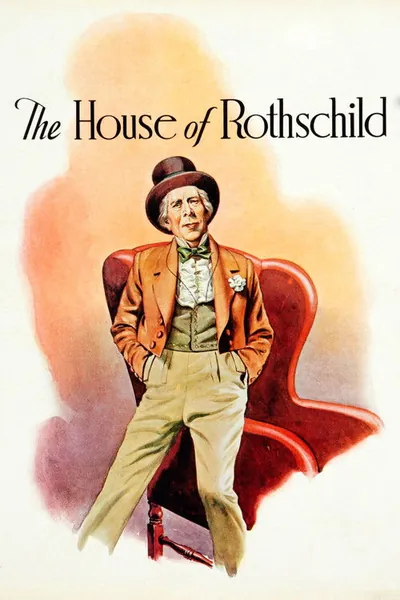 The House of Rothschild1934
 Suez1938
 Kentucky1938
 The Crusades1935
 Platinum Blonde1931
 The White Parade1934
 The Call of the Wild1935
- The Primrose Ring 1917 · cast
- The Sheik 1921 · cast
- Laugh, Clown, Laugh 1928 · cast
- The Show of Shows 1929 · cast
- The Squall 1929 · cast
- The Man from Blankley's 1930 · cast
- Show Girl in Hollywood 1930 · cast
- Platinum Blonde 1931 · cast
- The Hatchet Man 1932 · cast
- Man's Castle 1933 · cast
- Employees' Entrance 1933 · cast
- Zoo in Budapest 1933 · cast
- Heroes for Sale 1933 · cast
- Midnight Mary 1933 · cast
- The House of Rothschild 1934 · cast
- The White Parade 1934 · cast
- Born to Be Bad 1934 · cast
- The Crusades 1935 · cast
- The Call of the Wild 1935 · cast
- Clive of India 1935 · cast
- The Unguarded Hour 1936 · cast
- Private Number 1936 · cast
- Ramona 1936 · cast
- Love Is News 1937 · cast
- Suez 1938 · cast
- Kentucky 1938 · cast
- Four Men and a Prayer 1938 · cast
- The Story of Alexander Graham Bell 1939 · cast
- Eternally Yours 1939 · cast
- China 1943 · cast
- And Now Tomorrow 1944 · cast
- Along Came Jones 1945 · cast
- The Stranger 1946 · cast
- The Bishop's Wife 1947 · cast
- The Farmer's Daughter 1947 · cast
- Rachel and the Stranger 1948 · cast
- Come to the Stable 1949 · cast
- The Accused (1949) 1949 · cast
- Key to the City 1950 · cast
- Cause for Alarm! 1951 · cast
Original Cinematopedia text based on Wikipedia (es) and Wikipedia (en) and Wikidata.