
Liselotte Pulver
b. 1929 · Swiss actress, one of the biggest stars of German-language cinema in the 1950s and 1960s
Biography
Liselotte Pulver (born 11 October 1929 in Bern), sometimes credited as Lilo Pulver, is a Swiss actress who became one of the leading stars of German-language cinema in the 1950s and 1960s. She was often cast as a lively, mischievous young woman, and her hearty, joyful laugh became part of her public image. Her career mixed popular German comedy with a few more serious dramatic roles and with work in American and French productions.
The daughter of a civil engineer, she trained as a commercial student and worked as a model before studying acting at the Bern conservatory. She took small parts at the Bern theatre and then performed at the Schauspielhaus Zürich. Her first film was the 1949 American-Swiss co-production Swiss Tour, but her breakthrough came as Vreneli in Uli the Farmhand (1954), based on a novel by Jeremias Gotthelf. Comedies followed, notably Piroschka (1955) and The Zürich Engagement (1957), while Thomas Mann adaptations such as The Buddenbrooks (1959) gave her more serious material.
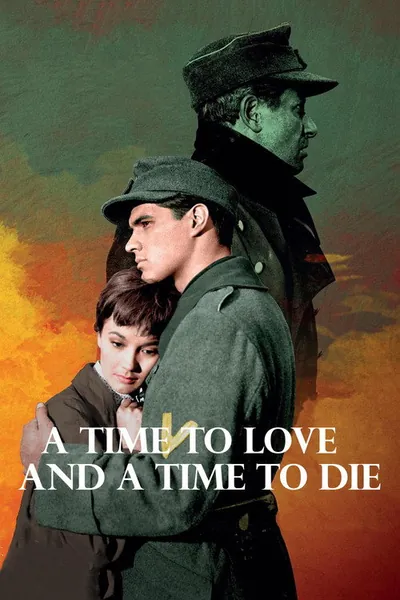
In the late 1950s she worked in Hollywood, starting with Douglas Sirk's war melodrama A Time to Love and a Time to Die (1958) opposite John Gavin. Her best-known role outside German cinema is probably James Cagney's secretary in Billy Wilder's One, Two, Three (1961). She was nominated for a Golden Globe as best supporting actress for A Global Affair in 1963. In France she appeared with Anna Karina in Jacques Rivette's The Nun (1966). In the 1970s she turned increasingly to television, and from 1978 to 1983 she worked on the German edition of Sesame Street. Her last film credit was a cameo in the 2007 remake of The Zürich Engagement.
Her private life has also been marked by tragedy: her daughter died by suicide in 1989, and her husband died of a heart attack in 1992. Since 2008 she has lived in seclusion in Perroy, on the shores of Lake Geneva, though she keeps an apartment near Bern. Her legacy rests on her popularity in German-language cinema and on the warmth of her comic performances. She received several Bambi Awards and, in 2018, another for lifetime achievement.
Key films
- A Time to Love and a Time to Die (1958), Douglas Sirk's war melodrama and her first Hollywood film.
- One, Two, Three (1961), Billy Wilder's comedy in which she plays James Cagney's secretary.
- I Often Think of Piroschka (1955), the comedy that made her a star of German cinema.
- The Confessions of Felix Krull (1957), Thomas Mann adaptation opposite Horst Buchholz.
- The Nun (1966), Jacques Rivette's French film with Anna Karina.
- The Buddenbrooks (1959), one of her more serious film roles.
Trivia
A recognisable laugh
Her hearty, joyful laugh is one of the traits most associated with her public image and with her mischievous screen characters.
Two names in the Thomas Mann adaptations
In The Confessions of Felix Krull (1957) she was credited as Lisa Pulver, while elsewhere she is often listed as Lilo Pulver.
On Cinematopedia
 One, Two, Three1961
 A Time to Love and a Time to Die1958Arms and the Man1958Arms and the Man1958
 The Haunted Castle1960
 The Nun1966The Adventures of Arsène Lupin1957The Adventures of Arsène Lupin1957The Spessart Inn1958The Spessart Inn1958Monsieur1964Monsieur1964The Zurich Engagement1957The Zurich Engagement1957
 La Fayette1961
 The Man from Cocody1965
 Weekend, Italian Style1965
- I Often Think of Piroschka 1955 · cast
- My Husband's Getting Married Today 1956 · cast
- The Adventures of Arsène Lupin 1957 · cast
- The Zurich Engagement 1957 · cast
- Confessions of Felix Krull 1957 · cast
- A Time to Love and a Time to Die 1958 · cast
- Arms and the Man 1958 · cast
- The Spessart Inn 1958 · cast
- The Gambler 1958 · cast
- The Beautiful Adventure 1959 · cast
- The Haunted Castle 1960 · cast
- A Glass of Water 1960 · cast
- One, Two, Three 1961 · cast
- La Fayette 1961 · cast
- A Nearly Decent Girl 1963 · cast
- Monsieur 1964 · cast
- The Man from Cocody 1965 · cast
- Weekend, Italian Style 1965 · cast
- Praetorius 1965 · cast
- The Nun 1966 · cast
- The Gardener of Argenteuil 1966 · cast
- Glorious Times at the Spessart Inn 1967 · cast
- Five Leaf Clover 1972 · cast
- The Superwife 1996 · cast
Original Cinematopedia text based on Wikipedia (es) and Wikipedia (en) and Wikidata.