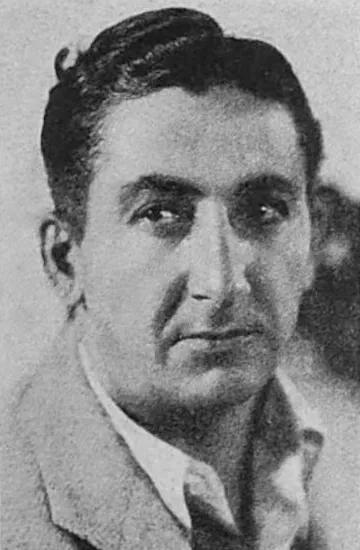
Lewis Seiler
1890–1964 · American film director
Biography
Lewis Seiler (New York City, 1890 - Los Angeles, 1964) was an American film director whose career ran from 1923 to 1958. He completed more than eighty films in that period, most of them made within the Hollywood studio system, and he is remembered more as a dependable craftsman than as a director with a strongly personal style.
His early work came in the silent era, with titles such as No Man's Gold (1926) and Wolf Fangs (1927). In the sound period he moved between very different material, from Frontier Marshal (1934) to Charlie Chan in Paris (1935), and in the late 1930s he made crime dramas such as Crime School (1938). During the Second World War he turned to war stories and action films, including Guadalcanal Diary (1943). His later work spans melodramas and thrillers, and the films of the 1940s and 1950s make up the largest share of his output.
His legacy is that of a prolific and reliable studio director. He died in 1964 at the UCLA Medical Center in Westwood, Los Angeles.
Key films
- It All Came True (1940), a comedy-drama made within the studio system that shows his range in the period.
- The Big Shot (1942), a gangster film in the crime genre that defined much of his early 1940s work.
- Guadalcanal Diary (1943), a war film about the Pacific campaign and one of his best-known titles of the period.
- Doll Face (1945), a 1940s studio picture that reflects his steady command of the genre films of the decade.
Trivia
A very extensive filmography
According to the available references, he directed more than eighty films between 1923 and 1958, a sign of how steadily he worked within the studio system.
His death in Westwood
He died on January 8, 1964, at the UCLA Medical Center in the Westwood neighborhood of Los Angeles.
On Cinematopedia
 You Can't Get Away with Murder
 The Great K & A Train Robbery
 The Air Circus
 Doll Face
 The Last Trail
 It All Came True
 The Big Shot
 Guadalcanal Diary
Original Cinematopedia text based on Wikipedia (en) and Wikidata.