
Lewis Milestone
1895–1980 · American film director of Moldovan origin
Biography
Lewis Milestone, born Leib Mendelevich Milstein in Chisinau, then part of the Russian Empire and now Moldova, on September 30, 1895, and who died on September 25, 1980, was an American film director who also worked as a screenwriter and producer during Hollywood's Golden Age. He won two Academy Awards for Best Director, for Two Arabian Knights and All Quiet on the Western Front, and remains one of the most recognizable names of American cinema in the 1920s and 1930s.
From a Jewish family with a strong interest in languages and culture, he wanted to work in theater rather than the engineering his family had chosen for him in Germany. He arrived in Hoboken, New Jersey, in November 1913 and supported himself through a range of jobs, including photography. During the First World War he enlisted in the Army Signal Corps, where he trained in aerial photography and documentary editing, and where he served alongside future directors such as Josef von Sternberg and Victor Fleming. In 1919 he became a US citizen and took the surname Milestone.
In Hollywood he started out as an editor and assistant, and wrote treatments and scripts for several studios. His directing debut came with Seven Sinners (1925), a comedy backed by Warner Bros. After a run of comic films, Two Arabian Knights brought him international recognition and his first Oscar. With All Quiet on the Western Front, adapted from Erich Maria Remarque's novel, he established his reputation. It is one of the most forceful anti-war films of the period, and it was banned in Germany.
With the arrival of sound he directed The Front Page, based on the play by Ben Hecht and Charles MacArthur, using a highly mobile camera among the actors. He then made musicals and adventure films such as The General Died at Dawn, and adapted Steinbeck's Of Mice and Men. His career lost some of its momentum in the 1940s, though he made notable films such as The North Star, A Walk in the Sun and The Strange Love of Martha Ivers, several of them written by Robert Rossen.
In the 1950s he worked largely in television, though he still made films such as Kangaroo. His last films for the cinema were Ocean's Eleven (1960) and Mutiny on the Bounty (1962). Shortly before his death he helped Universal restore All Quiet on the Western Front, a project that was completed years later and now circulates widely. His legacy is that of a craftsman with a strong interest in social themes, and he has a star on the Hollywood Walk of Fame.
Key films
- Two Arabian Knights (1927): a war comedy that won him his first Oscar for Best Director in comedy.
- All Quiet on the Western Front (1930): his best-known work, an anti-war drama that earned him a second Oscar.
- The Front Page (1931): an adaptation of a stage play with a dynamic staging, and his third Oscar nomination.
- The North Star (1943): a war drama about a Ukrainian village facing the German invasion.
- A Walk in the Sun (1945): a portrait of soldiers during the Allied landing in Italy.
- Ocean's Eleven (1960): a heist comedy later remade by Steven Soderbergh.
Trivia
A change of name
Born Leib Mendelevich Milstein, he took the surname Milestone in 1919, shortly after leaving the army and obtaining US citizenship.
Fellow soldiers
During the war he served in the Signal Corps alongside Josef von Sternberg and Victor Fleming, who both later became Hollywood directors.
On Cinematopedia
 All Quiet on the Western Front1930
 Mutiny on the Bounty1962
 The Front Page1931
 Of Mice and Men1939
 Ocean's Eleven1960
 The Racket1928
 Two Arabian Knights1927
 Tempest1928
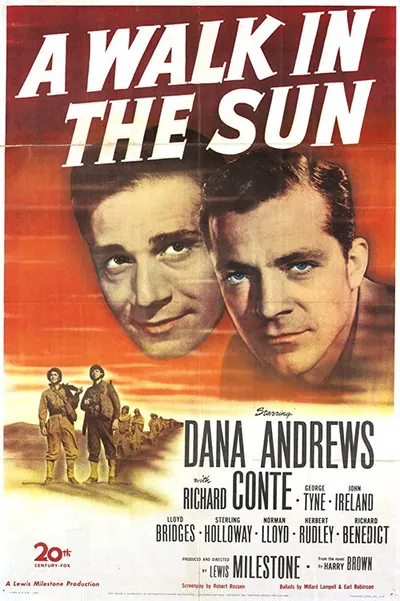 A Walk in the Sun1945
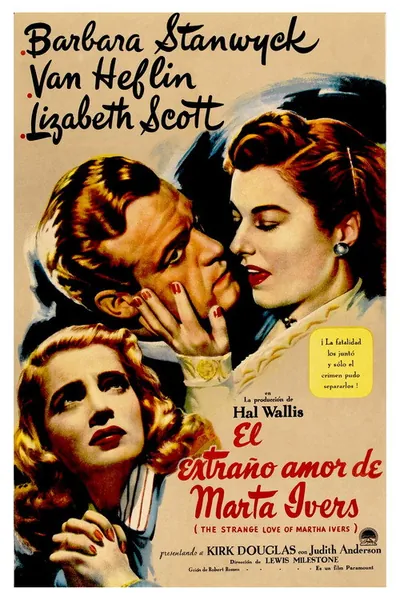 The Strange Love of Martha Ivers1946
 The North Star1943
 Arch of Triumph1948
- Where the North Begins 1923 · editing
- Dangerous Innocence 1925 · screenplay
- Two Arabian Knights 1927 · director
- The Kid Brother 1927 · director
- The Racket 1928 · director, cast
- Tempest 1928 · director, screenplay
- The Garden of Eden 1928 · director, producer
- New York Nights 1929 · director
- Betrayal 1929 · director
- All Quiet on the Western Front 1930 · director, screenplay
- The Front Page 1931 · director, producer, cast
- Rain 1932 · director, producer
- Hallelujah, I'm a Bum 1933 · director
- The General Died at Dawn 1936 · director
- Anything Goes 1936 · director
- Of Mice and Men 1939 · director, producer
- Lucky Partners 1940 · director, screenplay
- My Life with Caroline 1941 · director
- The North Star 1943 · director
- Edge of Darkness 1943 · director
- The Purple Heart 1944 · director
- A Walk in the Sun 1945 · director
- The Strange Love of Martha Ivers 1946 · director
- Arch of Triumph 1948 · director, screenplay
- The Red Pony 1949 · director, producer
- Halls of Montezuma 1951 · director
- Les Misérables 1952 · director
- Kangaroo 1952 · director
- Melba 1953 · director
- They Who Dare 1954 · director
- The Widow 1955 · director, screenplay
- Pork Chop Hill 1959 · director
- Ocean's Eleven 1960 · director, producer
- Mutiny on the Bounty 1962 · director
Original Cinematopedia text based on Wikipedia (es) and Wikipedia (en) and Wikidata.