
Lev Kuleshov
1899–1970 · Soviet filmmaker and film theorist
Biography
Lev Kuleshov (Tambov, 13 January 1899 – Moscow, 29 March 1970) was one of the pioneers of Soviet cinema and its most influential thinker on editing. Filmmaker, writer and occasional actor, he helped found the Moscow Film School, which is often cited as the world's first film school. His lasting importance lies in showing, during the upheaval of the revolutionary years, that the meaning of a shot depends on what surrounds it.
Born into a family of artists and teachers, he grew up around art. After his father died in 1911 he moved with his mother to Moscow, where he studied painting and stage design. In 1916 he joined the Khanzhonkov studio as a set designer and worked on the society melodramas of Yevgeni Bauer. When Bauer died during the shooting of For Happiness, Kuleshov completed the film, and the naturalism he saw on screen left him wary of that style.
His first film as director was The Project of Engineer Prait (1917), a detective story that used parallel action, alternating scenes and flashbacks, showing the strong influence of Griffith. While shooting it he realised that editing could build a space that never existed, by joining shots filmed in different parts of Moscow. He called this creative geography. From his experiments also came the so-called Kuleshov effect: one close-up of Ivan Mozzhukhin, placed beside a bowl of soup, a child in a coffin or a woman on a sofa, was read by audiences as hunger, grief or desire. Kuleshov treated the shot as a basic unit of meaning, much as letters form words.
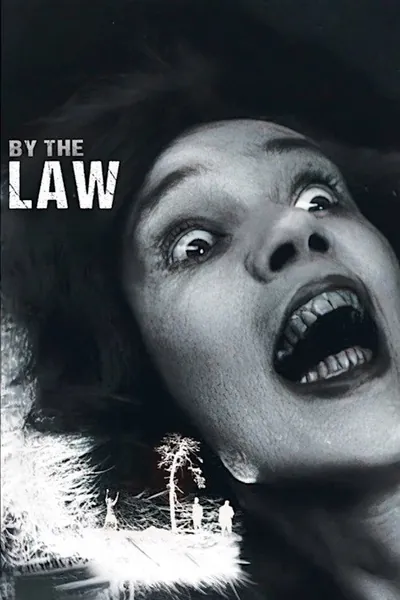
During the civil war he filmed and edited documentaries, and in 1920 he began teaching. That year the Laboratory took shape, a small group of students that included Vsevolod Pudovkin, Boris Barnet, Sergei Komarov and Porfiri Podobed. There they practised montage exercises and a method for actors that set aside inner psychology in favour of precise, readable movements that could be cut cleanly. In the twenties he directed The Extraordinary Adventures of Mr. West in the Land of the Bolsheviks (1924), an action comedy that mixed slapstick with satire of American life, and By the Law (1926), adapted from a Jack London story. Later came The Great Consoler (1933), a biographical drama about O. Henry, and in the 1930s a planned film in Tajikistan that the authorities halted.
In 1941 he published The Basics of Film Direction, setting out his methods, although many of his ideas reached readers through the writings of Pudovkin. From 1944 he devoted himself again to teaching at the Moscow Film School, where he served as rector and artistic director for about twenty-five years. He received the Order of Lenin shortly before his death and was buried at Novodevichy Cemetery. His legacy lives on in film pedagogy and in the term Kuleshov effect, still a staple of film studies.
Key films
- The Project of Engineer Prite (1918)
- The Extraordinary Adventures of Mr. West in the Land of the Bolsheviks (1924)
- The Death Ray (1925)
- By the Law (1926)
- The Great Consoler (1933)
Trivia
One shot, three meanings
In the experiment that bears his name, the same close-up of Mozzhukhin was read as hunger, grief or desire depending on the image placed before it.
Actors called models
Kuleshov called his performers naturshchik, or models, rather than actors, and had them rehearse on a spatial grid so their movements followed precise angles.
On Cinematopedia
 By the Law1926On the Red Front1920On the Red Front1920
 Your Acquaintance1927We from the Urals1943We from the Urals1943The Great Consoler1933The Great Consoler1933
 Siberians1940
 Two-Buldi-Two1929The Happy Canary1929The Happy Canary1929
 Horizon1932
 Dokhunda1936
Original Cinematopedia text based on Wikipedia (es) and Wikipedia (en) and Wikidata.