
Lauren Bacall
1924–2014 · American actress
Biography
Lauren Bacall (New York, 1924 – 2014) was an American actress who belonged to the last generation of major stars of Hollywood's Golden Age. Her sultry presence and husky voice, shaped by demanding training, made her one of the most recognizable figures of film noir and of the romantic comedies of the 1950s. The American Film Institute ranked her among the twenty greatest female stars of classic Hollywood, and in 2009 she received an Academy Honorary Award for her contribution to the Golden Age of motion pictures.
Born Betty Joan Perske in the Bronx, she was the only daughter of a secretary and a salesman. Her parents, both of Jewish descent, divorced when she was about six, and she lost contact with her father. She took her mother's Romanian surname, Bacal, and added an extra letter L with a touch of fancy. She attended a girls' boarding school in Tarrytown and a high school in Manhattan, and in 1941 she took classes at the American Academy of Dramatic Arts, where she crossed paths with Kirk Douglas. She worked as a model, and in 1943 she appeared on the cover of Harper's Bazaar, photographed by Louise Dahl-Wolfe. That cover caught the eye of Slim Keith, wife of director Howard Hawks, who urged her husband to test the young model for his next picture.
Hawks signed her after a screen test in Hollywood, changed her first name to Lauren, and had a voice coach lower her naturally high, nasal voice. For hours each day she was made to shout Shakespeare. Her first major film was To Have and Have Not (1944), opposite Humphrey Bogart, whom she would later marry. The famous gaze that became her trademark, known as The Look, grew out of nerves during her screen tests: she lowered her chin toward her chest and tilted her eyes up toward the camera. After the release, the studio ran an extensive publicity campaign, and she visited the National Press Club in Washington, where she sat on a piano while Vice President Harry S. Truman played it.
After the poorly received Confidential Agent (1945), The Big Sleep (1946) brought her back to the front ranks with the role of an enigmatic, independent woman that tied her closely to film noir. She reunited with Bogart in Dark Passage and Key Largo (1948). In the 1950s she moved between noir, comedy and melodrama, with How to Marry a Millionaire (1953), alongside Marilyn Monroe and Betty Grable, Written on the Wind (1956), one of Douglas Sirk's seminal melodramas, and Designing Woman (1957), opposite Gregory Peck. Later she appeared in Harper (1966) with Paul Newman, Murder on the Orient Express (1974) and The Shootist (1976), where she shared the screen with John Wayne at his personal request.
On Broadway she won two Tony Awards for Best Actress in a Musical, for Applause (1970) and Woman of the Year (1981). After a quieter period on screen, she enjoyed a comeback in the 1990s with The Mirror Has Two Faces (1996), which earned her the Golden Globe and the Screen Actors Guild Award, as well as an Academy Award nomination. She also stood out in supporting roles in Misery (1990) and Dogville (2003), which brought her to a younger audience, and she provided English voices for animated features such as Howl's Moving Castle (2004) and Ernest & Celestine (2012). She died in New York in 2014. Her legacy endures as a model of elegance and a screen presence that remains hard to imitate.
Key films
- To Have and Have Not (1944): her breakout as a leading lady opposite Bogart, which made her an instant star.
- The Big Sleep (1946): her Vivian Rutledge cemented her as an icon of film noir.
- How to Marry a Millionaire (1953): a romantic comedy sharing the cast with Marilyn Monroe and Betty Grable.
- Written on the Wind (1956): the female lead in one of Douglas Sirk's best-known melodramas.
- Misery (1990): a supporting role that introduced her to a new audience late in her career.
Trivia
An unexpected kinship
Through her father, Bacall was a relative of Shimon Peres, who would later become prime minister and president of Israel. According to the sources, Peres only learned of the connection when she told him.
Spoofed by Warner cartoons
Bacall and Bogart were parodied in the Warner Bros. Merrie Melodies shorts Bacall to Arms (1946) and Slick Hare (1947), a sign of how widely their screen pairing was known.
On Cinematopedia
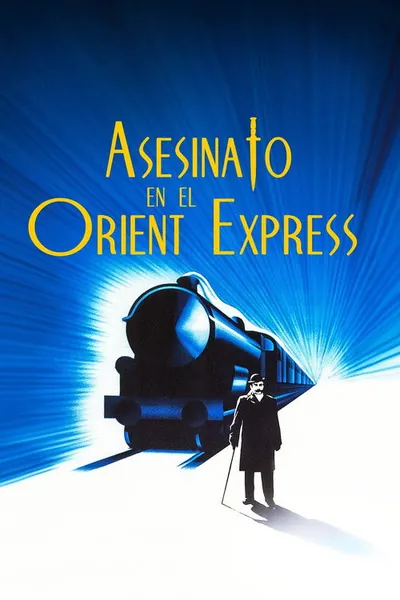 Murder on the Orient Express1974
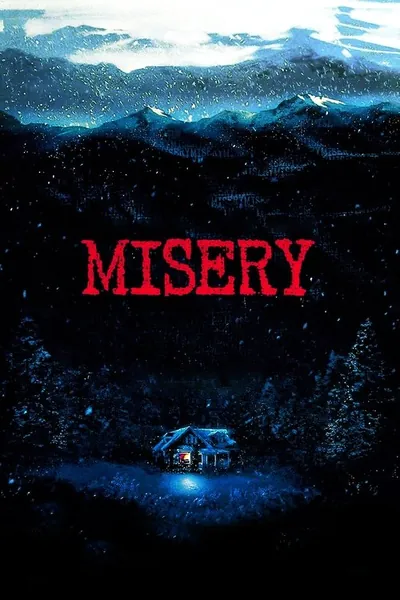 Misery1990
 Dogville2003
 Written on the Wind1956
 The Big Sleep1946
 Key Largo1948
 To Have and Have Not1944
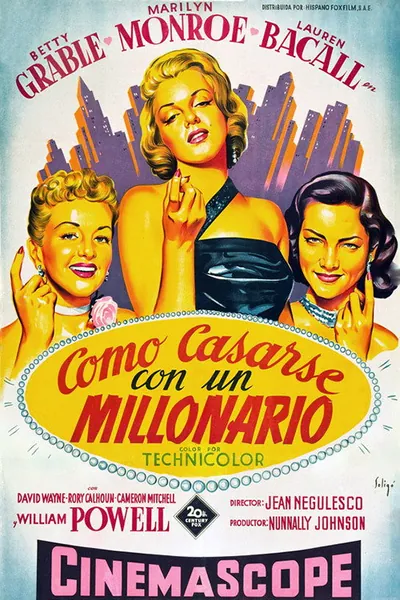 How to Marry a Millionaire1953
 Trumbo2015
 The Shootist1976
 Dark Passage1947
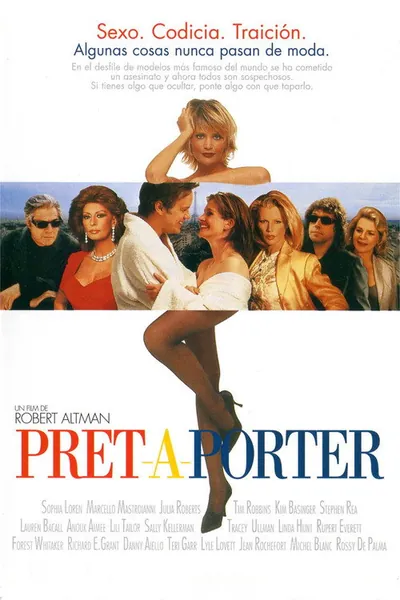 Ready to Wear1994
- To Have and Have Not 1944 · cast
- Confidential Agent 1945 · cast
- The Big Sleep 1946 · cast
- Dark Passage 1947 · cast
- Key Largo 1948 · cast
- Young Man with a Horn 1950 · cast
- Bright Leaf 1950 · cast
- How to Marry a Millionaire 1953 · cast
- Woman's World 1954 · cast
- Blood Alley 1955 · cast
- The Cobweb 1955 · cast
- Written on the Wind 1956 · cast
- Designing Woman 1957 · cast
- North West Frontier 1959 · cast
- Sex and the Single Girl 1964 · cast
- Harper 1966 · cast
- Murder on the Orient Express 1974 · cast
- The Shootist 1976 · cast
- HealtH 1980 · cast
- The Fan 1981 · cast
- Appointment with Death 1988 · cast
- Misery 1990 · cast
- Ready to Wear 1994 · cast
- The Mirror Has Two Faces 1996 · cast
- My Fellow Americans 1996 · cast
- Day and Night 1997 · cast
- Presence of Mind 1999 · cast
- Dogville 2003 · cast
- Birth 2004 · cast
- Manderlay 2005 · cast
- The Walker 2007 · cast
- Trumbo 2015 · cast
Original Cinematopedia text based on Wikipedia (es) and Wikipedia (en) and Wikidata.