
Larry King
1933–2021 · American television and radio host, journalist and author
Biography
Lawrence Harvey Zeiger, known as Larry King (New York, November 19, 1933 – Los Angeles, January 23, 2021), was an American broadcaster, journalist and writer whose name became synonymous with the television and radio interview. His film work was a sideline: he appeared in movies and series, almost always as himself. His importance lies in shaping a style of late-night interviewing and political discussion that defined American news television for decades.
Born in Brooklyn to Jewish parents who had emigrated from what is now Belarus in the 1920s, King lost his father when he was nine years old. The death drew him away from his schoolwork, and after finishing high school he worked to help support his mother. Radio had attracted him from an early age, although for a while he doubted he would ever get the chance.
His break came in 1957, when a CBS production supervisor suggested he try Florida, a growing media market with openings for inexperienced broadcasters. King moved to Miami and found work at a small station in Miami Beach, first doing odd jobs and then going on air. His first broadcast, on May 1, 1957, was a morning disc jockey shift. He adopted the surname King after the station's general manager argued that Zeiger was hard to remember. His first interviews took place at Pumpernik's restaurant, where he talked to whoever walked past. Two days later, the singer Bobby Darin, in town for a concert that evening, wandered in and became his first famous guest. In 1960 he hosted Miami Undercover on television, a discussion program about current affairs.
The early 1970s brought a setback. In December 1971 he was arrested on a grand larceny charge linked to a money dispute with Louis Wolfson, a former business partner. The main charge was dropped because the statute of limitations had run out, but King never answered several charges connected to checks, and for a time he was pushed off the air. He took other jobs, wrote for Esquire magazine and eventually returned to radio.
In 1978 he began hosting The Larry King Show, a nightly call-in program carried coast to coast by the Mutual Broadcasting System, taking over a slot that had previously belonged to other hosts. The format paired a guest interview with listener calls, and in its final stretch, Open Phone America, callers could raise any subject. It began with 28 affiliates, grew to more than five hundred and ran until 1994.
In June 1985 Larry King Live started on CNN, and it became his best-known show until 2010. Politicians, actors, athletes and controversial figures, including UFO theorists and self-described psychics, sat across from him. His manner was direct and non-confrontational, built on simple open-ended questions, which helped him land notable interviews such as Ross Perot's 1992 presidential announcement on the program. King said he did not reread his authors' books so that he would not know more than his audience. In 2000 he interviewed Vladimir Putin, who answered a question about the sinking of the submarine Kursk with the now-famous word “Sank.”
After leaving CNN he hosted Larry King Now from 2012 on online platforms and later Politicking with Larry King, a weekly political talk show. He died in Los Angeles in January 2021. His legacy rests more on radio and television than on film, though his appearances in movies such as Ghostbusters gave him wider popular recognition.
Key films
- Ghostbusters (1984): appears as himself, one of his earliest forays into fiction.
- Contact (1997): another appearance as a television host in Robert Zemeckis's science fiction thriller.
- Enemy of the State (1998): a role in the political thriller about government surveillance.
- Dave (1993): plays himself in the political comedy about a stand-in president.
Trivia
A name taken from an advertisement
By his own account, the surname King came from a liquor store advertisement he saw in a Miami newspaper, after the station manager rejected Zeiger.
An unexpected first guest
His first major interview was with Bobby Darin, who walked into the restaurant where King was working two days after his on-air debut, by chance.
Putin's reply
In 2000, asked about the sinking of the Kursk submarine, Vladimir Putin smiled and answered with the line “Sank,” one of the most quoted moments from King's interviews.
On Cinematopedia
 Ghostbusters1984
 Contact1997
 The Cable Guy1996
 Enemy of the State1998
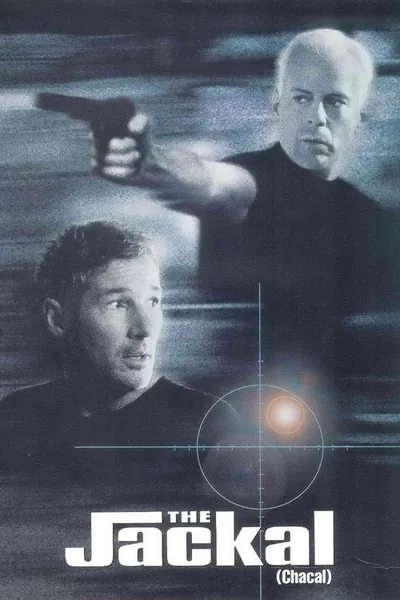 The Jackal1997
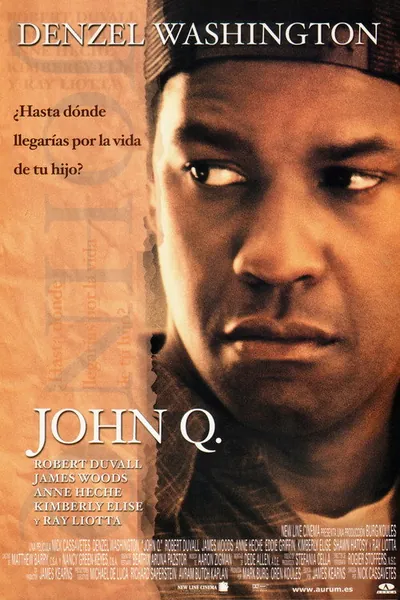 John Q2002
 Dave1993
 The Long Kiss Goodnight1996
 The Stepford Wives2004
 America's Sweethearts2001
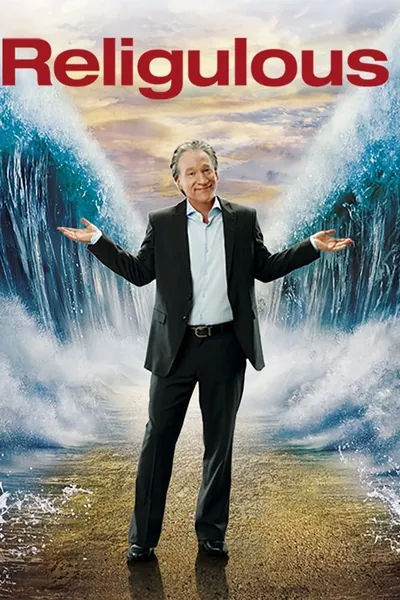 Religulous2008
 Primary Colors1998
- Ghostbusters 1984 · cast
- Lost in America 1985 · cast
- The Exorcist III 1990 · cast
- Dave 1993 · cast
- The Cable Guy 1996 · cast
- The Long Kiss Goodnight 1996 · cast
- Contact 1997 · cast
- The Jackal 1997 · cast
- Mad City 1997 · cast
- An Alan Smithee Film: Burn Hollywood Burn 1997 · cast
- Enemy of the State 1998 · cast
- Primary Colors 1998 · cast
- Bulworth 1998 · cast
- The Kid 2000 · cast
- The Contender 2000 · cast
- America's Sweethearts 2001 · cast
- John Q 2002 · cast
- The Stepford Wives 2004 · cast
- Religulous 2008 · cast
- Swing Vote 2008 · cast
Original Cinematopedia text based on Wikipedia (es) and Wikipedia (en) and Wikidata.