
Lajos Bíró
1880–1948 · Hungarian novelist, playwright and screenwriter
Biography
Lajos Bíró (Nagyvárad, 1880 – London, 1948) was a Hungarian novelist, playwright and screenwriter. He is remembered mainly for the scripts he wrote for historical and period films during the European cinema of the 1920s, 1930s and 1940s. Alongside his film work he was a journalist and a public figure in post-war Hungary, where he took part in political life.
Born in Nagyvárad, in the Kingdom of Hungary, now Oradea in Romania, he came from a Hungarian Jewish family, though some sources give Vienna as his birthplace. After school he worked as a newspaper writer in Paris, then in Oradea from 1900 and in Budapest from 1905. He became deputy editor of the Pesti Napló in 1904 and wrote sharply anti-militarist articles during the First World War. Under the Károlyi government he was appointed State Secretary for Foreign Affairs, and he later presided over the Writers' Union. After the fall of the Hungarian Soviet Republic in 1919 he was forced into exile, living first in Austria, France and Germany, then in the United States from 1925 to 1928, and from 1932 in England.
In Britain he served as scenario chief at London Film Productions, the company run by Alexander Korda, and wrote many screenplays with Arthur Wimperis. In 1929 he was nominated for the Academy Award for Best Original Writing for The Last Command, but the prize went to Ben Hecht for Underworld. His early writing was shaped by naturalism, and his short stories examined the contradictions of bourgeois morality. He died of a heart attack in London in 1948 and is buried in the northern section of Hampstead Cemetery. His legacy lies mainly in the historical and literary adaptations of British cinema in the 1930s.
Key films
- The Last Command (1928)
- The Thief of Bagdad (1940)
- The Private Life of Henry VIII (1933)
- The Scarlet Pimpernel (1934)
- Rembrandt (1936)
Trivia
An Oscar nomination
In 1929 he was nominated for the Academy Award for Best Original Writing for The Last Command. The award went to Ben Hecht for Underworld, the only other nominee in that category.
A disputed birthplace
Most sources place his birth in Nagyvárad, but some say he was born in Vienna, so the detail is not settled.
On Cinematopedia
 The Last Command1928
 The Private Life of Henry VIII1933
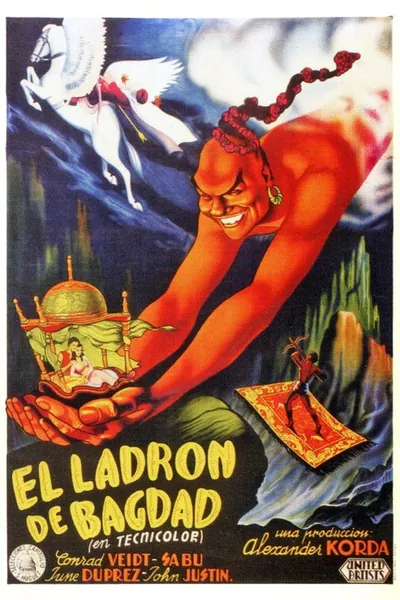 The Thief of Bagdad1940
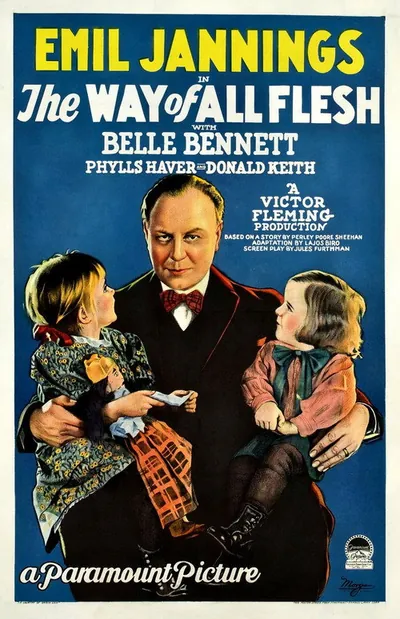 The Way of All Flesh1927
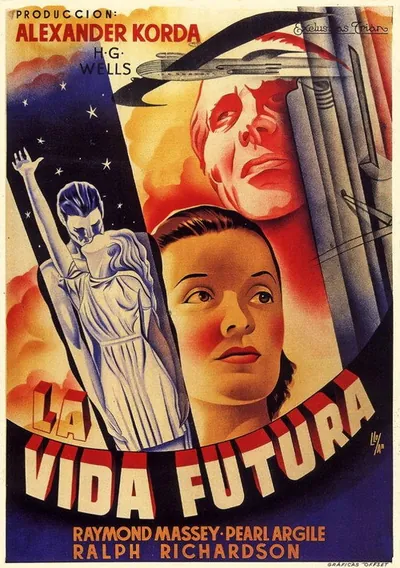 Things to Come1936
 Knight Without Armour1937
 The Scarlet Pimpernel1934
 The Drum1938The Prince and the Pauper1920The Prince and the Pauper1920
 Hotel Imperial1927
 Rembrandt1936
 Tragedy in the House of Habsburg1924
- The Prince and the Pauper 1920 · screenplay
- Tragedy in the House of Habsburg 1924 · screenplay
- The Way of All Flesh 1927 · screenplay
- Hotel Imperial 1927 · screenplay
- A Modern Dubarry 1927 · screenplay
- The Last Command 1928 · screenplay
- Service for Ladies 1932 · screenplay
- Wedding Rehearsal 1932 · screenplay
- The Private Life of Henry VIII 1933 · screenplay
- The Scarlet Pimpernel 1934 · screenplay
- Sanders of the River 1935 · screenplay
- Things to Come 1936 · screenplay
- Rembrandt 1936 · screenplay
- Knight Without Armour 1937 · screenplay
- Dark Journey 1937 · screenplay
- The Drum 1938 · screenplay
- The Thief of Bagdad 1940 · screenplay
Original Cinematopedia text based on Wikipedia (en) and Wikidata.