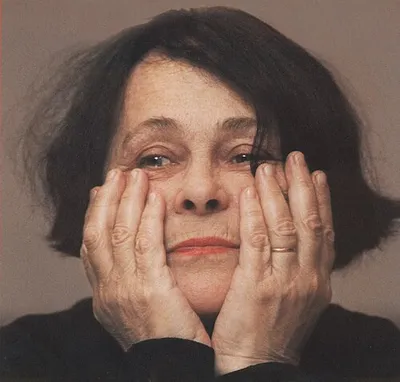
Kira Muratova
1934–2018 · Ukrainian film director, screenwriter and actress of Romanian origin
Biography
Kira Muratova (born in Soroca, Romania, in 1934; died in Odesa, Ukraine, in 2018) was a Ukrainian film director, screenwriter and actress of Romanian origin, and one of the most idiosyncratic figures of Soviet and post-Soviet cinema. She spent most of her career at the Odesa Film Studio, and her work, built on experimentation and close attention to ordinary life, spans Soviet censorship, the freedom of glasnost and the years after the USSR collapsed.
She began studying philology at Moscow State University before switching to directing at VGIK, where she trained under Sergei Gerasimov. She graduated in 1959 and from 1961 worked in Odesa. There she developed the themes that would define her: the psychological complexity of her characters, human coexistence and the everyday lives of ordinary people. In 1965 she co-directed Our Daily Bread with her husband, Aleksandr Muratov.
Under Soviet rule, her films were judged to lack civic spirit. Brief Encounters (1967), which had very limited distribution, and Long Farewells (1971), which was not released until 1987, were banned. Despite their simple plots, both used techniques rare in the Soviet Union, including heavy use of close-ups, narrative jumps and a split between what is heard and what is seen. Between 1971 and 1985 she made only two more films: Getting to Know the Big Wide World (1979), where she abandoned experimentation, and Among Grey Stones (1983), which was mutilated by the censors and credited to the pseudonym Ivan Sidorov.
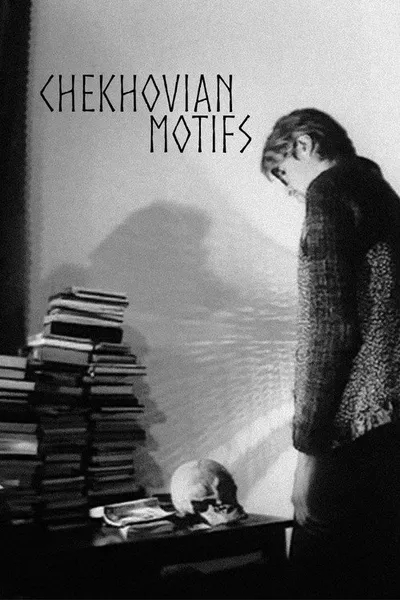
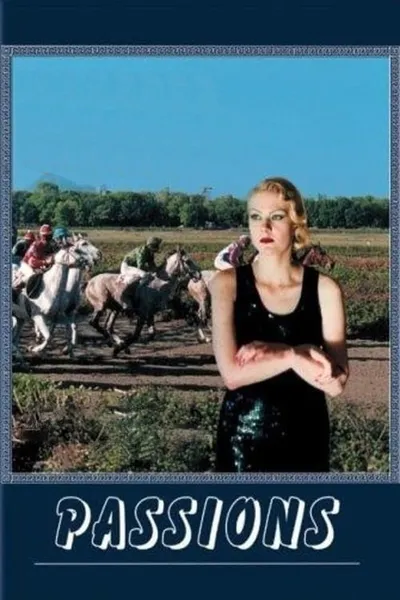
Her mature period came with glasnost. The Asthenic Syndrome (1989), which uses black-and-white and colour as symbols of political transition, portrays a Russian society frozen before the leap into capitalism. The Sentimental Policeman (1992) received weak reviews, while Passions (1994), the most accessible of her films, won the Nika Award. Three Stories (1997) and Chekhov's Motifs (2002), an absurdist adaptation of Chekhov, consolidated her style. In 2004 she directed The Tuner, which won a Nika for best director and the Lily d'Or.
Her cinema combines ugliness, a deliberate cruelty towards the viewer and the absurd, and it sits close to the so-called 'sad cinema' that emerged with glasnost. She repeatedly worked with the same actors and crews, including Renata Litvinova. Her legacy is that of a personal, hard-to-classify author, recognised with the Shevchenko National Prize in 1993 and with retrospectives in New York (2005) and Rotterdam (2013).
Key films
- Brief Encounters (1967), banned by Soviet censors, about a love triangle in a Russian province.
- The Asthenic Syndrome (1989), her most celebrated film, about a society in political transition.
- Passions (1994), her most accessible film, which won the Nika Award.
- Three Stories (1997), a cynical yet compassionate triptych on modern society.
- Chekhov's Motifs (2002), an absurdist adaptation of Anton Chekhov built around a wedding filmed almost in real time.
Trivia
A film held back for years
Long Farewells was shot in 1971, but Soviet authorities blocked it and it did not reach cinemas until 1987.
A confession about Passions
The director herself admitted that Passions was a deliberately superficial film, far from her own idea of art cinema.
A false name after the cuts
Among Grey Stones, mutilated by the censors, was credited to the pseudonym Ivan Sidorov.
On Cinematopedia
 Brief Encounters
 The Asthenic Syndrome
 A Long Goodbye
 Getting to Know the Big Wide World
 Three Stories
 The Tuner
 Chekhov's Motifs
 Passions
 Two in One
Original Cinematopedia text based on Wikipedia (es) and Wikipedia (en) and Wikidata.