
Kinuyo Tanaka
1909–1977 · Japanese actress and film director
Biography
Kinuyo Tanaka (Shimonoseki, 29 November 1909 – Tokyo, 21 March 1977) was one of the defining actresses of classic Japanese cinema and, after a long career in front of the camera, the second Japanese woman to direct a feature film. Her career, which spanned more than fifty years, helped open a path for women behind the camera in a studio system that had been dominated by men.
Born into a family of kimono merchants, she trained as a biwa player and joined an operetta troupe in Osaka before making her screen debut in 1924. She signed with Shochiku, where she became a major star during the 1930s, and her popularity was such that several directors used her name in film titles. She worked with Yasujirō Ozu, Heinosuke Gosho and others, and from 1940 she began a long partnership with Kenji Mizoguchi, appearing in around fifteen of his films, including The Life of Oharu and Ugetsu. Many of these stories followed women mistreated by their families, lovers and society.
After a three-month visit to the United States in 1949, as one of Japan's first postwar cultural envoys, she left Shochiku to work freelance and choose her own collaborators. In 1953 she made her directing debut with Love Letter, a romantic drama set at the end of the Second World War. Later films included The Moon Has Risen, scripted by Ozu, and The Eternal Breasts (1955), about the tanka poet Fumiko Nakajo, which is often considered her most important work as a director for its treatment of divorce, women's independence and breast cancer. She went on to make The Wandering Princess (1960), Women of the Night (1961) and Ogin-sama (1962), which closed her directing career.
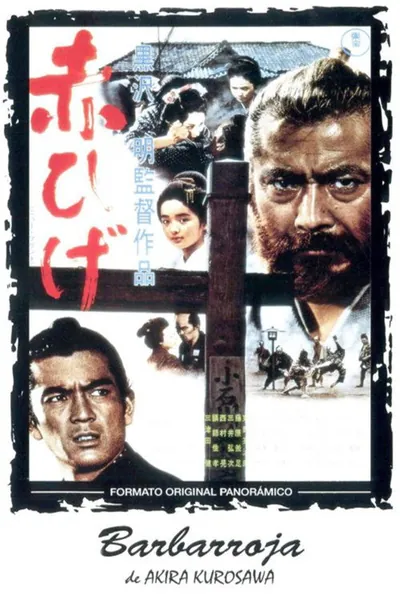
She kept acting in films such as The Ballad of Narayama, which earned her a Kinema Junpo award, and in Kurosawa's Red Beard. In 1975 she won the Silver Bear for Best Actress at the Berlin International Film Festival for Sandakan No. 8. Her name lives on in the Kinuyo Tanaka Award, presented since 1985 at the Mainichi Film Concours, and in renewed international interest in her films since the early 2010s.
Key films
- I Graduated, But... (1929), directed by Yasujirō Ozu, one of her early leading roles.
- The Life of Oharu (1952), directed by Kenji Mizoguchi, one of her most celebrated performances.
- Sansho the Bailiff (1954), directed by Mizoguchi, which strengthened her international reputation.
- Love Letter (1953), her directing debut.
- The Eternal Breasts (1955), her best-known work behind the camera.
- Sandakan No. 8 (1974), which earned her the Silver Bear.
Trivia
Berlin prize
For Sandakan No. 8 she won the Silver Bear for Best Actress at the Berlin festival in 1975, at the age of 65.
A pioneer behind the camera
She was the second Japanese woman to direct a film, after Tazuko Sakane, and her debut came with Love Letter in 1953.
On Cinematopedia
 Ugetsu1953
 Red Beard1965
 Sansho the Bailiff1954
 The Life of Oharu1952
 Sandakan No. 81974
 I Graduated, But...1929
 Equinox Flower1958
 Dragnet Girl1933
 The Munekata Sisters1950
 Miss Oyu1951
 The Ballad of Narayama1958
 A Hen in the Wind1948
- I Graduated, But... 1929 · cast
- The Neighbor's Wife and Mine 1931 · cast
- Dragnet Girl 1933 · cast
- Woman of Tokyo 1933 · cast
- The Dancing Girl of Izu 1933 · cast
- Army 1944 · cast
- Utamaro and His Five Women 1946 · cast
- The Love of the Actress Sumako 1947 · cast
- A Hen in the Wind 1948 · cast
- Women of the Night 1948 · cast
- Flame of My Love 1949 · cast
- The Munekata Sisters 1950 · cast
- Miss Oyu 1951 · cast
- The Lady of Musashino 1951 · cast
- Ginza Cosmetics 1951 · cast
- The Life of Oharu 1952 · cast
- Mother 1952 · cast
- Ugetsu 1953 · cast
- Love Letter 1953 · director, cast
- Where Chimneys Are Seen 1953 · cast
- Sansho the Bailiff 1954 · cast
- The Woman in the Rumor 1954 · cast
- The Moon Has Risen 1955 · director
- The Eternal Breasts 1955 · director
- Arashi 1956 · cast
- Flowing 1956 · cast
- Stepbrothers 1957 · cast
- Equinox Flower 1958 · cast
- The Ballad of Narayama 1958 · cast
- The Wandering Princess 1960 · director
- Her Brother 1960 · cast
- Girls of the Night 1961 · director
- A Wanderer's Notebook 1962 · cast
- Love under the Crucifix 1962 · director
- A Legend or Was It? 1963 · cast
- Red Beard 1965 · cast
- Sandakan No. 8 1974 · cast
- Cape of North 1976 · cast
Original Cinematopedia text based on Wikipedia (es) and Wikipedia (en) and Wikidata.