
Karel Štěpánek
1899–1980 · Czech actor and singer
Biography
Karel Štěpánek (Brno, 1899 – London, 1980) was a Czech actor and singer who spent many years in Austria and Germany, where he mostly played German-speaking roles. After leaving Nazi Germany he settled in Britain in 1939, and most of his screen career unfolded there.
Born in Brno, then part of Austria-Hungary, he trained in acting and classical singing before starting on stage in 1920. He worked in Vienna and Graz, then moved to Berlin in 1927, where he combined theatre, opera and cabaret. His film debut came in 1928 with a silent romance, and through the following decade he took mostly supporting parts in German productions, often billed as Karl Stepanek.
In 1939 he reached Britain, where he worked for the BBC's overseas service writing and recording propaganda broadcasts in German and Czech. From 1942, beginning with Secret Mission, he built a second career playing Nazi villains in wartime films, alongside other German-speaking emigré actors such as Conrad Veidt. He stayed on after the war and appeared in dozens of films and television series, usually as a villain. His legacy rests largely on that gallery of postwar British screen antagonists.
Key films
- The Third Man (1949): in a brief uncredited role as an actor at the Josefstadt Theatre, in Carol Reed's classic.
- The Fallen Idol (1948): as a first secretary at the embassy, in Carol Reed's drama about a boy and a diplomat.
- Anastasia (1956): as Mikhail Vlados, in Anatole Litvak's version.
- Our Man in Havana (1959): as Dr. Braun, one of the German scientists in Carol Reed's satire.
- Sink the Bismarck! (1960): as Admiral Günther Lütjens, in the British war film about the sinking of the battleship.
- Operation Crossbow (1965): as Professor Hoffer, in the film about the Allied campaign against the V-2 rockets.
On Cinematopedia
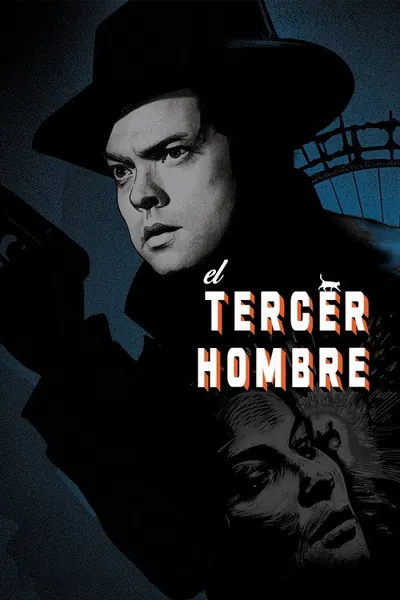 The Third Man1949
 Anastasia1956
 The Fallen Idol1948
 The Heroes of Telemark1965
 Sink the Bismarck!1960
 Operation Crossbow1965
 Affair in Trinidad1952
 Our Man in Havana1959
 No Highway in the Sky1951
 Conspirator1949
 A Prize of Gold1955Berlin Alexanderplatz1931Berlin Alexanderplatz1931
- Berlin Alexanderplatz 1931 · cast
- Here's Berlin 1932 · cast
- The Leghorn Hat 1939 · cast
- Secret Mission 1942 · cast
- The Fallen Idol 1948 · cast
- The Third Man 1949 · cast
- Conspirator 1949 · cast
- Give Us This Day 1949 · cast
- Cairo Road 1950 · cast
- No Highway in the Sky 1951 · cast
- Affair in Trinidad 1952 · cast
- A Prize of Gold 1955 · cast
- Man of the Moment 1955 · cast
- Anastasia 1956 · cast
- Our Man in Havana 1959 · cast
- Sink the Bismarck! 1960 · cast
- Brainwashed 1960 · cast
- Terror After Midnight 1962 · cast
- The Heroes of Telemark 1965 · cast
- Operation Crossbow 1965 · cast
- Murderers Club of Brooklyn 1967 · cast
- Before Winter Comes 1969 · cast
Original Cinematopedia text based on Wikipedia (en) and Wikidata.