
Judy Geeson
b. 1948 · English film, stage and television actress
Biography
Judy Geeson (born 10 September 1948 in Arundel, Sussex) is an English actress who has worked in film, stage and television since the 1960s. Her career began mainly on British television and moved into a wide range of films, from crime and thrillers to horror, before she settled in the United States and continued working there.
She made her stage debut in 1957 and became known to British audiences through the BBC series The Newcomers. Her breakthrough film role came in 1967 with To Sir, with Love, alongside Sidney Poitier, and she followed it with 10 Rillington Place and Brannigan, the latter opposite John Wayne. Through the 1970s and 1980s she returned often to horror, in films such as A Candle for the Devil and Inseminoid. After relocating to Los Angeles in 1984, she found steady work in American television, most notably as the hostile neighbour Maggie Conway in Mad About You. In 2012 she returned to the genre with Rob Zombie's The Lords of Salem, marking her return to acting after a nine-year absence.
Key films
- To Sir, with Love (1967): her major film debut, opposite Sidney Poitier.
- 10 Rillington Place (1970): one of her most remembered performances in British cinema of the 1970s.
- Brannigan (1975): a crime film starring John Wayne, with Geeson as a detective sergeant.
- The Eagle Has Landed (1976): a wartime thriller in which she plays Pamela.
- A Candle for the Devil (1973): one of her horror titles of the decade, released internationally as It Happened at Nightmare Inn.
- The Lords of Salem (2012): her return to horror under Rob Zombie.
Trivia
An antiques business
For about ten years Geeson ran Blanche & Co, an antiques shop in Beverly Hills, which closed in December 2009.
Shakespeare in Watts
In 1980 she volunteered, alongside Jenny Agutter, Ian McKellen, Timothy Dalton and Olivia Hussey, to teach children in Watts, Los Angeles, about Shakespeare.
On Cinematopedia
 The Eagle Has Landed1976
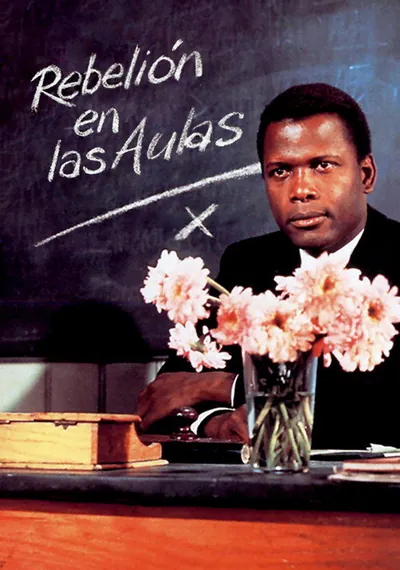 To Sir, with Love1967
 Brannigan1975
 The Lords of Salem2012
 312016
 Berserk!1967
 10 Rillington Place1971
 The Executioner1970
 Carry On England1976
 Inseminoid1981
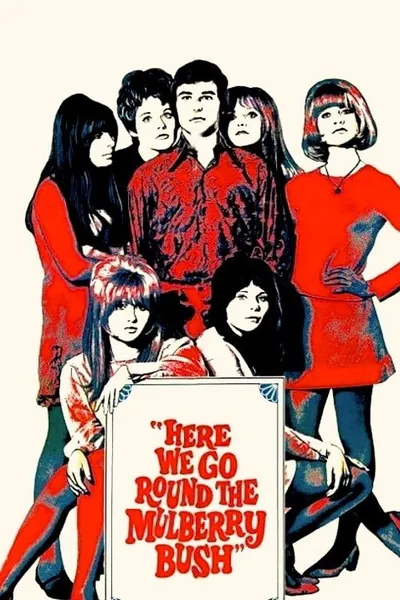 Here We Go Round the Mulberry Bush1968
 Fear in the Night1972
- To Sir, with Love 1967 · cast
- Berserk! 1967 · cast
- Here We Go Round the Mulberry Bush 1968 · cast
- Hammerhead 1968 · cast
- Three Into Two Won't Go 1969 · cast
- The Executioner 1970 · cast
- 10 Rillington Place 1971 · cast
- Fear in the Night 1972 · cast
- Doomwatch 1972 · cast
- Brannigan 1975 · cast
- The Eagle Has Landed 1976 · cast
- Carry On England 1976 · cast
- Dominique 1978 · cast
- Inseminoid 1981 · cast
- The Lords of Salem 2012 · cast
- 31 2016 · cast
Original Cinematopedia text based on Wikipedia (es) and Wikipedia (en) and Wikidata.