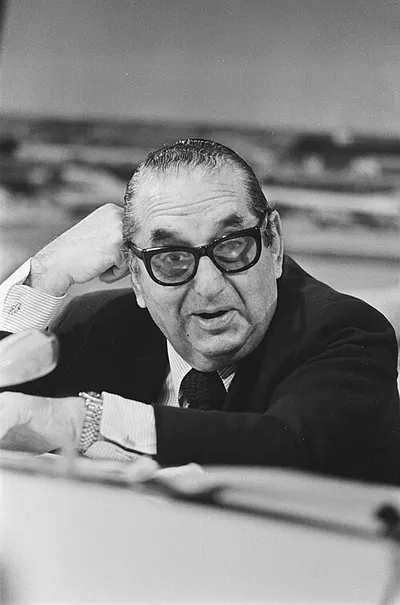
Joseph E. Levine
1905–1987 · American film producer and distributor
Biography
Joseph E. Levine (Boston, 1905 - Greenwich, 1987) was an American producer and distributor who played a major part in how films were sold to the public in the second half of the twentieth century. He is credited, in one capacity or another, with some 497 films.
The youngest of six children of a Russian-Jewish immigrant tailor, he grew up in a poor Boston neighborhood and left school at fourteen. After a series of small business ventures, he settled in New Haven as an exhibitor and distributor in New England. In 1956 he brought Godzilla, King of the Monsters! to American audiences with a large-scale advertising campaign that became his trademark, and that same year he founded Embassy Pictures, which focused mainly on European art-house films. His peak of prestige came in the sixties with Two Women, whose Oscar success made Sophia Loren the first foreign-language cast member to win Best Actress, and with The Graduate (1967), which he sold that year to Avco.
Levine died in Greenwich in 1987, aged 81. His legacy lies in his approach to film promotion and his eye for backing little-known projects and talent.
Key films
- Two Women (1960), produced and promoted by Levine, earned Sophia Loren the Academy Award for Best Actress.
- Contempt (1963), directed by Jean-Luc Godard and distributed by Levine in the United States.
- Godzilla, King of the Monsters! (1956), the American version of the Japanese film that launched his career as a distributor.
- The Graduate (1967), his biggest commercial success, which marked the start of a new era in Hollywood.
- Harlow (1965), a biopic of Jean Harlow starring Carroll Baker, which flopped despite heavy pre-publicity.
Trivia
A controversial slogan
To promote the film Ravaged Earth, Levine wrote advertisements that reflected the anti-Japanese sentiment of the wartime period, language later considered offensive.
A sale that made him rich
In 1967 he sold Embassy Pictures to Avco for about 40 million dollars, a deal he later described as a horrible mistake that made him rich.
On Cinematopedia
 The Graduate1967
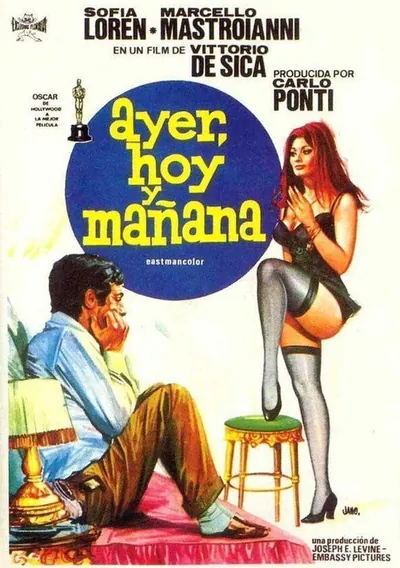 Yesterday, Today and Tomorrow1963
 Contempt1963
 A Bridge Too Far1977
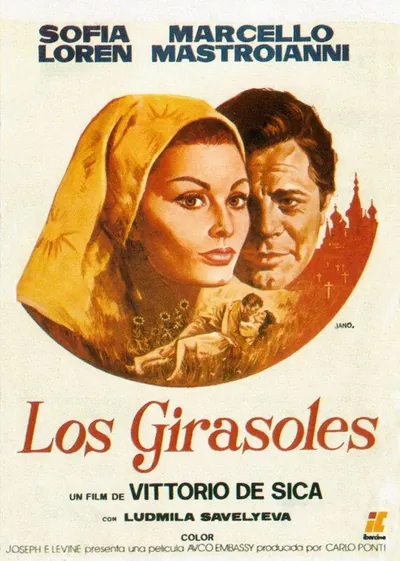 Sunflower1970
 They Call Me Trinity1970
 Carnal Knowledge1971
 Long Day's Journey into Night1962
 Nevada Smith1966
 Santa Claus Conquers the Martians1964
 The Day of the Dolphin1973
 The Carpetbaggers1964
- Godzilla, King of the Monsters! 1956 · producer
- Morgan the Pirate 1960 · producer
- The Wonders of Aladdin 1961 · producer
- Long Day's Journey into Night 1962 · producer
- Yesterday, Today and Tomorrow 1963 · producer
- Contempt 1963 · producer
- Santa Claus Conquers the Martians 1964 · producer
- The Carpetbaggers 1964 · producer
- Where Love Has Gone 1964 · producer
- Harlow 1965 · producer
- Nevada Smith 1966 · producer
- The Spy with a Cold Nose 1966 · producer
- The Graduate 1967 · producer
- Woman Times Seven 1967 · producer
- Sunflower 1970 · producer
- They Call Me Trinity 1970 · producer
- Carnal Knowledge 1971 · producer
- The Day of the Dolphin 1973 · producer
- A Bridge Too Far 1977 · producer
- Magic 1978 · producer
Original Cinematopedia text based on Wikipedia (es) and Wikipedia (en) and Wikidata.