
José Antonio de la Loma
1924–2004 · Spanish film director and screenwriter, associated with the quinqui cinema
Biography
José Antonio de la Loma (Barcelona, 1924-2004) was a Spanish director and screenwriter. He worked in the western genre during the 1960s, but he is best remembered for launching the quinqui cinema, a socially minded style focused on young delinquents from the marginal neighbourhoods of big cities.
The son of a military officer, he first worked as a schoolteacher in Barcelona's Barrio Chino during the 1940s. As a university student he became drawn to acting through the Teatro Español Universitario, and he co-founded the company El Corral with Juan Germán Schroeder. He made his debut as a filmmaker in 1953 with an adaptation of a play by Ángel Guimerá.
After a run of spaghetti westerns, he turned to socially critical films about young criminals raised in the peripheries of large cities. His casts included non-professional teenagers who sometimes played versions of their own lives, as seen in Perros callejeros (1977). He also wrote novels, among them Sin la sonrisa de Dios (1949).
He died in Barcelona in 2004, aged 80, about four months after Juan José Moreno Cuenca, El Vaquilla, whom he had directed and whose mentor he had been in a sense. His legacy is tied to quinqui cinema, and his career was recognised with the Medallas del Círculo de Escritores Cinematográficos.
Key films
- Cuatro en la frontera (1958): one of his early films, made before his western period.
- El magnífico Tony Carrera (1968): a western from the period when he made several titles in the genre.
- Perros callejeros (1977): the first major title of quinqui cinema, starring Ángel Fernández Franco.
- Yo, el Vaquilla (1985): directed by De la Loma, with Juan José Moreno Cuenca playing a version of himself.
Trivia
Schoolteacher in the Barrio Chino
Before working in film, he was a schoolteacher in Barcelona's Barrio Chino during the 1940s.
Outlived El Vaquilla
He died about four months after Juan José Moreno Cuenca, El Vaquilla, whom he had directed and with whom he had a close personal bond.
On Cinematopedia
 Wild Kurdistan1965
 $100,000 for Ringo1965
 The Sea Pirate1966
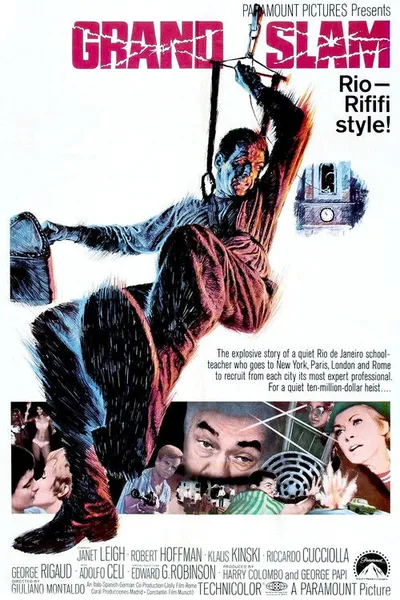 Grand Slam1967
 Street Warriors1977
 Cuatro en la frontera1958
 The Last Tomahawk1965Kingdom of the Silver Lion1965Kingdom of the Silver Lion1965
 Perché uccidi ancora1965
 Conquest1983
 Doc, Hands of Steel1965
 Five Thousand Dollars on One Ace1965
- Cuatro en la frontera 1958 · screenplay
- Wild Kurdistan 1965 · screenplay
- $100,000 for Ringo 1965 · screenplay
- The Last Tomahawk 1965 · screenplay
- Kingdom of the Silver Lion 1965 · screenplay
- Perché uccidi ancora 1965 · director
- Doc, Hands of Steel 1965 · screenplay
- Five Thousand Dollars on One Ace 1965 · screenplay
- Toto of Arabia 1965 · director
- The Sea Pirate 1966 · screenplay
- Lightning Bolt 1966 · screenplay
- Grand Slam 1967 · screenplay
- Clint the Stranger 1967 · screenplay
- Red Blood, Yellow Gold 1967 · screenplay
- The Magnificent Tony Carrera 1968 · director, screenplay
- The Boldest Job in the West 1972 · director, screenplay
- Street Warriors 1977 · director, screenplay
- Conquest 1983 · screenplay
- I, 'The Heifer' 1985 · director, editing
Original Cinematopedia text based on Wikipedia (es) and Wikidata.