
Jason Robards
1922–2000 · American stage and film actor
Biography
Jason Robards (Chicago, 1922 – Bridgeport, Connecticut, 2000) was an American stage and film actor who won Academy Awards, a Tony and an Emmy. He is best remembered as the leading interpreter of Eugene O'Neill's plays, and his career spans the New York stage of the 1950s and the American screen into the 1990s.
The son of silent-era character actor Jason Robards Sr., whose career faded with the arrival of sound, Robards saw his family move from New York to Los Angeles when he was a child, and lived through his parents' divorce. After graduating from high school in 1940 he joined the US Navy. As a radioman he served on the cruiser Northampton, which was sunk at the Battle of Tassafaronga in 1942, and later on the Nashville, struck by a kamikaze aircraft in December 1944 during the Mindoro invasion. After the war, on his father's advice, he trained at the American Academy of Dramatic Arts in New York.
His career began on radio and Broadway. In 1956 he starred in José Quintero's production of O'Neill's The Iceman Cometh, and that same year he played James Tyrone Jr. in Long Day's Journey into Night. He won the Tony Award for Best Actor in a Play for Budd Schulberg's The Disenchanted in 1959, the same year he made his feature debut in Anatole Litvak's The Journey.
During the 1960s he took on a wide range of parts: the psychiatrist in Henry King's Tender Is the Night (1962), the troubled son in Sidney Lumet's Long Day's Journey into Night (1962), Al Capone in Roger Corman's The St. Valentine's Day Massacre (1967), and Sergio Leone's Once Upon a Time in the West (1968). In the 1970s he worked repeatedly with Sam Peckinpah, on The Ballad of Cable Hogue and Pat Garrett and Billy the Kid. In 1972 a car accident linked to his drinking left him badly injured, and he later underwent extensive facial reconstruction before returning to work.
His breakthrough with mainstream audiences came with two Hollywood films: All the President's Men (1976), in which he played editor Ben Bradlee, and Julia (1977), in which he played Dashiell Hammett. Both roles brought him consecutive Academy Awards for Best Supporting Actor. He received a further Oscar nomination for Melvin and Howard (1980), directed by Jonathan Demme.
In the 1980s he divided his time between film and television, appearing in the TV movie The Day After (1983) and the comedy Parenthood (1989). He also won a Primetime Emmy in 1988 for his role in the television adaptation of Inherit the Wind. In the 1990s he made Philadelphia (1993) and Magnolia (1999), the latter his last major big-screen appearance. He died of cancer in December 2000.
Robards was above all a stage actor, and he appeared on New York stages many times. He was married to Lauren Bacall, whom he met while working on a new version of the 1942 Tracy and Hepburn film Woman of the Year.
Key films
- Long Day's Journey into Night (1962): as the troubled son Jamie Tyrone, in Sidney Lumet's adaptation of the O'Neill play he had already performed on stage.
- All the President's Men (1976): as editor Ben Bradlee, in the Watergate drama that won him his first Academy Award.
- Julia (1977): as writer Dashiell Hammett, earning his second consecutive Oscar.
- Melvin and Howard (1980): his Oscar-nominated role in Jonathan Demme's film.
- Philadelphia (1993): one of his major successes of the 1990s.
- Magnolia (1999): his last major appearance on the big screen, in Paul Thomas Anderson's film.
Trivia
A kamikaze strike on the Nashville
In December 1944, during the Mindoro invasion, a kamikaze aircraft hit the Nashville, causing 223 casualties. Robards was part of its crew.
Two Oscars in a row
In 1976 and 1977 he won the Academy Award for Best Supporting Actor in consecutive years, for All the President's Men and Julia.
A medal often credited to him in error
He is often said to have received the Navy Cross for his service, but that claim is inaccurate and traces back to a 1979 newspaper column.
On Cinematopedia
 Julia1977
 All the President's Men1976
 Magnolia1999
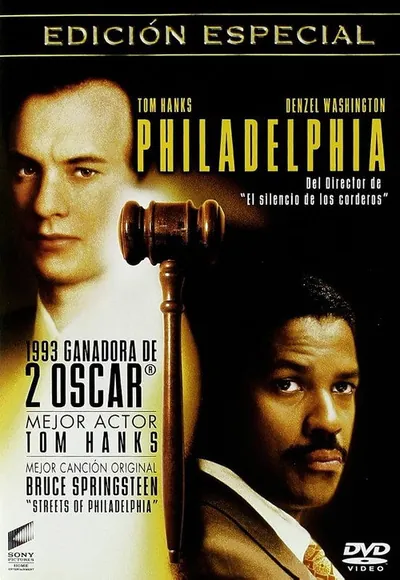 Philadelphia1993
 Once Upon a Time in the West1968
 Tora! Tora! Tora!1970
 Crimson Tide1995
 Enemy of the State1998
 Melvin and Howard1980
 A Thousand Clowns1965
 Johnny Got His Gun1971
 The Day After1983
- The Journey 1959 · cast
- Long Day's Journey into Night 1962 · cast
- Tender Is the Night 1962 · cast
- A Thousand Clowns 1965 · cast
- A Big Hand for the Little Lady 1966 · cast
- The St. Valentine's Day Massacre 1967 · cast
- Hour of the Gun 1967 · cast
- Divorce American Style 1967 · cast
- Once Upon a Time in the West 1968 · cast
- Isadora 1968 · cast
- Tora! Tora! Tora! 1970 · cast
- The Ballad of Cable Hogue 1970 · cast
- Julius Caesar 1970 · cast
- Operation Snafu 1970 · cast
- Johnny Got His Gun 1971 · cast
- Pat Garrett and Billy the Kid 1973 · cast
- A Boy and His Dog 1975 · cast
- All the President's Men 1976 · cast
- Julia 1977 · cast
- Comes a Horseman 1978 · cast
- Hurricane 1979 · cast
- Melvin and Howard 1980 · cast
- Raise the Titanic 1980 · cast
- Caboblanco 1980 · cast
- The Legend of the Lone Ranger 1981 · cast
- The Day After 1983 · cast
- Something Wicked This Way Comes 1983 · cast
- Bright Lights, Big City 1988 · cast
- The Good Mother 1988 · cast
- Parenthood 1989 · cast
- Black Rainbow 1989 · cast
- Dream a Little Dream 1989 · cast
- Quick Change 1990 · cast
- Philadelphia 1993 · cast
- The Adventures of Huck Finn 1993 · cast
- The Trial 1993 · cast
- The Paper 1994 · cast
- Crimson Tide 1995 · cast
- A Thousand Acres 1997 · cast
- Enemy of the State 1998 · cast
- Beloved 1998 · cast
- Magnolia 1999 · cast
- My Best Fiend 1999 · cast
Original Cinematopedia text based on Wikipedia (es) and Wikipedia (en) and Wikidata.