
Jacques Rivette
1928–2016 · French film director, screenwriter and critic associated with the New Wave
Biography
Jacques Rivette (Rouen, 1928 – Paris, 2016) was a French film director, screenwriter and critic, closely linked to the New Wave and to the magazine Cahiers du Cinéma. Alongside Godard, he is regarded as one of the most idiosyncratic and influential figures of that movement. His films often unfold in unconventional ways, blending romance, mystery and comedy, with improvised scenes and running times that are frequently very long.
Born in Rouen into a family of pharmacists, he discovered cinema through the ciné-clubs. Inspired by Jean Cocteau's book on the making of Beauty and the Beast, he resolved to become a filmmaker. In 1948 he shot his first short, Aux Quatre Coins, and the following year moved to Paris, where he frequented the Cinémathèque and the ciné-clubs of the Latin Quarter. There he met Rohmer, Godard, Truffaut and others who would form the core of the New Wave. He began writing criticism in 1950 and joined Cahiers du Cinéma in 1953, later becoming its editor in chief in 1963. With Truffaut he conducted a widely read series of interviews with directors he admired.
His first feature, Paris Belongs to Us (1960), came out after several colleagues had already made their debuts. The Nun (1966), an adaptation of Diderot, brought him prestige, though French censorship banned it for a few months. After L'Amour fou (1969) he made Out 1 (1971), a thirteen-hour work that is rarely screened but prized by cinephiles. The 1970s brought lighter, more fantastical films such as Céline and Julie Go Boating (1974), while in the 1980s he returned to plots, theatrical rehearsal and mystery. He gave his actors considerable freedom and often worked without a fixed script, handing over only a page of synopsis shortly before shooting.
In the 1990s he made La Belle Noiseuse (1991), about a painter and his model, and Haut bas fragile (1995), closer to comedy. Secret Défense (1998) returned to drama while paying tribute to American suspense films. He then made Va savoir (2001), Histoire de Marie et Julien (2003) and Ne touchez pas la hache (2007), based on Balzac. His final feature, 36 vues du Pic Saint-Loup (2009), was completed when he was past eighty.
Rivette always tied his cinema to theatre, which he saw as the sister art of film: "All films are about theatre; there is no other subject." Less visible than his peers in later years, he left behind a body of work that remains a touchstone for viewers seeking something different.
Key films
- Paris Belongs to Us (1960): his first feature, which showed the spirit of the New Wave before his colleagues released their own debuts.
- The Nun (1966): a theatrical adaptation of Diderot whose censorship dispute brought him wide attention.
- Out 1 (1971): a thirteen-hour work that condenses his experiments with actors and improvisation.
- Céline and Julie Go Boating (1974): a playful fantasy comedy about two women and everyday life spiralling out of control, often considered his most accessible film.
- La Belle Noiseuse (1991): a study of a painter and his model in the studio, one of his most sustained explorations of the creative process.
Trivia
Financing Le Quadrille
Godard produced and starred in the 1950 short Le Quadrille. To raise the money he stole and sold his grandfather's collection of rare first editions by Paul Valéry.
A rarely seen film
Out 1 (1971) runs about thirteen hours and has been screened only rarely. Much of its reputation among cinephiles rests on how hard it is to see.
Cocteau opens the door
At the 1950 Biarritz festival, the young members of the group were turned away at the entrance until Jean Cocteau allowed them in.
On Cinematopedia
 La Belle Noiseuse1991
 Céline and Julie Go Boating1974
 Lumière and Company1995
 Paris Belongs to Us1961
 The Nun1966The Glass Castle1950The Glass Castle1950
 Va savoir2001
 Out 11971
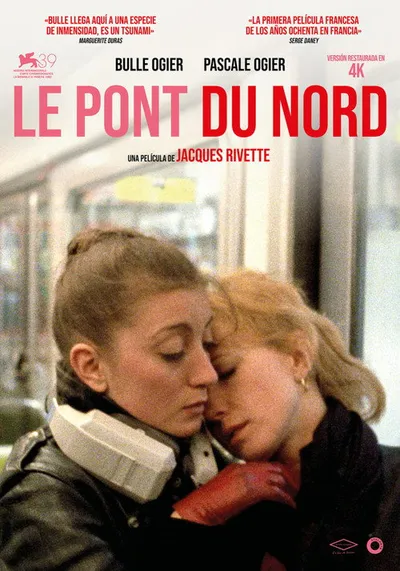 Le Pont du Nord1981
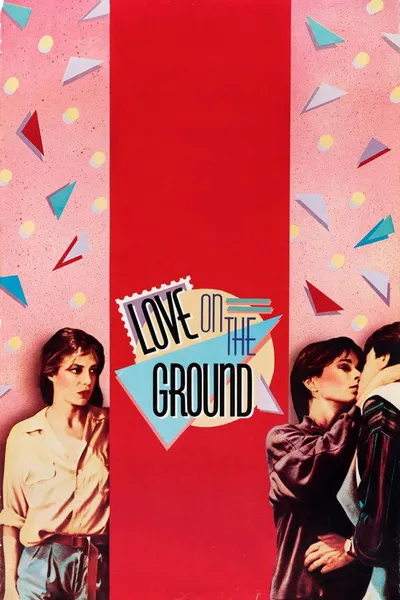 Love on the Ground1984
 Hurlevent1985
 Gang of Four1989
- The Glass Castle 1950 · cast
- Paris Belongs to Us 1961 · director, screenplay, cast
- The Nun 1966 · director, screenplay
- L'Amour fou 1969 · director, screenplay
- Out 1 1971 · director, screenplay
- Céline and Julie Go Boating 1974 · director, screenplay
- Noroît 1976 · director, screenplay
- Duelle 1976 · director, screenplay
- Merry-Go-Round 1980 · director, screenplay
- Le Pont du Nord 1981 · director, screenplay
- Love on the Ground 1984 · director, screenplay
- Hurlevent 1985 · director, screenplay
- Gang of Four 1989 · director, screenplay
- La Belle Noiseuse 1991 · director, screenplay
- Joan the Maid 1994 · director, screenplay
- Joan the Maiden, Part 1: The Battles 1994 · director, screenplay
- Lumière and Company 1995 · director, cast
- Up, Down, Fragile 1995 · director, screenplay, cast
- Secret Défense 1998 · director, screenplay
- Va savoir 2001 · director, screenplay
- The Story of Marie and Julien 2003 · director, screenplay
- The Duchess of Langeais 2006 · director, screenplay
- 36 Views from the Pic Saint-Loup 2009 · director, screenplay
- Two in the Wave 2009 · cast
Original Cinematopedia text based on Wikipedia (es) and Wikipedia (en) and Wikidata.