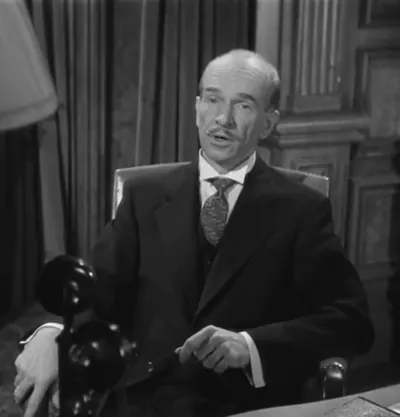
Ian Wolfe
1896–1992 · American character actor
Biography
Ian Wolfe (Canton, Illinois, 1896 – Los Angeles, California, 1992) was an American character actor who moved from the stage to film and television. With around 400 credits, his career spanned seven decades, from the mid-1930s until 1990.
Trained at the American Academy of Dramatic Arts, he began on the stage before making his film debut in 1934 with The Barretts of Wimpole Street. His precise diction, shaped by his theatre work, won him roles as Englishmen even though he was born in the United States. That led to a fictional Scotland Yard commissioner in the final Sherlock Holmes film of 1939–1946, and to parts in films directed by Alfred Hitchcock and George Lucas.
Part of his appeal was his appearance: for years he looked considerably older than he was. In Mad Love he played Colin Clive's stepfather, though he was only four years older than Clive. On television he had roles in shows such as Bonanza, Star Trek and WKRP in Cincinnati. His final screen credit was Dick Tracy (1990). Away from the screen, he wrote and self-published two books of poetry.
Key films
- Foreign Correspondent (1940): plays Stiles in Alfred Hitchcock's espionage thriller.
- Saboteur (1942): plays Robert, the butler, in another Hitchcock thriller.
- Julius Caesar (1953): appears in the film adaptation of Shakespeare's play.
- Rebel Without a Cause (1955): shares scenes with James Dean in this landmark youth drama.
- THX 1138 (1971): appears in George Lucas's feature debut, a dystopian science fiction film.
Trivia
A convincing older look
For years Wolfe was cast as older men, even though he was younger than some of his co-stars. In Mad Love he played Colin Clive's stepfather while being only four years older than Clive.
A self-published poet
Wolfe wrote and self-published two poetry books, Forty-Four Scribbles and a Prayer: Lyrics and Ballads and Sixty Ballads and Lyrics in Search of Music.
On Cinematopedia
 Mrs. Miniver1942
 You Can't Take It with You1938
 A Place in the Sun1951
 Mutiny on the Bounty1935
 Reds1981
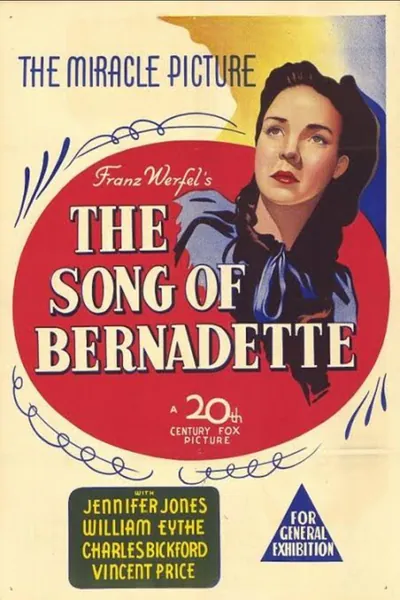 The Song of Bernadette1943
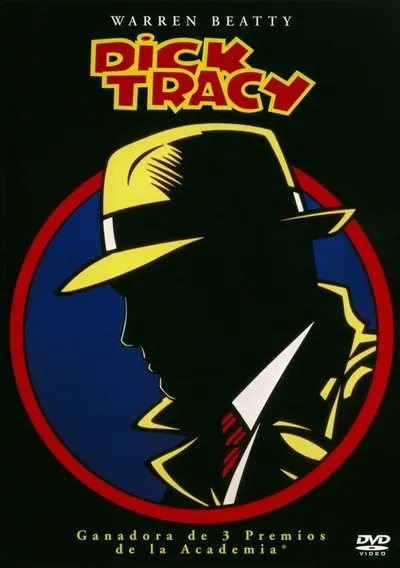 Dick Tracy1990
 Witness for the Prosecution1957
 Rebel Without a Cause1955
 Foreign Correspondent1940
 Seven Brides for Seven Brothers1954
 Julius Caesar1953
- The Barretts of Wimpole Street 1934 · cast
- Mutiny on the Bounty 1935 · cast
- The Raven 1935 · cast
- Mad Love 1935 · cast
- Clive of India 1935 · cast
- Romeo and Juliet 1936 · cast
- Conquest 1937 · cast
- The Prince and the Pauper 1937 · cast
- The Emperor's Candlesticks 1937 · cast
- You Can't Take It with You 1938 · cast
- Blondie 1938 · cast
- Allegheny Uprising 1939 · cast
- The Return of Doctor X 1939 · cast
- Foreign Correspondent 1940 · cast
- The Son of Monte Cristo 1940 · cast
- Mrs. Miniver 1942 · cast
- Random Harvest 1942 · cast
- Saboteur 1942 · cast
- The Song of Bernadette 1943 · cast
- Holy Matrimony 1943 · cast
- Corvette K-225 1943 · cast
- The Scarlet Claw 1944 · cast
- The Pearl of Death 1944 · cast
- The White Cliffs of Dover 1944 · cast
- The Invisible Man's Revenge 1944 · cast
- In Society 1944 · cast
- The Impostor 1944 · cast
- Love Letters 1945 · cast
- Confidential Agent 1945 · cast
- Dressed to Kill 1946 · cast
- Tomorrow Is Forever 1946 · cast
- Without Reservations 1946 · cast
- The Verdict 1946 · cast
- Bedlam 1946 · cast
- Pursued 1947 · cast
- California 1947 · cast
- If Winter Comes 1947 · cast
- They Live by Night 1948 · cast
- Mr. Blandings Builds His Dream House 1948 · cast
- Julia Misbehaves 1948 · cast
- Colorado Territory 1949 · cast
- My Friend Irma 1949 · cast
- No Way Out 1950 · cast
- The Magnificent Yankee 1950 · cast
- Copper Canyon 1950 · cast
- A Place in the Sun 1951 · cast
- The Great Caruso 1951 · cast
- Here Comes the Groom 1951 · cast
- On Dangerous Ground 1952 · cast
- The Captive City 1952 · cast
- Julius Caesar 1953 · cast
- Young Bess 1953 · cast
- The Actress 1953 · cast
- Houdini 1953 · cast
- Seven Brides for Seven Brothers 1954 · cast
- The Silver Chalice 1954 · cast
- Moonfleet 1954 · cast
- Rebel Without a Cause 1955 · cast
- The Court-Martial of Billy Mitchell 1955 · cast
- Diane 1956 · cast
- Witness for the Prosecution 1957 · cast
- Pollyanna 1960 · cast
- The Lost World 1960 · cast
- The Wonderful World of the Brothers Grimm 1962 · cast
- Games 1967 · cast
- THX 1138 1971 · cast
- The Fortune 1975 · cast
- The Frisco Kid 1979 · cast
- Up the Academy 1980 · cast
- Reds 1981 · cast
- Jinxed! 1982 · cast
- Dick Tracy 1990 · cast
Original Cinematopedia text based on Wikipedia (es) and Wikipedia (en) and Wikidata.