
Humphrey Bogart
1899–1957 · American actor of film and stage
Biography
Humphrey DeForest Bogart (New York, 1899 - Los Angeles, 1957), known to friends as Bogie, was an American actor whose career defined much of Hollywood's classic era. He is best remembered for playing gangsters and detectives in film noir, roles that gave him a cynical, morally uncertain screen persona that few of his contemporaries could match. The American Film Institute later named him the greatest male star of the first hundred years of American cinema.
Born on Christmas Day 1899 into a comfortable Manhattan family, he was the eldest of three children. His father, Belmont DeForest Bogart, was a surgeon, and his mother, Maud Humphrey, was a successful illustrator and a militant suffragist. Both parents were formal and undemonstrative, and the young Bogart spent his summers at a family cottage on Canandaigua Lake, where his friends staged amateur plays. His family expected him to follow his father into medicine, but he left Phillips Academy without finishing and, in the spring of 1918, enlisted in the Navy to serve in the First World War. He saw no combat and returned home to a family whose finances had been badly damaged.
His path into acting came through a school friend, the son of a theatre producer, who encouraged him to try the stage. After a spell in administrative work at a film company, he made his Broadway debut in 1922 and spent more than a decade in small parts, mostly supporting roles in comedies and dramas. His distinctive speech and a face unlike that of the conventional leading man held him back at first. It was the 1936 stage success of The Petrified Forest, and its film adaptation, that brought him to wider attention. Two films in 1941, High Sierra and The Maltese Falcon, directed by John Huston, made him a star.
Warner Bros. kept him busy through the forties. Casablanca, in 1942, gave him a romantic lead that remains widely admired, and earned him his first Academy Award nomination. Between 1944 and 1948 he made four films with Lauren Bacall, whom he married in 1945 after they met on the set of To Have and Have Not. The Treasure of the Sierra Madre, again directed by Huston, saw his co-star Walter Huston win the Oscar for Best Supporting Actor. In 1951 Bogart won the Academy Award for Best Actor for The African Queen, opposite Katharine Hepburn.
Off screen, Bogart was known for his independence. During the anti-communist hearings of the 1950s he spoke out against the blacklisting of writers and actors, and he was an outspoken opponent of the House Un-American Activities Committee. He loved sailing and spent many weekends on his yacht, the Santana. His final film, The Harder They Fall, was shot in 1956 while he was already suffering from esophageal cancer, and he died of the disease the following year. His legacy rests on his noir work and on the enduring image of the weary, sardonic hero he helped define.
Key films
- Casablanca (1942): a cynical nightclub owner forced to choose between love and duty during the Second World War.
- The Treasure of the Sierra Madre (1948): one of three prospectors whose greed turns against them in Mexico, among his most acclaimed performances.
- The African Queen (1951): a riverboat captain, the role that won him the Academy Award for Best Actor.
- The Maltese Falcon (1941): private detective Sam Spade, the part that confirmed his status as a leading man.
- To Have and Have Not (1944): the first of his four films with Lauren Bacall, whom he married shortly after making it.
Trivia
His date of birth
For years a birth date of January 23, 1900 circulated, a version attributed to Warner Bros. publicity. Official records and a contemporary birth announcement confirm that he was born on December 25, 1899.
The lip scar
Bogart's trademark scar was linked in publicity to his wartime service, but his own accounts varied. According to David Niven, he once said it came from a childhood accident, and that a poorly done repair had left it visible.
On Cinematopedia
 Casablanca1942
 The Treasure of the Sierra Madre1948
 The African Queen1951
 Sabrina1954
 The Maltese Falcon1941
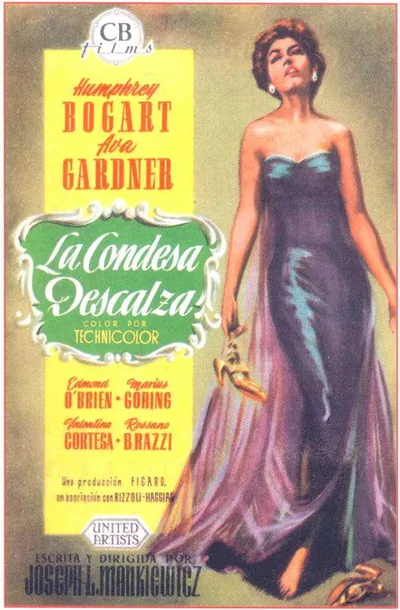 The Barefoot Contessa1954
 The Big Sleep1946
 Key Largo1948
 The Caine Mutiny1954
 Angels with Dirty Faces1938
 To Have and Have Not1944
 Dark Victory1939
- Up the River 1930 · cast
- A Devil with Women 1930 · cast
- Racket Busters 1930 · cast
- Bad Sister 1931 · cast
- Three on a Match 1932 · cast
- Big City Blues 1932 · cast
- Midnight 1934 · cast
- The Petrified Forest 1936 · cast
- Bullets or Ballots 1936 · cast
- China Clipper 1936 · cast
- Dead End 1937 · cast
- Marked Woman 1937 · cast
- Kid Galahad 1937 · cast
- Black Legion 1937 · cast
- San Quentin 1937 · cast
- Stand-In 1937 · cast
- The Great O'Malley 1937 · cast
- Angels with Dirty Faces 1938 · cast
- The Amazing Dr. Clitterhouse 1938 · cast
- Dark Victory 1939 · cast
- The Roaring Twenties 1939 · cast
- Invisible Stripes 1939 · cast
- The Oklahoma Kid 1939 · cast
- You Can't Get Away with Murder 1939 · cast
- The Return of Doctor X 1939 · cast
- They Drive by Night 1940 · cast
- Virginia City 1940 · cast
- Brother Orchid 1940 · cast
- It All Came True 1940 · cast
- The Maltese Falcon 1941 · cast
- High Sierra 1941 · cast
- The Wagons Roll at Night 1941 · cast
- Casablanca 1942 · cast
- Across the Pacific 1942 · cast
- All Through the Night 1942 · cast
- The Big Shot 1942 · cast
- Sahara 1943 · cast
- Action in the North Atlantic 1943 · cast
- Thank Your Lucky Stars 1943 · cast
- To Have and Have Not 1944 · cast
- Passage to Marseille 1944 · cast
- Conflict 1945 · cast
- The Big Sleep 1946 · cast
- Dark Passage 1947 · cast
- Dead Reckoning 1947 · cast
- The Two Mrs. Carrolls 1947 · cast
- The Treasure of the Sierra Madre 1948 · cast
- Key Largo 1948 · cast
- Knock on Any Door 1949 · cast
- Tokyo Joe 1949 · cast
- In a Lonely Place 1950 · cast
- Chain Lightning 1950 · cast
- The African Queen 1951 · cast
- The Enforcer 1951 · cast
- Sirocco 1951 · cast
- Road to Bali 1952 · cast
- Deadline – U.S.A. 1952 · cast
- Beat the Devil 1953 · cast
- Battle Circus 1953 · cast
- Sabrina 1954 · cast
- The Barefoot Contessa 1954 · cast
- The Caine Mutiny 1954 · cast
- We're No Angels 1955 · cast
- The Desperate Hours 1955 · cast
- The Left Hand of God 1955 · cast
- The Harder They Fall 1956 · cast
- The Happy Ending 1969 · cast
- Dead Men Don't Wear Plaid 1982 · cast
- Trumbo 2015 · cast
Original Cinematopedia text based on Wikipedia (es) and Wikipedia (en) and Wikidata.