
Howard Fast
1914–2003 · American novelist and television writer
Biography
Howard Melvin Fast (New York, 1914 – Greenwich, Connecticut, 2003) was an American novelist and television writer whose career spanned almost seven decades and several genres, from historical fiction to noir. He is best known for Spartacus, the novel on which Stanley Kubrick's 1960 film was based, but his output was far broader. He also became a central figure in the fight against the blacklist in American publishing.
Born to immigrant parents, Fast grew up in hardship after his mother's death in 1923 and his father's unemployment. He sold newspapers and found a part-time job at the New York Public Library, where his reading habit took hold. He began writing young, and his first novel, Two Valleys, came out in 1933, when he was eighteen. His first popular success was Citizen Tom Paine, a fictional life of Thomas Paine, followed by novels on American history such as The Last Frontier and Freedom Road. During the Second World War he worked with the Office of War Information, writing for the Voice of America.
His communist membership, which began in 1944, had serious consequences. In 1950 he refused to name contributors to a fund that supported Spanish Civil War refugees, and he was sentenced to three months in prison for contempt of Congress. He began Spartacus while in jail. Major publishers refused it, so he issued the book through his own imprint, Blue Heron Press, which allowed him to keep publishing under his name during the blacklist. The novel sold well, and the film adaptation, driven by Kirk Douglas, is often seen as a milestone in the decline of the Hollywood blacklist. Unable to publish under his own name for much of the following decade, Fast also used pseudonyms, including E. V. Cunningham, under which he wrote a detective series starring the Nisei officer Masao Masuto.
He left the Communist Party in 1956 over the Soviet suppression of the Hungarian uprising, and soon afterwards published April Morning, a novel about the battles of Lexington and Concord seen through the eyes of a teenager, which became a common school assignment in the United States. In 1974 he moved to California, where he wrote for television, and in 1977 he began the Lavette Family saga with The Immigrants. His legacy rests on historical novels that champion liberty and resistance to oppression, and on his account of censorship during the McCarthy era.
Key films
- Spartacus (1960), Stanley Kubrick's adaptation of his novel.
- Freedom Road (1979), the television miniseries based on his novel.
- 21 Hours at Munich (1976), the television film based on his account of the 1972 Olympic massacre.
Trivia
A decisive bookseller
After several publishers rejected the novel, George Hecht of Doubleday promised to order six hundred copies if Fast published it himself.
Stalin Peace Prize
In 1953 he received the Stalin Peace Prize, an award later closely associated with his communist activism.
On Cinematopedia
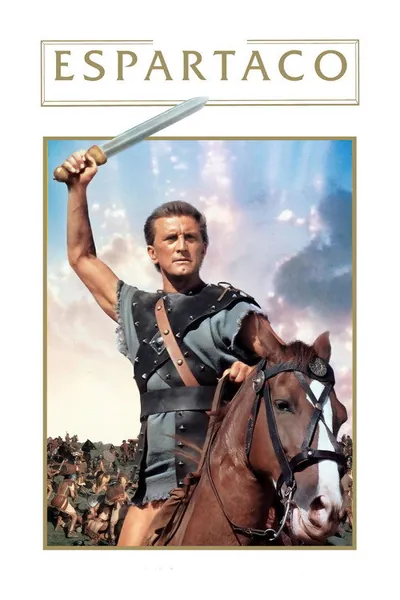 Spartacus
 21 Hours at Munich
 Rachel and the Stranger
Original Cinematopedia text based on Wikipedia (es) and Wikipedia (en) and Wikidata.