
Hiroshi Inagaki
1905–1980 · Japanese film director and screenwriter
Biography
Hiroshi Inagaki (Tokyo, 1905-1980) was a Japanese director and screenwriter whose career spanned more than five decades and over a hundred films. He is best remembered for his jidaigeki, or period dramas, and for the Samurai trilogy, which introduced many Western audiences to Japanese cinema.
The son of a travelling actor, he performed on stage from childhood. After he was orphaned at nine, he lived an itinerant life. He joined the Nikkatsu studio as an actor and soon began working behind the camera. His first film as a director was Tenka taiheiki (1928), made for Chiezō Kataoka's company. Back at Nikkatsu, he became part of a circle of young filmmakers, including Sadao Yamanaka, who wrote scripts under the shared name Kinpachi Kajiwara. He later worked at Daiei and Toho, where he made big-budget colour spectacles alongside more delicate films about children.
During the war he made Muhōmatsu no isshō, and in 1958 he remade it in colour as Rickshaw Man, which won the Golden Lion in Venice. The Samurai trilogy, based on Eiji Yoshikawa's novel, was shot between 1954 and 1956 with Toshiro Mifune in the lead, and its first part received an honorary Academy Award for best foreign-language film. Inagaki directed Mifune in twenty films.
He died in Tokyo in 1980 from health problems linked to alcoholism. His jidaigeki remain a reference point, and in a 1989 poll of Japanese critics and filmmakers, Rickshaw Man ranked eighth among the best Japanese films of all time.
Key films
- Tenka taiheiki (1928): his directorial debut, made while he was still working as an actor and screenwriter.
- Samurai I: Musashi Miyamoto (1954): the first part of the trilogy based on Eiji Yoshikawa's novel, starring Toshiro Mifune.
- Samurai II: Duel at Ichijoji Temple (1955): the second film, continuing the story of the swordsman Musashi.
- Rickshaw Man (1958): a colour remake of his 1943 film, which won the Golden Lion at Venice.
Trivia
Golden Lion in Venice
Rickshaw Man won the Golden Lion at the 1958 Venice Film Festival. It was a colour remake of a film Inagaki had made during the Second World War.
A poll of Japanese critics
In a 1989 poll of Japanese critics and filmmakers, Rickshaw Man was placed eighth among the best Japanese films of all time.
On Cinematopedia
 Rickshaw Man1958
 Samurai I: Musashi Miyamoto1954
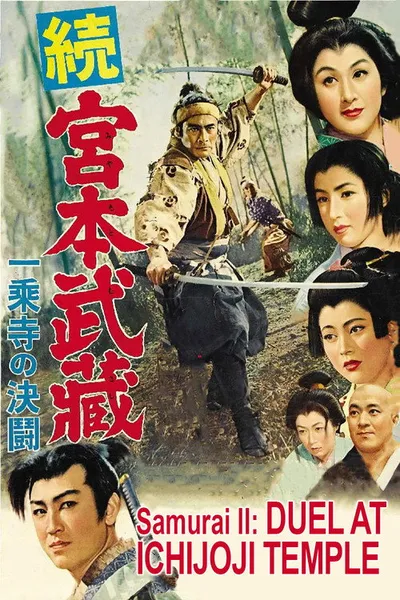 Samurai II: Duel at Ichijoji Temple1955
 The Birth of Japan1959
 Samurai III: Duel at Ganryu Island1956
 Chushingura1962
 Sword for Hire1952
 Arashi1956
 Life of an Expert Swordsman1959
 The Story of Osaka Castle1961
 Samurai Banners1969
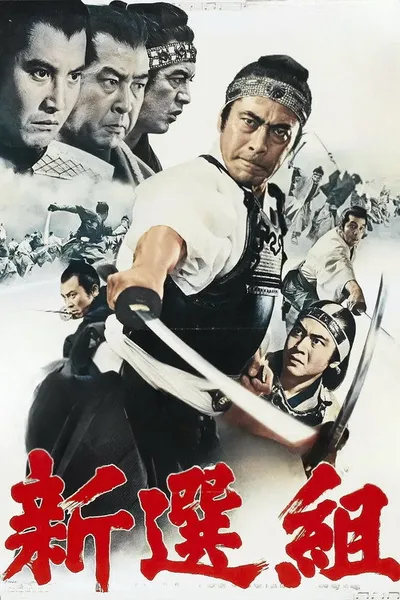 Shinsengumi: Assassins of Honor1969
Original Cinematopedia text based on Wikipedia (es) and Wikipedia (en) and Wikidata.