
Harry-Max
1901–1979 · French stage, film and television actor
Biography
Harry-Max, born Maxime Louis Charles Dichamp, was a French actor who worked in theatre, film and television. He was born in Paris in 1901 and died in Ivry-sur-Seine in 1979. He became best known for whimsical, fantasy-tinged roles, although he could also handle dramatic characters.
He began on the stage and in films during the 1930s. After the war his screen work grew steadily: between 1946 and 1950 he appeared in many popular titles under directors such as Christian-Jaque, André Berthomieu and Sacha Guitry. His role in Fanfan the Tulip (1952) is among the most remembered. In the 1950s he worked with Julien Duvivier, Max Ophuls and Henri Verneuil, and in 1955 he took part in Cela s'appelle l'aurore, directed by Luis Buñuel.
In the later part of his career he balanced film with television, appearing in series and broadcasts such as Les Cinq Dernières Minutes and the programme Au théâtre ce soir. On film he was also noted for Hibernatus, opposite Louis de Funès. His name remains linked to popular French cinema of the postwar years.
Key films
- Fanfan the Tulip (1952), directed by Christian-Jaque: a role in one of the most popular adventure films of the period.
- Public Enemy Number One (1953), directed by Henri Verneuil: a part in a French gangster thriller of the 1950s.
- Lola Montès (1956), directed by Max Ophuls: an appearance in Ophuls's final major production, shot in colour and widescreen.
- Stolen Kisses (1968), directed by François Truffaut: a role in an entry from the Antoine Doinel cycle.
- We Won't Grow Old Together (1972), directed by Maurice Pialat: one of his last films, within Pialat's drama of a couple.
Trivia
Real name
His real name was Maxime Louis Charles Dichamp, a detail that film listings of the period often left out.
A Buñuel film
He took part in Cela s'appelle l'aurore (1955), the Franco-Italian co-production directed by Luis Buñuel.
On Cinematopedia
 Stolen Kisses1968
 Fanfan la Tulipe1952
 Montparnasse 191958
 Le Beau Serge1958
 Le Chat1971
 The Parisian1957
 Lola Montès1955
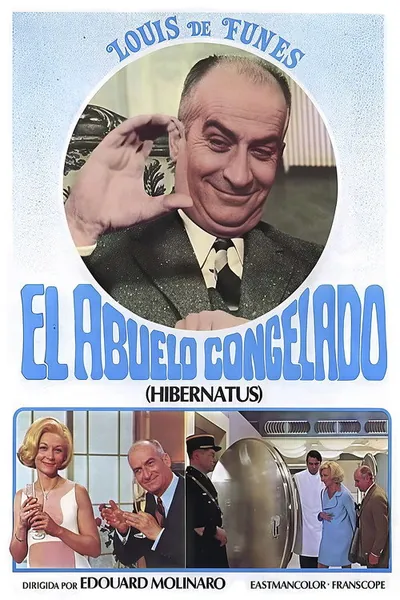 Hibernatus1969
 Man About Town1947
 Maigret Sees Red1963The Most Wanted Man1953The Most Wanted Man1953The Maurizius Case1954The Maurizius Case1954
- Man About Town 1947 · cast
- Millionaires for One Day 1949 · cast
- La Poison 1951 · cast
- My Wife Is Formidable 1951 · cast
- Fanfan la Tulipe 1952 · cast
- Massacre in Lace 1952 · cast
- The Most Wanted Man 1953 · cast
- The Maurizius Case 1954 · cast
- Lola Montès 1955 · cast
- Heroes and Sinners 1955 · cast
- Je suis un sentimental 1955 · cast
- Law of the Streets 1956 · cast
- Hello Smile! 1956 · cast
- Paris, Palace Hotel 1956 · cast
- The Parisian 1957 · cast
- Montparnasse 19 1958 · cast
- Le Beau Serge 1958 · cast
- Girl and the River 1958 · cast
- Certains l'aiment froide 1960 · cast
- Maigret Sees Red 1963 · cast
- The Adventures of Salavin 1964 · cast
- Stolen Kisses 1968 · cast
- Hibernatus 1969 · cast
- Le Chat 1971 · cast
- Law Breakers 1971 · cast
- We Won't Grow Old Together 1972 · cast
Original Cinematopedia text based on Wikipedia (es) and Wikipedia (en) and Wikidata.