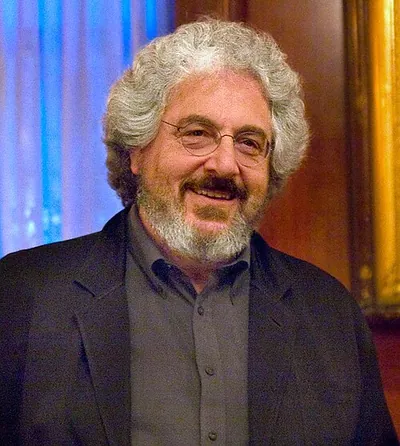
Harold Ramis
1944–2014 · American screenwriter, actor and director
Biography
Harold Ramis (born November 21, 1944, in Chicago; died February 24, 2014, in Glencoe, Illinois) was an American screenwriter, actor and director, and one of the most influential comic talents of late twentieth-century American comedy. He is best known for playing Dr. Egon Spengler in the Ghostbusters films and for writing and directing comedies such as Groundhog Day and Analyze This. His career spanned television, satirical magazine work and feature films.
Raised in a Jewish household in Chicago, Ramis studied English literature at Washington University in St. Louis, where he began writing parody. After a stint working in a mental institution and a period as a substitute teacher in Chicago, he moved into journalism through a friend, Michael Shamberg, and wrote for Playboy, eventually becoming an associate editor there. He also trained with Chicago's Second City improv troupe, a key training ground for American comedians of the period.
During the 1970s he worked on The National Lampoon Radio Hour and the stage revue The National Lampoon Show in New York, alongside John Belushi, Bill Murray and Gilda Radner. He then became a performer and head writer of the Canadian sketch series SCTV during its first three seasons, where he created memorable characters. His move into film came with the screenplay for National Lampoon's Animal House, written with Douglas Kenney and later with Chris Miller. Meatballs followed, and Caddyshack, his directing debut, came next. His collaboration with Bill Murray produced several films.
In 1984 he co-wrote the screenplay for Ghostbusters with Dan Aykroyd, one of the biggest comedy hits ever made, and he also starred in it. He returned to the role in the 1989 sequel. As a director, Groundhog Day is widely regarded as his finest work, and his screenplay, written with Danny Rubin, won the BAFTA Award for Best Original Screenplay. His films are known for an irreverent take on institutional life and an improvised, intelligent style that influenced later generations of comedians and writers.
He also directed Analyze This and its sequel Analyze That, as well as Year One and The Ice Harvest, and in his later years he appeared in comedies directed by others, such as Knocked Up. He died in 2014 in Illinois after a long illness. His legacy endures in comedy cinema and popular culture, especially through Ghostbusters and Groundhog Day.
Key films
- National Lampoon's Animal House (1978): co-writer of the raucous college comedy that defined the genre.
- Caddyshack (1980): his directing debut, an ensemble comedy set at a golf club.
- Ghostbusters (1984): co-writer and star as Dr. Egon Spengler, one of the great comedy hits.
- Groundhog Day (1993): writer and director of his most celebrated work, about a day that repeats endlessly.
- Analyze This (1999): directed Robert De Niro and Billy Crystal in a comedy about a mobster and his therapist.
- Analyze That (2002): the sequel, continuing the same comic pairing.
Trivia
From newspapers to Playboy
Before working in film, Ramis wrote freelance for the Chicago Daily News and eventually became a joke editor at Playboy.
A shared award
His Groundhog Day screenplay, written with Danny Rubin, won the BAFTA Award for Best Original Screenplay.
On Cinematopedia
 As Good as It Gets1997
 Ghostbusters1984
 Groundhog Day1993
 Ghostbusters II1989
 Knocked Up2007
 Analyze This1999
 Animal House1978
 Bedazzled2000
 Caddyshack1980
 National Lampoon's Vacation1983
 Analyze That2002
 High Fidelity2000
- Animal House 1978 · screenplay
- Meatballs 1979 · screenplay
- Caddyshack 1980 · director, screenplay
- Stripes 1981 · screenplay, cast
- National Lampoon's Vacation 1983 · director, cast
- Ghostbusters 1984 · screenplay, cast
- Back to School 1986 · screenplay
- Armed and Dangerous 1986 · screenplay
- Club Paradise 1986 · director, screenplay
- Baby Boom 1987 · cast
- Caddyshack II 1988 · screenplay
- Ghostbusters II 1989 · screenplay, cast
- Groundhog Day 1993 · director, screenplay, producer, cast
- Airheads 1994 · cast
- Love Affair 1994 · cast
- Multiplicity 1996 · director
- As Good as It Gets 1997 · cast
- Analyze This 1999 · director, screenplay
- Bedazzled 2000 · director, screenplay, producer
- High Fidelity 2000 · cast
- Analyze That 2002 · director, screenplay
- Orange County 2002 · cast
- It's Already Yesterday 2004 · screenplay
- The Ice Harvest 2005 · director
- The Last Kiss 2006 · cast
- Knocked Up 2007 · cast
- Walk Hard: The Dewey Cox Story 2007 · cast
- Year One 2009 · director, screenplay, producer, cast
Original Cinematopedia text based on Wikipedia (es) and Wikipedia (en) and Wikidata.