
Harold Pinter
1930–2008 · British playwright, screenwriter, director and actor
Biography
Harold Pinter (Hackney, east London, 1930 - 2008) was a British playwright, screenwriter, director and actor, one of the most influential voices of modern English theatre. His writing career spanned more than half a century, and in 2005 he received the Nobel Prize in Literature. In film he worked mainly as a screenwriter, adapting the works of other authors, although he also acted in productions of his own and others' work.
Pinter was born on 10 October 1930 in Hackney, the only child of a British Jewish family of Eastern European descent of modest means: his father was a ladies' tailor and his mother a housewife. During the Second World War he lived through the Blitz and was evacuated to Cornwall and Reading in 1940 and 1941. According to his official biographer Michael Billington, that experience left him with memories of loneliness, bewilderment and loss that run through all his work. At Hackney Downs School he shone at English, published poetry from a young age and discovered a gift for acting in school plays. Cricket remained a constant passion throughout his life.
From late 1948 he attended the Royal Academy of Dramatic Art, but left before completing the course. He refused national service as a conscientious objector and was eventually fined. He then continued his training at the Central School of Speech and Drama and worked in repertory companies in Ireland and England, where he played dozens of roles, many under the stage name David Baron. To supplement his income he also worked as a waiter, postman and doorman while he wrote.
His career as a playwright began in 1957 with a production of The Room. His second play, The Birthday Party, initially failed, though it received favourable reviews. Critics described his early plays as «comedy of menace», and later works such as No Man's Land (1975) and Betrayal (1978) became known as «memory plays». He adapted several of his own plays for screen and television, and as a screenwriter he brought other writers' texts to the cinema, among them The Servant, The Go-Between, The French Lieutenant's Woman, The Trial and Sleuth. His personal life included his marriage to actress Vivien Merchant, with whom he had a son, Daniel, and his second marriage, to the writer Antonia Fraser, in 1980.
In December 2001 he was diagnosed with oesophageal cancer, yet he continued to act on stage and screen, and in 2006 he performed Samuel Beckett's Krapp's Last Tape. He died of liver cancer on 24 December 2008. He directed nearly fifty productions for stage, television and film and received more than fifty awards and honours, including the Nobel Prize and the French Légion d'honneur in 2007. His legacy rests on his plays and on his screenwriting, which remains widely studied. He was also an outspoken political activist, and his name is closely tied to the renewal of British postwar theatre.
Key films
- The Servant (1963): screenplay for one of his most cited adaptations, about the power struggle between a manservant and his master.
- The Go-Between (1971): screenplay adapted from L. P. Hartley's novel, one of the best-known British films of its era.
- The French Lieutenant's Woman (1981): a period drama whose screenplay helped establish him as a leading screenwriter.
- The Remains of the Day (1993): a prestigious production on which Pinter worked as a screenwriter.
- Mansfield Park (1999): a new adaptation of Jane Austen's novel for which he wrote the screenplay.
Trivia
A cricket portrait
One wall of his study was dominated by a portrait of himself as a young man playing cricket. The journalist Sarah Lyall described it with wry humour in The New York Times.
A stage name
From 1954 to 1959 he acted under the stage name David Baron, playing more than twenty roles under it.
A family legend
As a young man he believed an aunt's story that his family was Sephardic. Later research by Antonia Fraser showed the tale was apocryphal and that the family was Ashkenazic.
On Cinematopedia
 The Remains of the Day1993
 The Go-Between1971
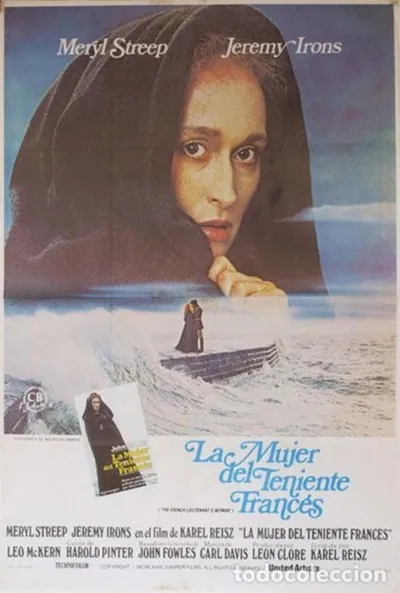 The French Lieutenant's Woman1981
 The Last Tycoon1976
 The Servant1963
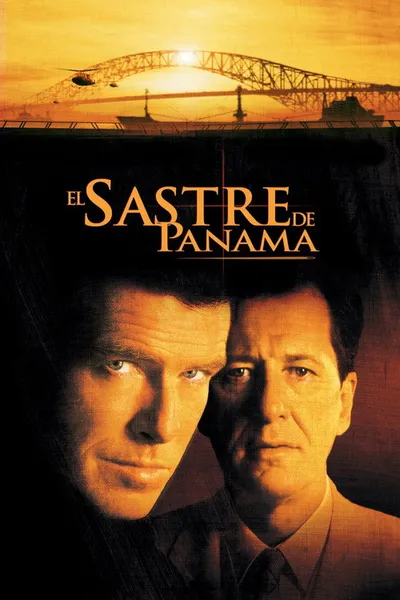 The Tailor of Panama2001
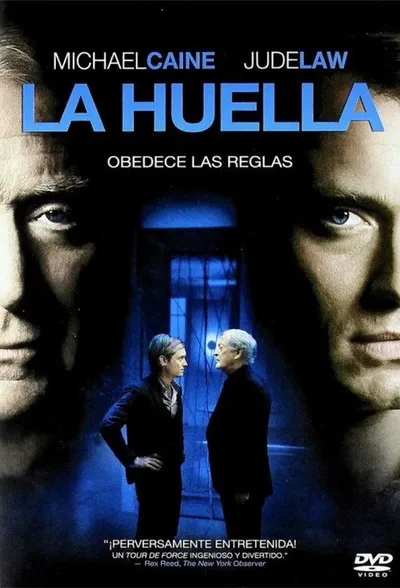 Sleuth2007
 The Pumpkin Eater1964
 Accident1967
 The Quiller Memorandum1966
 The Tamarind Seed1974
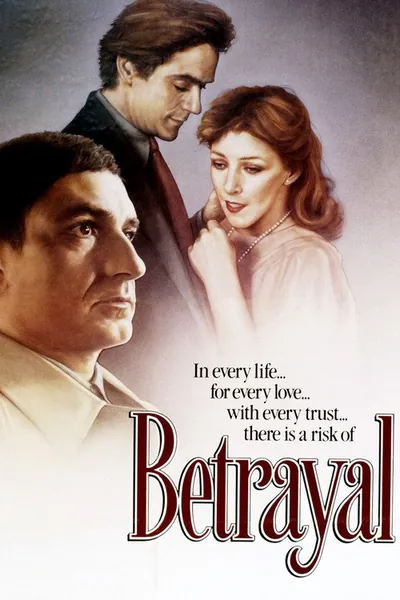 Betrayal1983
- The Servant 1963 · screenplay, cast
- The Caretaker 1963 · screenplay
- The Pumpkin Eater 1964 · screenplay
- The Quiller Memorandum 1966 · screenplay
- Accident 1967 · screenplay, cast
- The Birthday Party 1968 · screenplay
- The Go-Between 1971 · screenplay
- The Tamarind Seed 1974 · cast
- The Last Tycoon 1976 · screenplay
- The French Lieutenant's Woman 1981 · screenplay
- Betrayal 1983 · screenplay
- The Handmaid's Tale 1990 · screenplay
- The Remains of the Day 1993 · screenplay
- The Trial 1993 · screenplay
- Mansfield Park 1999 · cast
- The Tailor of Panama 2001 · cast
- Sleuth 2007 · screenplay, cast
Original Cinematopedia text based on Wikipedia (es) and Wikipedia (en) and Wikidata.