
Hans Moser
1880–1964 · Austrian comic actor associated with the Wiener Film
Biography
Hans Moser (Vienna, 1880 - Vienna, 1964) was an Austrian actor whose long career, running from the 1920s until his death, was built mainly on comedy. Born Johann Julier, he appeared in more than 150 films and is particularly associated with the Wiener Film, the German-language cinema centred on Vienna. His importance lies in having shaped a type of character that audiences in his country came to recognise at once.
Moser most often played the man in the street, usually someone working under another person: a servant, waiter, porter, shopkeeper, coachman or minor clerk. These were decent, well-meaning people who, unable to keep their heads in a crisis, landed themselves in trouble. His delivery was famously mumbled for comic effect, and he often left sentences unfinished. Combined with a moderate Viennese accent, this made him hard to follow for non-native speakers, yet it became part of his signature. He worked alongside Paul Hörbiger, Theo Lingen, Oskar Sima and Annie Rosar, among other regular partners.
Beyond comedy, Moser was also a serious actor, especially on stage and, towards the end of his life, on television. In many musical films he can be heard singing a Wienerlied, the traditional Viennese song. Under the Nazi regime his position was delicate, since his wife, Blanca Hirschler, was Jewish and he refused to divorce her. His popularity allowed him to keep working, while she was forced to flee to Hungary, where the couple reunited after the war.
Moser died of cancer in Vienna in 1964, aged 83, and was buried in the city's Zentralfriedhof. His manner of speaking is still imitated, often by very young entertainers, a sign that his presence lingers in the memory of German-speaking audiences.
Key films
- Die Stadt ohne Juden (1924): one of his early notable films, based on Hugo Bettauer's novel.
- Red Heels (1925): a silent-era title that shows him establishing himself as a supporting performer.
- Gently My Songs Entreat (1933): a musical comedy in which he plays one of the ordinary men who defined his screen persona.
- Heaven on Earth (1935): a product of the Wiener Film's peak years, where his character offers comic counterpoint.
- The Twins from Zillertal (1957): a late-period comedy in which audiences already recognised him instantly.
Trivia
A wife in danger
His wife, Blanca Hirschler, was Jewish. Moser refused to divorce her despite pressure under the Nazi regime, and she eventually fled to Hungary, reuniting with him after the war.
A voice still parodied
His mumbled, unfinished way of speaking is still parodied, often by very young entertainers.
On Cinematopedia
 The City Without Jews1924
 Gently My Songs Entreat1933
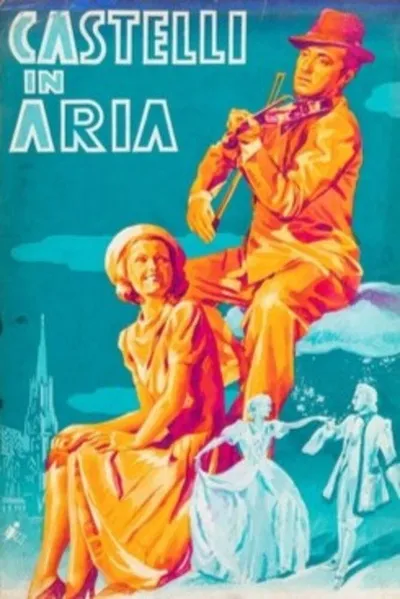 Castles in the Air1939April 1, 20001952April 1, 20001952
 Maskerade1934The Congress Dances1955The Congress Dances1955Red Heels1925Red Heels1925
 Money on the Street1930Heaven on Earth1935Heaven on Earth1935
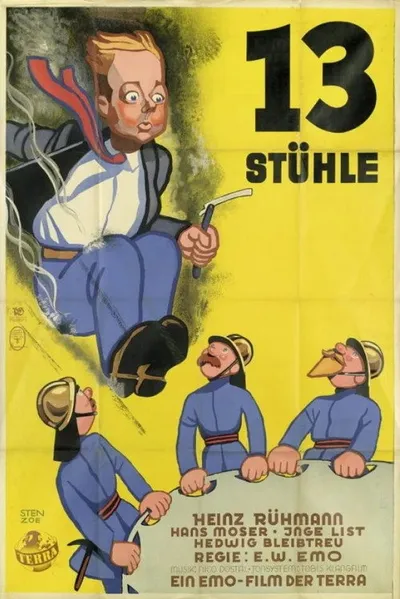 Thirteen Chairs1938Viennese Girls1949Viennese Girls1949
 No Money Needed1932
- The City Without Jews 1924 · cast
- Red Heels 1925 · cast
- Money on the Street 1930 · cast
- No Money Needed 1932 · cast
- Gently My Songs Entreat 1933 · cast
- Maskerade 1934 · cast
- Heaven on Earth 1935 · cast
- Burgtheater 1936 · cast
- Mother Song 1937 · cast
- Thirteen Chairs 1938 · cast
- Castles in the Air 1939 · cast
- Vienna Blood 1942 · cast
- Viennese Girls 1949 · cast
- April 1, 2000 1952 · cast
- Shame on You, Brigitte! 1952 · cast
- Hello Porter 1952 · cast
- Emperor's Ball 1953 · cast
- The Congress Dances 1955 · cast
- Yes, Yes, Love in Tyrol 1955 · cast
- Marriage Sanitarium 1955 · cast
- Opera Ball 1956 · cast
- As Long as the Roses Bloom 1956 · cast
- The Unexcused Hour 1957 · cast
- The Twins from Zillertal 1957 · cast
- Countess Maritza 1958 · cast
- Mariandl 1961 · cast
- Die Fledermaus 1962 · cast
- Mariandl's Homecoming 1962 · cast
Original Cinematopedia text based on Wikipedia (es) and Wikipedia (en) and Wikidata.