
Groucho Marx
1890–1977 · American actor, comedian and writer
Biography
Julius Henry Marx, known as Groucho Marx (New York, October 2, 1890 - Los Angeles, August 19, 1977), was an American actor, comedian and writer, best known as one of the Marx Brothers. Acting was his main trade, though he also worked as a screenwriter, singer and host on radio and television. He belonged to the generation of comics who learned their craft in vaudeville and variety theatre before sound cinema arrived, and his fast, irreverent wordplay made him a touchstone for screen comedy.
He was born into a modest family of German Jewish immigrants with a long involvement in show business. He was the fourth of six brothers, and his mother, Minnie Schoenberg, made sure her children received musical training. Groucho began as a boy singer at fifteen and toured the country with his brothers in trios and quartets before moving into revues. Over time, comic routines began to replace the songs, and the act built a reputation on the vaudeville circuit. In 1914 their mother bought a page in the trade paper Variety to promote them, an audacious move that helped them reach a higher level of the business.
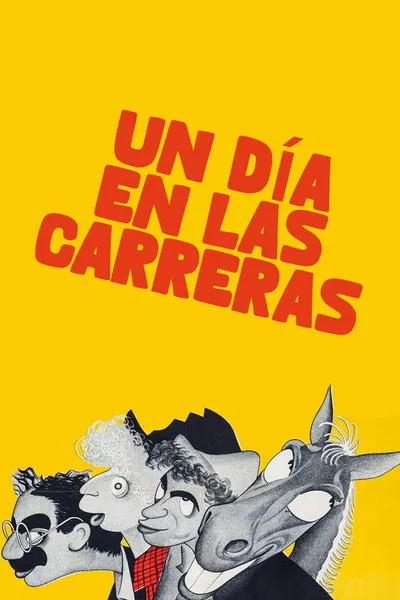
Their real breakthrough came with the Broadway show The Cocoanuts, performed from 1925 to 1928, which gave the brothers their chance in New York theatre. It also began his lasting friendship with the playwright and screenwriter George S. Kaufman. After that success they signed with Paramount, making Monkey Business, Horse Feathers and Duck Soup among other films. During this period Groucho lost much of his money speculating on the stock market before the 1929 crash. They later moved to MGM, where producer Irving Thalberg asked them to give their scripts more narrative shape and keep improvisation for specific sequences. That phase produced A Night at the Opera (1935), A Day at the Races (1937) and At the Circus (1939).
His character had recognisable traits: a moustache painted with greasepaint, heavy eyebrows, a cigar, metal-rimmed glasses and a stooped, chicken-like walk that drew laughs long before the films. He usually played a fast-talking, slightly shady lawyer, quick with insults and ready to do anything for money, often chasing a rich widow, a role that frequently put him against Margaret Dumont. His humour was corrosive and anarchic, complemented by the silent mischief of Harpo and the Italianate hustling of Chico.
By the mid-1940s the brothers seemed close to retiring after The Big Store (1941), but they agreed to make one more film to help Chico financially, A Night in Casablanca (1946). The title led to a dispute with the Warner brothers, who felt it encroached on their famous film. Groucho divorced Ruth in 1942 and married dancer Kay Marvis in 1945, a marriage that ended in 1950. As a solo performer he found a new audience on radio and television with the quiz show You Bet Your Life, which he hosted from 1947 and which ran on television for eleven years. He also wrote memoirs and letters that kept him present with readers.
During the anti-communist witch hunt he backed the Committee for the First Amendment, which defended freedom of expression alongside other entertainers, and that brought him an FBI investigation. He married Eden Hartford in 1954. He died in Los Angeles of pneumonia, shortly after the Academy of Motion Picture Arts and Sciences had given him an honorary Oscar for his career. His legacy lives on in quotations still repeated by new generations and in a style of verbal comedy that influenced many who came after him.
Key films
- Duck Soup (1933): one of the group's most celebrated titles, in which Groucho plays his most recognisable role.
- A Night at the Opera (1935): the first major MGM production of the brothers, with a more structured script.
- A Day at the Races (1937): another MGM comedy where verbal humour sits alongside improvised sequences.
- Horse Feathers (1932): one of their Paramount films, where the anarchic side of the humour takes centre stage.
- A Night in Casablanca (1946): the penultimate film of the brothers, made to help Chico and marked by the dispute with Warner Bros.
Trivia
The stolen ashes
His ashes were stolen in 1982 but were returned the same night at the gates of the nearby Mount Sinai Memorial Park. They have since rested at Eden Memorial Park in Mission Hills, California.
An epitaph that does not exist
The line «Excuse my dust» is not on his headstone, although he did voice that wish in an interview shortly before his death, which may have fuelled the legend.
A disputed title
Warner Bros, owners of the 1942 film Casablanca, felt the title of A Night in Casablanca encroached on theirs. The playful letters Groucho exchanged with his lawyers were later published.
On Cinematopedia
 Duck Soup1933
 A Night at the Opera1935
 A Day at the Races1937
 Love Happy1950
 Monkey Business1931
 A Night in Casablanca1946
 The Cocoanuts1929
 Animal Crackers1930
 Horse Feathers1932
 Will Success Spoil Rock Hunter?1957
 The Big Store1941
 At the Circus1939
- Humor Risk 1921 · cast
- The Cocoanuts 1929 · cast
- Animal Crackers 1930 · cast
- Monkey Business 1931 · cast
- Horse Feathers 1932 · cast
- Duck Soup 1933 · cast
- A Night at the Opera 1935 · cast
- A Day at the Races 1937 · cast
- Room Service 1938 · cast
- At the Circus 1939 · cast
- Go West 1940 · cast
- The Big Store 1941 · cast
- A Night in Casablanca 1946 · cast
- Copacabana 1947 · cast
- Love Happy 1950 · cast
- Double Dynamite 1951 · cast
- Will Success Spoil Rock Hunter? 1957 · cast
- The Story of Mankind 1957 · cast
- Skidoo 1968 · cast
- That's Entertainment, Part II 1976 · cast
Original Cinematopedia text based on Wikipedia (es) and Wikipedia (en) and Wikidata.