
Greer Garson
1904–1996 · British-born American actress
Biography
Eileen Evelyn Greer Garson (1904 – 1996), known professionally as Greer Garson, was a British-born actress who became one of the leading female stars of Hollywood's Golden Age. She began on the stage and in early British television before moving to Metro-Goldwyn-Mayer, where she specialised in poised, dignified heroines in period pieces and wartime melodramas. Her importance lies in her popularity at the height of the Second World War, when she ranked among America's leading box-office draws, and in a record run of five consecutive Best Actress Academy Award nominations.
Born in Manor Park, East Ham, she was the only child of a London commercial clerk and a mother with roots in Ireland. She studied French and eighteenth-century literature at King's College London and later at the University of Grenoble. Before acting full time she worked in an advertising firm, where her colleague George Sanders later wrote that she had encouraged him to try acting. She made her stage debut at the Birmingham Repertory Theatre in 1932 and appeared in a televised excerpt of Twelfth Night in 1937, among the earliest Shakespeare productions shown on television.
Louis B. Mayer spotted her while looking for new talent in London, and she signed with MGM in late 1937. A back injury delayed her first projects, but she made her Hollywood debut in Goodbye, Mr. Chips (1939), which brought her first Oscar nomination. The following year she played Elizabeth Bennet in Pride and Prejudice, and in 1941 she became a major box-office draw with Blossoms in the Dust. Her breakthrough came with Mrs. Miniver (1942), a wartime drama that won her the Academy Award for Best Actress and was used by the American government for propaganda purposes. That same year she co-starred with Ronald Colman in Random Harvest, and throughout the decade she worked often with Walter Pidgeon, a friendship that lasted for years.
By the late 1940s her career had begun to slow, though she remained a prominent name into the mid-1950s. She married a Texas rancher in 1949, became a naturalised American citizen in 1951, and made only a few films after her MGM contract ended in 1954. She returned briefly to the screen with Sunrise at Campobello (1960), playing Eleanor Roosevelt, which earned her a final Oscar nomination. Today she is remembered for her poised screen presence and for the wartime films that defined her public image.
Key films
- Mrs. Miniver (1942): a steadfast British mother and wife facing the war at home, the role that won her the Oscar.
- Goodbye, Mr. Chips (1939): her first film for MGM and the start of her run of Academy Award nominations.
- Pride and Prejudice (1940): Elizabeth Bennet, a performance critics singled out as one of her finest of the period.
- Random Harvest (1942): a romantic drama opposite Ronald Colman, set after the First World War.
- Madame Curie (1943): the physicist Marie Curie, another Oscar-nominated role.
- Sunrise at Campobello (1960): her return to the screen as Eleanor Roosevelt and her last nomination.
Trivia
A record-length speech
After accepting the Oscar for Mrs. Miniver, her acceptance speech ran five and a half minutes, a length that earned her an entry in the Guinness Book of World Records. The Academy soon afterwards introduced a time limit for acceptance speeches.
An advertising catchphrase
To promote Adventure (1945), co-starring Clark Gable, the studio used the slogan «Gable's back, and Garson's got him!», which the two actors then played with in jokes about the wording.
On Cinematopedia
 Mrs. Miniver1942
 Goodbye, Mr. Chips1939
 Julius Caesar1953
 Random Harvest1942
 Pride and Prejudice1940
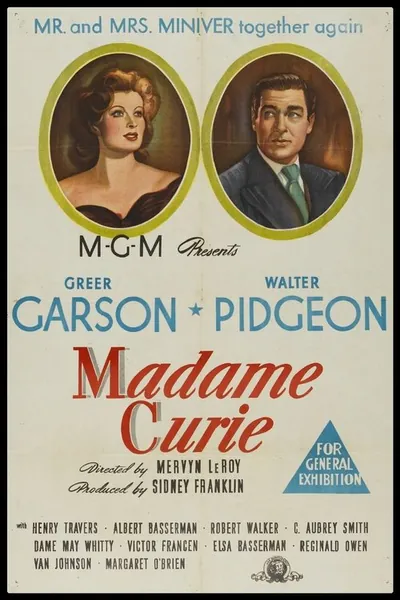 Madame Curie1943
 Blossoms in the Dust1941
 Sunrise at Campobello1960
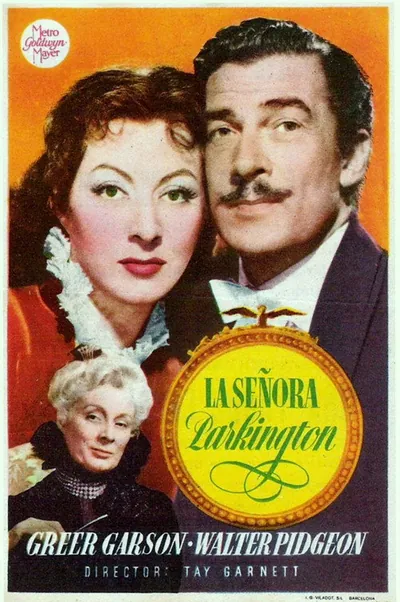 Mrs. Parkington1944
 The Valley of Decision1945
 Pepe1960
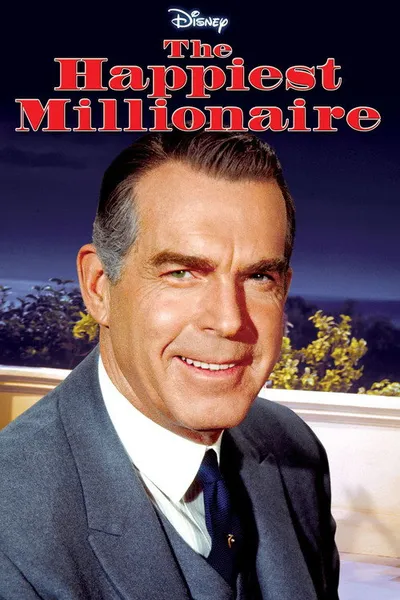 The Happiest Millionaire1967
- Goodbye, Mr. Chips 1939 · cast
- Remember? 1939 · cast
- Pride and Prejudice 1940 · cast
- Blossoms in the Dust 1941 · cast
- When Ladies Meet 1941 · cast
- Mrs. Miniver 1942 · cast
- Random Harvest 1942 · cast
- Madame Curie 1943 · cast
- Mrs. Parkington 1944 · cast
- The Valley of Decision 1945 · cast
- Adventure 1945 · cast
- Desire Me 1947 · cast
- Julia Misbehaves 1948 · cast
- That Forsyte Woman 1950 · cast
- The Miniver Story 1950 · cast
- Julius Caesar 1953 · cast
- Strange Lady in Town 1955 · cast
- Sunrise at Campobello 1960 · cast
- Pepe 1960 · cast
- The Happiest Millionaire 1967 · cast
- That's Entertainment, Part II 1976 · cast
Original Cinematopedia text based on Wikipedia (es) and Wikipedia (en) and Wikidata.