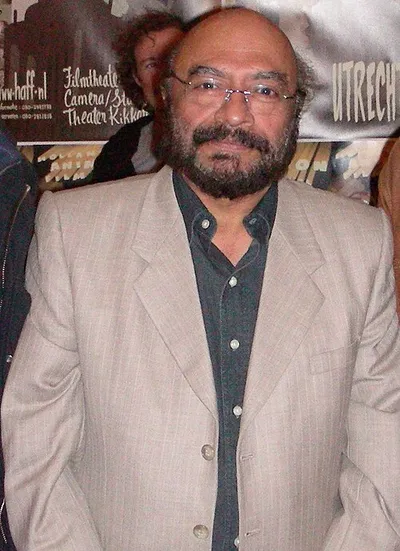
Govind Nihalani
b. 1940 · Indian film director, cinematographer, screenwriter and producer
Biography
Govind Nihalani is an Indian film director, cinematographer, screenwriter and producer, best known for his work in Hindi cinema, particularly within the parallel cinema movement. He was born in 1940 in Karachi, in Sindh province, now part of Pakistan, and his family moved to India during the partition of 1947. He trained in cinematography at the Shree Jaya Chamrajendra polytechnic in Bangalore, graduating in 1962. His films are associated with socially and politically engaged storytelling that has drawn praise from critics.
He began as an assistant cinematographer to V. K. Murthy before moving on to work as a cinematographer in his own right. He was associated with the early films of Shyam Benegal and worked on the cinematography of Richard Attenborough's Gandhi (1982), where he also served, uncredited, as second unit director. His directorial debut was Aakrosh, a legal drama scripted by the Marathi playwright Vijay Tendulkar, which won the Golden Peacock for best film at the International Film Festival of India in New Delhi in 1981. He then directed Ardh Satya (1983), based on a story by S. D. Panwalkar, and later adapted Mahasweta Devi's novel for Hazaar Chaurasi Ki Maa.
His work has earned several National Film Awards and Filmfare Awards, as well as the Padma Shri in 2002. Together with Saibal Chatterjee and Gulzar, he co-wrote the Encyclopaedia of Hindi Cinema (2003), a reference work on the industry. His legacy lies in showing that Indian mainstream filmmaking could address social, political and justice themes with seriousness and restraint.
Key films
- Ankur (1974): cinematography on an early parallel cinema film directed by Shyam Benegal.
- Aakrosh (1980): his debut as a director, with a script by Vijay Tendulkar about a miscarriage of justice.
- Ardh Satya (1983): a police thriller about corruption and violence within the force, based on a story by S. D. Panwalkar.
- Drishti (1990): a key film from the middle of his directing career, honoured as best Hindi feature.
- Hazaar Chaurasi Ki Maa (1998): an adaptation of Mahasweta Devi's novel with a political and socially critical tone.
- Dev (2004): a social drama that received the Filmfare Critics Award for Best Movie.
Trivia
An uncredited role on Gandhi
He worked as an uncredited second unit director on Gandhi (1982), shooting key scenes such as the huge funeral procession of its central figure.
A script in a Tamil remake
In 1996 Kamal Haasan adapted his script for Drohkaal into the Tamil remake Kuruthipunal, which became India's official entry for the Academy Award for Best Foreign Language Film.
On Cinematopedia
 Ankur1974Bhumika1977Bhumika1977Nishant1975Nishant1975Junoon1978Junoon1978Aakrosh1980Aakrosh1980Ardh Satya1983Ardh Satya1983
 Dev2004
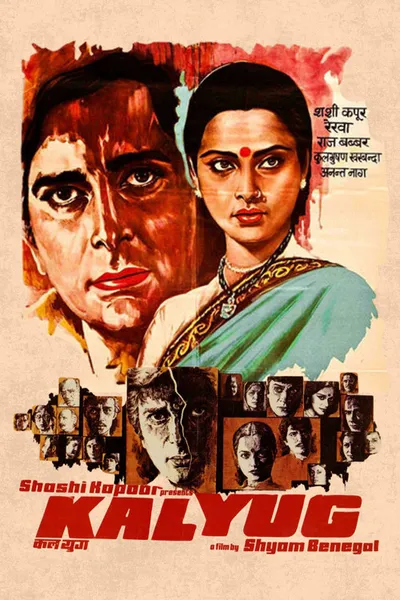 Kalyug1981Drishti1990Drishti1990
 Thakshak1999
 Party1984
 Drohkaal1994
- Kaadu 1973 · cinematography
- Ankur 1974 · cinematography
- Nishant 1975 · cinematography
- Bhumika 1977 · cinematography
- Junoon 1978 · cinematography
- Kondura 1978 · cinematography
- Aakrosh 1980 · director, cinematography
- Kalyug 1981 · cinematography
- Arohan 1982 · cinematography
- Vijeta (The Victor) 1982 · director, cinematography
- Ardh Satya 1983 · director, cinematography
- Party 1984 · director, cinematography, screenplay
- Aghaat 1985 · director
- Drishti 1990 · director, cinematography, screenplay
- Drohkaal 1994 · director
- Hazaar Chaurasi Ki Maa 1998 · director
- Thakshak 1999 · director, cinematography, screenplay, producer
- Dev 2004 · director, cinematography, screenplay, producer
Original Cinematopedia text based on Wikipedia (es) and Wikipedia (en) and Wikidata.