
Gérard Philipe
1922–1959 · French actor of film and theatre
Biography
Gérard Philipe (Cannes, 4 December 1922 – Paris, 25 November 1959) was a French actor of film and stage, one of the most popular figures of the post-war years. His good looks and stage talent earned him the nickname "the prince of actors" in France, and his youthful, romantic image has made him a cult icon of French cinema.
He came from a well-off family: his father, Marcel Philipe, was a businessman who owned hotels on the Côte d'Azur. Gérard began law studies in Nice, but director Marc Allégret, who had met his mother, encouraged him to audition, and he soon chose acting. After early radio and small roles, he made a successful stage debut in 1942 in a play by André Roussin, and in 1943 he became known in Paris for Sodome et Gomorrhe by Jean Giraudoux. That same year he began working in films, in modest parts. On stage, his breakthrough came in 1945 with Albert Camus's Caligula.
In film, his first major role was Prince Mishkin in The Idiot (1946), an adaptation of Dostoevsky, followed by The Devil in the Flesh (1947), which established him as a leading man. His range across comedy, drama and adventure became evident in The Charterhouse of Parma (1947), La Ronde (1950) and Fanfan the Tulip (1952), his great popular success. In the following years he worked with directors such as René Clair, Yves Allégret and Jacques Becker, and shared the screen with Gina Lollobrigida, Michèle Morgan and Danielle Darrieux.
Throughout his career he moved between cinema and theatre. He joined Jean Vilar's Théâtre National Populaire in 1951, performing works by Shakespeare, Musset, Kleist and Corneille, and he also directed some productions at the Avignon Festival. His voice was heard in recordings of poetry and in the radio adaptation of The Little Prince (1954). Openly left-wing, he was also active in the French actors' association.
His last film, The Fever Rises in El Pao (1959), directed by Luis Buñuel, was shot shortly before his death from liver cancer at the age of 36. His legacy lives on in French public memory, where theatres bear his name, and in the youthful, romantic image still associated with post-war French cinema. He was awarded a César posthumously in 1990.
Key films
- Fanfan the Tulip (1952), dir. Christian-Jaque: his most popular role, an adventure hero that made him a star.
- Les Amants de Montparnasse (1958), dir. Jacques Becker: he plays Amedeo Modigliani in a portrait of the painter in 1920s Paris.
- La Ronde (1950), dir. Max Ophüls: one of his most admired performances, in an episodic ensemble cast.
- The Devil in the Flesh (1947), dir. Claude Autant-Lara: the role that cemented his reputation as a leading actor of his generation.
- Les Liaisons dangereuses (1959), dir. Roger Vadim: the Vicomte de Valmont, one of his final performances.
Trivia
A name with an added 'e'
To satisfy his mother's superstition, he added an 'e' to his surname, so that his first name and surname made 13 letters. He used this name professionally for the rest of his life.
Buried in stage costume
He asked to be buried in the costume from Corneille's El Cid, a play in which he had played Rodrigue at the Avignon Festival.
On Cinematopedia
 Fanfan la Tulipe1952
 La Ronde1950
 Montparnasse 191958
 Royal Affairs in Versailles1954
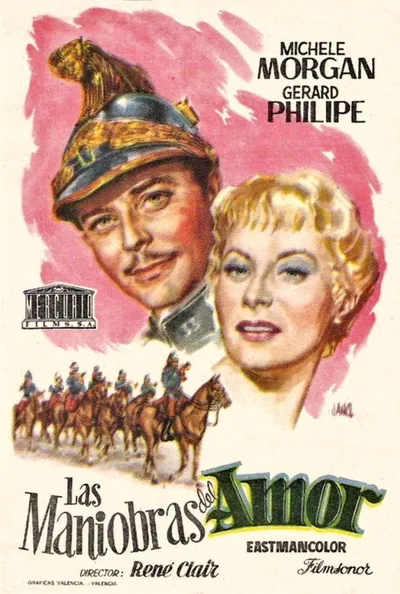 The Grand Maneuver1955
 Devil in the Flesh1947
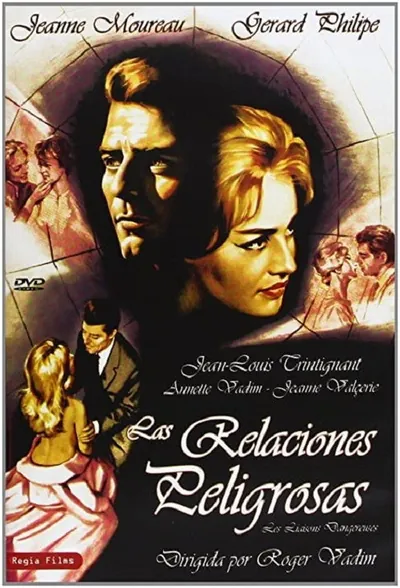 Les Liaisons Dangereuses1959
 Beauty and the Devil1950
 The Charterhouse of Parma1948Beauties of the Night1952Beauties of the Night1952
 The Proud and the Beautiful1953The Red and the Black1954The Red and the Black1954
- The Little Ones of the Flower Platform 1944 · cast
- The Idiot 1946 · cast
- Devil in the Flesh 1947 · cast
- The Charterhouse of Parma 1948 · cast
- Such a Pretty Little Beach 1949 · cast
- La Ronde 1950 · cast
- Beauty and the Devil 1950 · cast
- Juliette, or Key of Dreams 1950 · cast
- Lost Souvenirs 1950 · cast
- Fanfan la Tulipe 1952 · cast
- Beauties of the Night 1952 · cast
- The Seven Deadly Sins 1952 · cast
- The Proud and the Beautiful 1953 · cast
- It Happened in the Park 1953 · cast
- Royal Affairs in Versailles 1954 · cast
- The Red and the Black 1954 · cast
- Knave of Hearts 1954 · cast
- The Grand Maneuver 1955 · cast
- If Paris Were Told to Us 1956 · cast
- The Adventures of Till Eulenspiegel 1956 · director, cast
- Lovers of Paris 1957 · cast
- Montparnasse 19 1958 · cast
- Life Together 1958 · cast
- The Gambler 1958 · cast
- Les Liaisons Dangereuses 1959 · cast
- Fever Mounts at El Pao 1959 · cast
Original Cinematopedia text based on Wikipedia (es) and Wikipedia (en) and Wikidata.