
George Raft
1901–1980 · American actor and dancer
Biography
George Raft (New York City, 1901 - Los Angeles, California, 1980) was an American actor and dancer, born George Ranft. He became known in the 1930s and 1940s for his gangster roles in crime melodramas, which made him one of the most recognizable faces of the period. His elegant screen presence and precise movement explain much of his appeal, and his career shows both the rise and the wear of the genre he helped define.
Raft started out as a dancer. As a young man he performed in New York nightclubs, including the venue run by Texas Guinan, and later worked on Broadway and in London. In 1927 he moved to Hollywood, where he first took small parts and appeared in stage shows. His decisive opportunity came with Scarface (1932), directed by Howard Hawks, in which he shared the spotlight with Paul Muni. That same year he starred in If I Had a Million and Madame Racketeer, which helped establish his name at Paramount.
During the 1930s he worked in films such as The Bowery (1933), directed by Raoul Walsh, and Bolero (1934), opposite Carole Lombard, where he danced rather than played a gangster. He made Invisible Stripes and They Drive by Night with Humphrey Bogart, and he worked with James Cagney in Each Dawn I Die (1939). His friendships with organized crime figures, including Bugsy Siegel, fed public speculation about whether he was a real gangster, a question the press often raised without ever settling it.
In the 1940s his career lost momentum. He is widely said to have turned down important roles, including the lead in The Maltese Falcon, which went on to help make Bogart a major star, and the part in Double Indemnity, which went to Fred MacMurray. A common account also holds that he refused to let his character die in High Sierra. In 1959 he parodied his own gangster image in Some Like It Hot, alongside Marilyn Monroe, Tony Curtis and Jack Lemmon, but the film did not restore his stardom, and he spent much of that decade working in Europe. He then made a brief appearance as a casino owner in Ocean's Eleven (1960) with the Rat Pack.
His final screen roles included Sextette (1978), with Mae West, and The Man with Bogart's Face (1980). He died of leukemia in Los Angeles at the age of 79, going by the birth year now generally accepted, although 1895 was long cited. His legacy rests mainly on his polished gangster persona, which remains linked to the crime cinema of the 1930s. He has two stars on the Hollywood Walk of Fame, one for film and one for television.
Key films
- Scarface (1932): as Guino Rinaldo, Tony Camonte's second-in-command, whose coin-flipping habit became a signature of the gangster film.
- If I Had a Million (1932): a counterfeiter on the run from the police.
- Souls at Sea (1937): a co-star opposite Gary Cooper in this seafaring drama.
- They Drive by Night (1940): a supporting role alongside Humphrey Bogart in one of their best-known collaborations.
- Some Like It Hot (1959): a satire of his own gangster image, with Marilyn Monroe, Tony Curtis and Jack Lemmon.
Trivia
The coin-flipping gesture
In Scarface Raft flipped a coin, a habit that became a staple of gangster films. Screenwriter W. R. Burnett confirmed that Raft was the one who invented it, although others later claimed credit.
A different name
He was born George Ranft, though New York records show the spelling "Rauft", probably a transcription error. For years his birth year was given as 1895, a figure he himself stated was wrong shortly before his death.
On Cinematopedia
 Around the World in 80 Days1956
 Some Like It Hot1959
 Casino Royale1967
 Scarface1932
 Ocean's Eleven1960
 They Drive by Night1940
 Stage Door Canteen1943
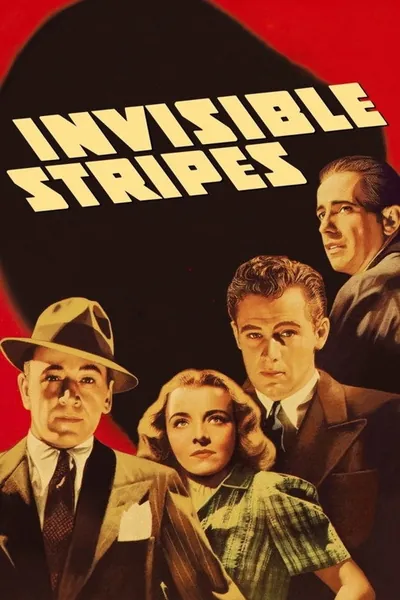 Invisible Stripes1939
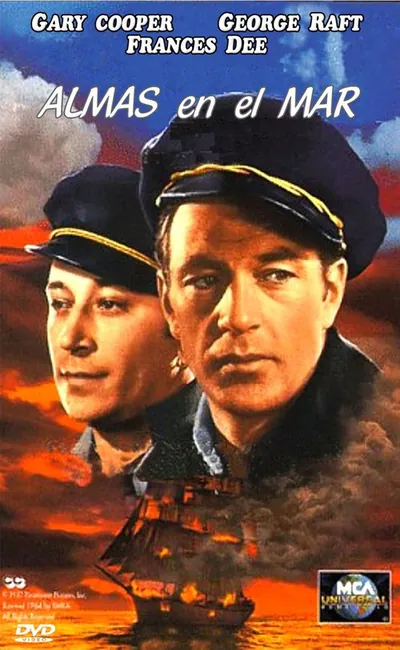 Souls at Sea1937
 You and Me1938
 Manpower1941
 Madame Racketeer1932
- Gold Diggers of Broadway 1929 · cast
- Quick Millions 1931 · cast
- Goldie 1931 · cast
- Scarface 1932 · cast
- Madame Racketeer 1932 · cast
- If I Had a Million 1932 · cast
- Night After Night 1932 · cast
- The Bowery 1933 · cast
- Limehouse Blues 1934 · cast
- Every Night at Eight 1935 · cast
- Souls at Sea 1937 · cast
- You and Me 1938 · cast
- Spawn of the North 1938 · cast
- Invisible Stripes 1939 · cast
- Each Dawn I Die 1939 · cast
- They Drive by Night 1940 · cast
- Manpower 1941 · cast
- Stage Door Canteen 1943 · cast
- Follow the Boys 1944 · cast
- Nob Hill 1945 · cast
- Whistle Stop 1946 · cast
- I'll Get You for This 1951 · cast
- A Bullet for Joey 1955 · cast
- Around the World in 80 Days 1956 · cast
- Some Like It Hot 1959 · cast
- Ocean's Eleven 1960 · cast
- The Ladies Man 1961 · cast
- The Upper Hand 1966 · cast
- Casino Royale 1967 · cast
- Five Golden Dragons 1967 · cast
- Skidoo 1968 · cast
- Hammersmith Is Out 1972 · cast
Original Cinematopedia text based on Wikipedia (es) and Wikipedia (en) and Wikidata.