Ferris Webster
1912–1989 · American film editor
Biography
Ferris Webster (1912-1989) was an American film editor with around seventy-two credits to his name. Trained at MGM, his career spanned classic studio Hollywood and the auteur cinema of the 1960s and 1970s, and he appeared as an actor once, in a film directed by John Frankenheimer.
At MGM he cut six films for Vincente Minnelli, among them Madame Bovary and Father of the Bride. His first Academy Award nomination came for Blackboard Jungle, directed by Richard Brooks. He later worked on John Frankenheimer's paranoia trilogy, whose best-known title, The Manchurian Candidate, critics regard as his finest work. With John Sturges he collaborated on fifteen films between 1950 and 1972, including The Great Escape, which also earned him a nomination. In his final phase he edited several Clint Eastwood films, until a falling-out that reportedly ended his career.
Webster died in 1989. His name is still linked mainly to the editing room rather than to the wider public.
Key films
- Blackboard Jungle (1955): Webster's first Academy Award nomination, with Richard Brooks directing.
- The Manchurian Candidate (1962): the editing of the long brainwashing sequence, considered his masterpiece.
- The Great Escape (1963): an Oscar nomination for editing, made with John Sturges.
- Father of the Bride (1950): one of six films he cut for Vincente Minnelli.
- The Magnificent Seven (1960): a Sturges western and another project in their long partnership.
Trivia
College athlete
Webster ran for the USC track and field team, where he was an All-American at 880 yards and finished fourth at the 1933 NCAA championships.
A role in front of the camera
Frankenheimer cast him as Air Force General Bernard Rutkowski in Seven Days in May (1964), his only appearance as an actor.
On Cinematopedia
 Cat on a Hot Tin Roof1958
 The Magnificent Seven1960
 The Great Escape1963
 Escape from Alcatraz1979
 The Outlaw Josey Wales1976
 The Manchurian Candidate1962
 Magnum Force1973
 Father of the Bride1950
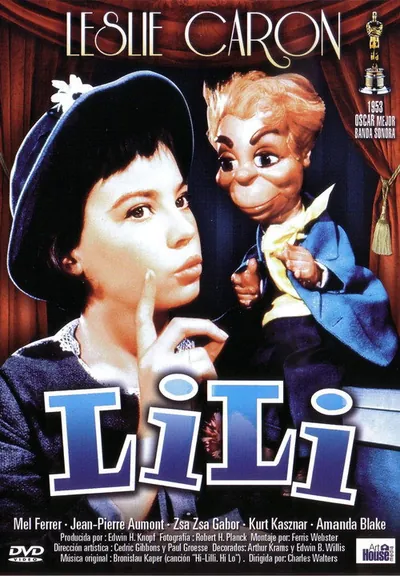 Lili1953
 Forbidden Planet1956
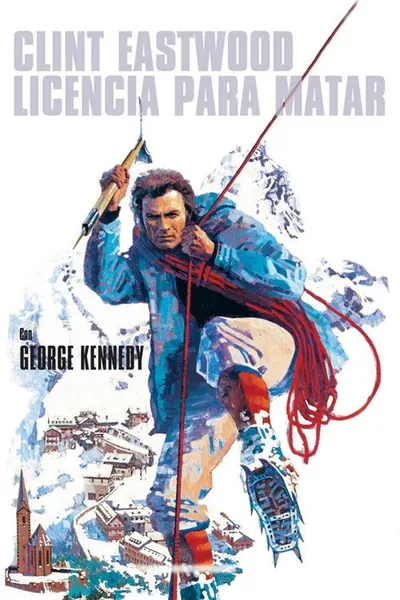 The Eiger Sanction1975
 Blackboard Jungle1955
- The Picture of Dorian Gray 1945 · editing
- Undercurrent 1946 · editing
- Madame Bovary 1949 · editing
- The Doctor and the Girl 1949 · editing
- Father of the Bride 1950 · editing
- The Magnificent Yankee 1950 · editing
- Mystery Street 1950 · editing
- Father's Little Dividend 1951 · editing
- Lili 1953 · editing
- All the Brothers Were Valiant 1953 · editing
- Blackboard Jungle 1955 · editing
- The Glass Slipper 1955 · editing
- Forbidden Planet 1956 · editing
- Tea and Sympathy 1956 · editing
- Ransom! 1956 · editing
- Les Girls 1957 · editing
- Something of Value 1957 · editing
- Cat on a Hot Tin Roof 1958 · editing
- The Law and Jake Wade 1958 · editing
- The Magnificent Seven 1960 · editing
- The Manchurian Candidate 1962 · editing
- Sergeants 3 1962 · editing
- The Great Escape 1963 · editing
- Seven Days in May 1964 · editing
- The Hallelujah Trail 1965 · editing
- The Satan Bug 1965 · editing
- Seconds 1966 · editing
- Hour of the Gun 1967 · editing
- Divorce American Style 1967 · editing
- Ice Station Zebra 1968 · editing
- The Organization 1971 · editing
- Joe Kidd 1972 · editing
- Magnum Force 1973 · editing
- High Plains Drifter 1973 · editing
- Breezy 1973 · editing
- Thunderbolt and Lightfoot 1974 · editing
- The Eiger Sanction 1975 · editing
- The Outlaw Josey Wales 1976 · editing
- Every Which Way but Loose 1978 · editing
- Escape from Alcatraz 1979 · editing
- Honkytonk Man 1982 · editing
Original Cinematopedia text based on Wikipedia (en) and Wikidata.