
Eugene Pallette
1889–1954 · American stage and film actor
Biography
Eugene Pallette (Winfield, Kansas, 1889 – Los Angeles, California, 1954) was an American actor who worked in both the silent and sound eras. Between 1913 and 1946 he appeared in more than 240 productions, and his deep, gravelly voice and heavy build made him one of Hollywood's most recognizable character actors in the 1930s and 1940s.
The son of stage actors, he attended the Culver Military Academy in Indiana and spent six years in stock companies before entering films. His first credited role came in the Western The Fugitive (1913). He worked with D. W. Griffith on The Birth of a Nation (1915) and Intolerance (1916). He began as a slender leading man, playing Aramis in The Three Musketeers (1921), but his growing weight steered him toward character parts. In 1927 he signed with Hal Roach Studios and supported Laurel and Hardy in several comedies.
The arrival of sound gave his career a fresh start. His rough voice suited exasperated fathers, as in My Man Godfrey (1936), and cynical insiders, as in Mr. Smith Goes to Washington (1939). His most famous role was Friar Tuck in The Adventures of Robin Hood (1938).
By the mid-1940s his health kept him from working. He retired to a ranch in Oregon that he had prepared as a shelter against a possible nuclear attack, and in 1948 he returned to Los Angeles without going back to the screen. He died in 1954 of throat cancer. He is remembered mainly for his comic character roles, and he has a star on the Hollywood Walk of Fame.
Key films
- My Man Godfrey (1936): the exasperated comic father of the heroine, one of his most typical roles.
- The Adventures of Robin Hood (1938): Friar Tuck, his best-known performance.
- Mr. Smith Goes to Washington (1939): a cynical insider in the political story.
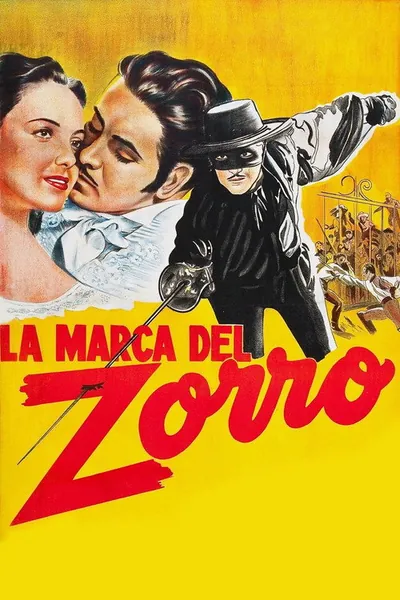
- The Mark of Zorro (1940): Fray Felipe, a character close to Friar Tuck.
- The Birth of a Nation (1915): one of his early films under D. W. Griffith.
Trivia
Clash with Otto Preminger
During the shooting of In the Meantime, Darling (1944) he clashed with director Otto Preminger, and the studio dismissed him. The part of his role not yet filmed was cut from the script.
Refuge in Oregon
Convinced that an atomic catastrophe was coming, he built a kind of mountain fortress on a ranch in Oregon, where he took refuge after leaving films. He later sold the ranch when the predicted disaster did not occur.
On Cinematopedia
 The Adventures of Robin Hood1938
 Mr. Smith Goes to Washington1939
 The Birth of a Nation1915
 Intolerance1916
 Shanghai Express1932
 My Man Godfrey1936
 The Lady Eve1941
 The Love Parade1929
 The Mark of Zorro1940
 The Ten Commandments1923
 Heaven Can Wait1943
 One Hundred Men and a Girl1937
- The Birth of a Nation 1915 · cast
- Intolerance 1916 · cast
- A Man's Man 1917 · cast
- Tarzan of the Apes 1918 · cast
- Terror Island 1920 · cast
- The Three Musketeers 1921 · cast
- The Ten Commandments 1923 · cast
- North of Hudson Bay 1923 · cast
- The Wolf Man 1924 · cast
- Mantrap 1926 · cast
- The Volga Boatman 1926 · cast
- The Second Hundred Years 1927 · cast
- Chicago 1927 · cast
- Lights of New York 1928 · cast
- The Love Parade 1929 · cast
- The Canary Murder Case 1929 · cast
- The Virginian 1929 · cast
- The Greene Murder Case 1929 · cast
- Paramount on Parade 1930 · cast
- Huckleberry Finn 1931 · cast
- Girls About Town 1931 · cast
- Shanghai Express 1932 · cast
- The Kennel Murder Case 1933 · cast
- The Ghost Goes West 1935 · cast
- Steamboat Round the Bend 1935 · cast
- Bordertown 1935 · cast
- My Man Godfrey 1936 · cast
- Stowaway 1936 · cast
- One Hundred Men and a Girl 1937 · cast
- Topper 1937 · cast
- The Adventures of Robin Hood 1938 · cast
- There Goes My Heart 1938 · cast
- Mr. Smith Goes to Washington 1939 · cast
- First Love 1939 · cast
- The Mark of Zorro 1940 · cast
- Young Tom Edison 1940 · cast
- The Lady Eve 1941 · cast
- The Bride Came C.O.D. 1941 · cast
- Swamp Water 1941 · cast
- Appointment for Love 1941 · cast
- Tales of Manhattan 1942 · cast
- The Male Animal 1942 · cast
- The Big Street 1942 · cast
- Silver Queen 1942 · cast
- Are Husbands Necessary? 1942 · cast
- Heaven Can Wait 1943 · cast
- The Gang's All Here 1943 · cast
- Slightly Dangerous 1943 · cast
- It Ain't Hay 1943 · cast
- Step Lively 1944 · cast
- Pin Up Girl 1944 · cast
Original Cinematopedia text based on Wikipedia (es) and Wikipedia (en) and Wikidata.