
Edward LeSaint
1870–1940 · American actor and film director
Biography
Edward LeSaint (born in Cincinnati, 1870 or 1871; died in Los Angeles, 1940) was an American actor and director whose career unfolded largely during the silent era. Sources do not agree on the year of his birth. He appeared in more than three hundred films, usually in supporting roles of authority such as judges, police officers and officials, and directed several dozen titles.
He started young in theatre circles in Philadelphia and later worked with stock companies in Cincinnati and on touring productions across the United States. His screen debut came in 1911 with a short for Independent Moving Pictures, and he then moved on to Selig Polyscope. His first film as director was Where Paths Meet, from 1912. At Selig he met the stage and vaudeville actress Stella Razetto, whom he married in 1913 and stayed with for the rest of his life. She took his surname and pursued her own acting career as Stella LeSaint.
His last film as an actor was A Night at Earl Carroll's (1940), the year he died. He was buried at Hollywood Forever Cemetery. LeSaint's legacy is that of a working character actor, present in many productions of the period, whose brief parts are still noticed in thirties films such as Modern Times and Duck Soup.
Key films
- City Streets (1931), uncredited as a patron at a shooting gallery, in Rouben Mamoulian's urban crime drama.
- Lady for a Day (1933), as a police captain, in Frank Capra's comedy about an apple seller passing herself off as a society lady.
- Duck Soup (1933), as the Secretary of Labor, in one of the Marx Brothers' satires.
- Modern Times (1936), as Sheriff Couler, in Charlie Chaplin's film with synchronized sound effects and music.
- The Adventures of Tom Sawyer (1938), as a coroner at the trial, in Norman Taurog's adaptation of Mark Twain's novel.
Trivia
A marriage on the set
LeSaint met Stella Razetto at the Selig Polyscope studios. They married on Christmas Day, 1913, and she adopted her husband's surname for her acting career.
A specialist in judges
More than thirty of his roles, credited or uncredited, are judges, which gave his career a recognizable identity among the supporting casts of the period.
On Cinematopedia
 Mr. Deeds Goes to Town1936
 Modern Times1936
 Duck Soup1933
 Lady for a Day1933
 Ruggles of Red Gap1935
 The Sign of the Cross1932
 The Gorgeous Hussy1936
 City Streets1931
 Reefer Madness1936
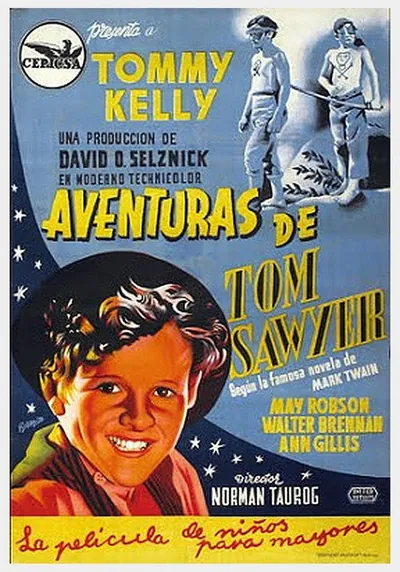 The Adventures of Tom Sawyer1938
 Wife vs. Secretary1936
 The Buccaneer1938
- The Circular Staircase 1915 · director
- The Victoria Cross 1916 · director
- The Three Godfathers 1916 · director
- Cupid's Round Up 1918 · director
- City Streets 1931 · cast
- The Miracle Woman 1931 · cast
- Huckleberry Finn 1931 · cast
- Range Feud 1931 · cast
- Girls About Town 1931 · cast
- The Sign of the Cross 1932 · cast
- If I Had a Million 1932 · cast
- Forbidden 1932 · cast
- Thirteen Women 1932 · cast
- Duck Soup 1933 · cast
- Lady for a Day 1933 · cast
- Gabriel Over the White House 1933 · cast
- Madame Du Barry 1934 · cast
- Ruggles of Red Gap 1935 · cast
- Reckless 1935 · cast
- The Big Broadcast of 1936 1935 · cast
- Romance in Manhattan 1935 · cast
- Frisco Kid 1935 · cast
- Mr. Deeds Goes to Town 1936 · cast
- Modern Times 1936 · cast
- The Gorgeous Hussy 1936 · cast
- Reefer Madness 1936 · cast
- Wife vs. Secretary 1936 · cast
- Disorder in the Court 1936 · cast
- The Road Back 1937 · cast
- The Adventures of Tom Sawyer 1938 · cast
- The Buccaneer 1938 · cast
- Idiot's Delight 1939 · cast
- Frontier Marshal 1939 · cast
- Swanee River 1940 · cast
Original Cinematopedia text based on Wikipedia (es) and Wikipedia (en) and Wikidata.