
Edward Anhalt
1914–2000 · American screenwriter, producer and documentary filmmaker
Biography
Edward Anhalt (New York City, 1914 - 2000) was an American screenwriter, producer and documentary filmmaker who worked in Hollywood for almost four decades. He won two Academy Awards, one for Best Story and another for Best Adapted Screenplay, which place him among the most recognised studio writers of his generation.
Before moving into film he worked as a journalist and documentary maker for Pathé and CBS-TV. During the Second World War he served with the Army Air Force's First Motion Picture Unit in Culver City, writing scripts for training films. Together with his wife, Edna Anhalt, he wrote pulp thrillers under the joint pseudonym Andrew Holt.
After their first screenplay credit in 1946 with Strange Voyage, the couple settled in Los Angeles. With Panic in the Streets (1950) they shared the Oscar for Best Story. After their divorce, Anhalt worked alone with notable versatility, adapting Irwin Shaw's novel The Young Lions and writing Becket, which earned his second Oscar. He also worked in television, receiving an Emmy nomination for the miniseries QB VII (1974).
His work is a good example of the dependable, professional craft of the studio screenwriter, valued more for skill than for a recognisable signature, and it remains a reference point for literary adaptation in American cinema.
Key films
- Becket (1964): adaptation of Jean Anouilh's play that earned him his second Oscar.
- The Young Lions (1958): adaptation of Irwin Shaw's novel about the Second World War.
- The Boston Strangler (1968): thriller based on the real case of the Boston murders.
- Jeremiah Johnson (1972): Western directed by Sydney Pollack, starring Robert Redford.
Trivia
An Oscar shared with his wife
Anhalt won his first Oscar together with Edna Anhalt, with whom he had written the story of Panic in the Streets. It recognised the couple's work as a writing team.
From stage to screen
His second Oscar came for adapting Jean Anouilh's stage play Becket, an example of his specialty in turning theatre and novels into screenplays.
On Cinematopedia
 The Right Stuff1983
 Becket1964
 The Young Lions1958
 Jeremiah Johnson1972
 The Pride and the Passion1957
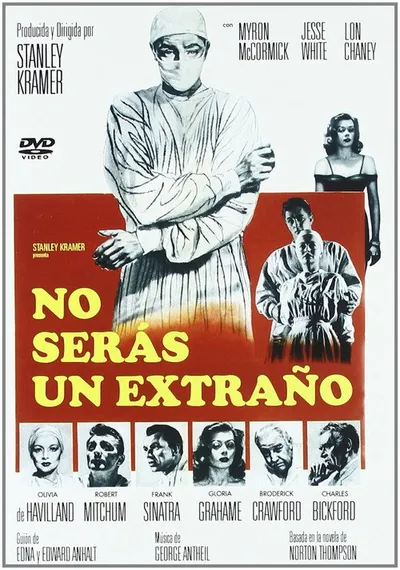 Not as a Stranger1955
 Escape to Athena1979
 Girls! Girls! Girls!1962
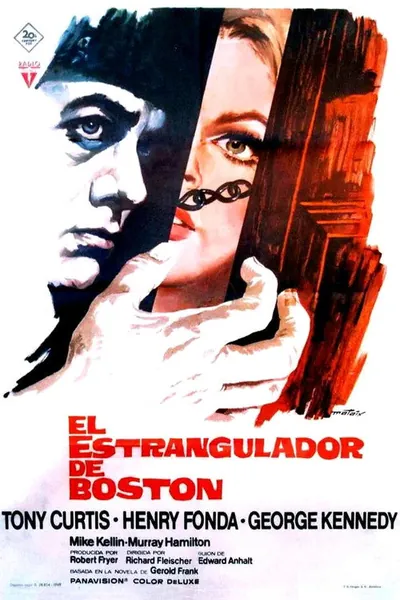 The Boston Strangler1968
 The Man in the Glass Booth1975
 The Holcroft Covenant1985
 Hour of the Gun1967
- Not as a Stranger 1955 · screenplay
- The Pride and the Passion 1957 · screenplay
- The Young Lions 1958 · screenplay
- The Young Savages 1961 · screenplay
- The Sins of Rachel Cade 1961 · screenplay
- Girls! Girls! Girls! 1962 · screenplay, producer
- Becket 1964 · screenplay
- Boeing Boeing 1965 · screenplay
- The Satan Bug 1965 · screenplay
- Hour of the Gun 1967 · screenplay, cast
- The Boston Strangler 1968 · screenplay
- Jeremiah Johnson 1972 · screenplay
- Luther 1973 · screenplay
- The Man in the Glass Booth 1975 · screenplay
- Escape to Athena 1979 · screenplay
- The Right Stuff 1983 · cast
- The Holcroft Covenant 1985 · screenplay
Original Cinematopedia text based on Wikipedia (en) and Wikidata.