
Dean Jagger
1903–1991 · American character actor
Biography
Dean Jagger (Columbus Grove, Ohio, 1903 - Santa Monica, California, 1991) was an American character actor whose career spanned film, stage and television. He belonged to the generation of supporting players who gave classic Hollywood much of its texture, although he also carried leads from time to time. His Academy Award for Best Supporting Actor for Twelve O'Clock High (1949) remains the best-known milestone of his career.
Ira Dean Jagger studied at Wabash College and trained as an actor in Chicago, where he worked in repertory theatre, vaudeville and radio before reaching Broadway in 1925. His real breakthrough came with the play Tobacco Road, which ran until 1941 and opened the door to Hollywood. He signed with Paramount in 1934, though his film debut dated from 1929, in The Woman from Hell opposite Mary Astor. Those early steps were interrupted when sound transformed the industry almost overnight.
His decisive chance came with Brigham Young (1940), in which he played the Mormon leader under Henry Hathaway's direction. According to George D. Pyper, a technical adviser who had known Young personally, Jagger not only resembled him but also spoke and moved like him. He then worked in Fritz Lang's Western Union (1941), Sister Kenny (1946) and Raoul Walsh's western Pursued (1947). He was often cast as soldiers, sheriffs and men of authority, and his restrained style earned him a reputation as a dependable performer.
After the Oscar, his career continued with substantial supporting parts. He appeared in The Robe (1953) as the weaver Justus of Cana, alongside Richard Burton, and in White Christmas (1954), with Bing Crosby and Danny Kaye, as a retired general. In 1955 he played a sheriff in Bad Day at Black Rock, directed by John Sturges, and in 1958 he was the father of Elvis Presley's character in King Creole. During the British production of X the Unknown (1956) he refused to work with Joseph Losey, who was on the Hollywood blacklist; Losey left the project after a few days and was replaced by Leslie Norman.
On television he stayed busy. He had a central role in the series Mr. Novak (1963-1965), which earned him Primetime Emmy nominations in 1964 and 1965, and he won an Emmy for This Is the Life. He also appeared in an episode of The Twilight Zone titled 'Static' and took guest roles in series such as Kung Fu and The Fugitive. In 1972 he was baptized as a member of The Church of Jesus Christ of Latter-day Saints. He died in 1991 in Santa Monica of heart disease. His legacy lies in the gallery of character actors who gave classic American cinema its depth, rather than in the image of a single star.
Key films
- Brigham Young (1940): the Mormon leader that gave him his first major role.
- Western Union (1941): a notable part in Fritz Lang's western.
- Twelve O'Clock High (1949): Major Stovall, the role that won him the Oscar for Best Supporting Actor.
- The Robe (1953): the weaver Justus of Cana in the biblical epic.
- Bad Day at Black Rock (1955): a sheriff in the drama directed by John Sturges.
- White Christmas (1954): a retired general in the musical with Bing Crosby and Danny Kaye.
Trivia
A striking resemblance
George D. Pyper, the technical adviser who had known Brigham Young personally, said Jagger not only looked like him but also spoke like him and shared some of his mannerisms.
A controversial shoot
He refused to work with Joseph Losey, who was on the Hollywood blacklist, during the making of X the Unknown. An alternative account says Losey left the project because of illness.
On Cinematopedia
 Elmer Gantry1960
 Twelve O'Clock High1949
 The Nun's Story1959
 Bad Day at Black Rock1955
 The Robe1953
 Game of Death1978
 White Christmas1954
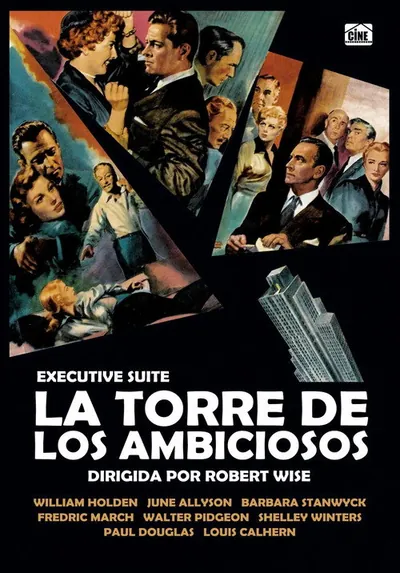 Executive Suite1954
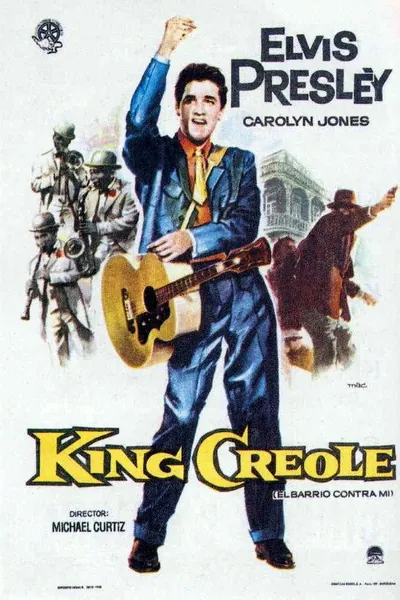 King Creole1958
 The North Star1943
 Western Union1941
 Vanishing Point1971
- Whoopee! 1930 · cast
- Thirteen Hours by Air 1936 · cast
- Revolt of the Zombies 1936 · cast
- Having Wonderful Time 1938 · cast
- Brigham Young 1940 · cast
- Western Union 1941 · cast
- The North Star 1943 · cast
- Sister Kenny 1946 · cast
- Pursued 1947 · cast
- Twelve O'Clock High 1949 · cast
- Dark City 1950 · cast
- Sierra 1950 · cast
- Rawhide 1951 · cast
- My Son John 1952 · cast
- The Robe 1953 · cast
- White Christmas 1954 · cast
- Executive Suite 1954 · cast
- Private Hell 36 1954 · cast
- Bad Day at Black Rock 1955 · cast
- X the Unknown 1956 · cast
- Forty Guns 1957 · cast
- King Creole 1958 · cast
- The Proud Rebel 1958 · cast
- The Nun's Story 1959 · cast
- Elmer Gantry 1960 · cast
- Parrish 1961 · cast
- Billy Rose's Jumbo 1962 · cast
- Firecreek 1968 · cast
- Day of the Evil Gun 1968 · cast
- The Kremlin Letter 1970 · cast
- Vanishing Point 1971 · cast
- Game of Death 1978 · cast
- Alligator 1980 · cast
Original Cinematopedia text based on Wikipedia (es) and Wikipedia (en) and Wikidata.