
Claude Rains
1889–1967 · British-American character actor
Biography
William Claude Rains (10 November 1889 - 30 May 1967) was an English-born actor who became an American citizen in 1939 and one of the great character performers of Hollywood's Golden Age. His career spanned almost seven decades across stage and screen, and he is best remembered for cultured villains and strong supporting roles. The son of a stage actor, he began working in London theatres as a child, making his debut at age ten at the Haymarket Theatre.
He grew up in poverty with a Cockney accent and a speech impediment that he had to correct if he wanted a career. Sir Herbert Beerbohm Tree, founder of the Royal Academy of Dramatic Art (RADA), paid for his elocution lessons, and Rains later taught at the same school, where John Gielgud and Charles Laughton were among his students. During the First World War a gas attack left him almost completely blind in one eye. He settled in New York in the late 1920s and worked on Broadway, and in 1951 he won the Tony Award for Best Actor in a Play for Darkness at Noon.
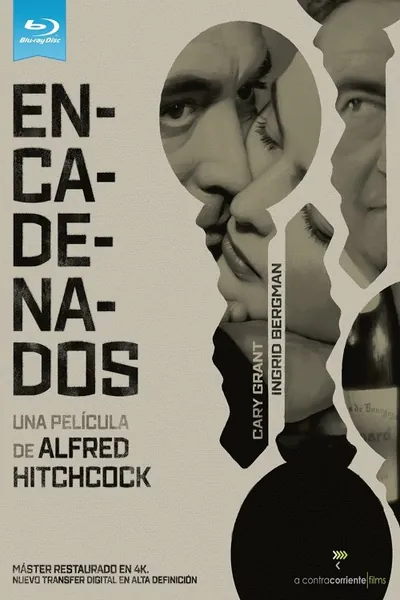
His film career started late. His first major role was Dr. Jack Griffin in James Whale's The Invisible Man (1933), in which his face appears only for a few seconds at the end, so the performance rests on his voice. He then worked for several studios and signed a long-term contract with Warner Bros. in 1935. He played Prince John in The Adventures of Robin Hood (1938), a corrupt senator in Mr. Smith Goes to Washington (1939), which earned him his first Academy Award nomination, and the cynical police chief Louis Renault in Casablanca (1942). He also appeared with Bette Davis in The Man Who Came Back, known as Mr. Skeffington (1944), and with Alfred Hitchcock in Notorious (1946), as a Nazi agent opposite Cary Grant and Ingrid Bergman. In 1945 he played Julius Caesar in Caesar and Cleopatra opposite Vivien Leigh, an expensive production that was not the success its backers hoped for. He received four Academy Award nominations for Best Supporting Actor without winning.
His legacy lies in being the model of the supporting actor whose face is remembered better than his name, able to dominate a scene in only a few minutes of screen time. He had a notable role in David Lean's Lawrence of Arabia (1962) as Mr. Dryden, and he closed his film career playing Herod in The Greatest Story Ever Told (1965). In 1960 he received a star on the Hollywood Walk of Fame. He died at his home in New Hampshire in 1967 from an intestinal haemorrhage.
Key films
- The Invisible Man (1933), directed by James Whale, where his voice carries a role with almost no face on screen
- The Adventures of Robin Hood (1938), as Prince John, the usurper of the English throne
- Mr. Smith Goes to Washington (1939), directed by Frank Capra, as a corrupt senator and his first Oscar nomination
- Casablanca (1942), as police chief Louis Renault, a cynical man who ends up redeemed
- Notorious (1946), directed by Alfred Hitchcock, as a Nazi agent opposite Cary Grant and Ingrid Bergman
Trivia
A Tony Award
In 1951 he won the Tony Award for Best Actor in a Play for his role in Darkness at Noon, recognition of his career on stage.
A record salary
He is often credited as the first actor to earn a million dollars for a single film, Caesar and Cleopatra (1945), which did not achieve the success expected of it.
A voice without a face
In The Invisible Man his face appears for only a few seconds at the end of the film, so the performance relied mainly on his voice.
On Cinematopedia
 Casablanca1942
 Lawrence of Arabia1962
 The Adventures of Robin Hood1938
 Mr. Smith Goes to Washington1939
 Anthony Adverse1936
 Notorious1946
 Here Comes Mr. Jordan1941
 Now, Voyager1942
 The Greatest Story Ever Told1965
 The Invisible Man1933
 The Wolf Man1941
 Four Daughters1938
- The Invisible Man 1933 · cast
- Crime Without Passion 1934 · cast
- The Mystery of Edwin Drood 1935 · cast
- Anthony Adverse 1936 · cast
- The Prince and the Pauper 1937 · cast
- They Won't Forget 1937 · cast
- The Adventures of Robin Hood 1938 · cast
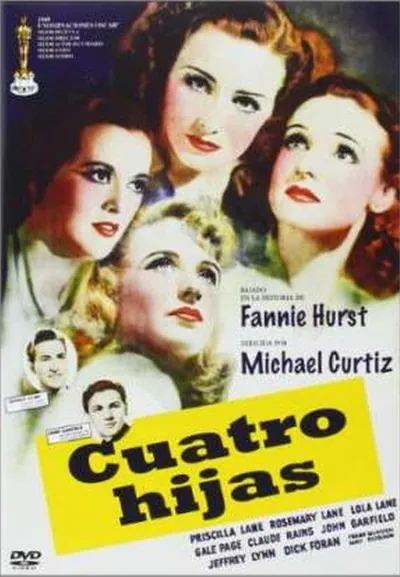
- Four Daughters 1938 · cast
- White Banners 1938 · cast
- Gold Is Where You Find It 1938 · cast
- Mr. Smith Goes to Washington 1939 · cast
- Juarez 1939 · cast
- They Made Me a Criminal 1939 · cast
- Four Wives 1939 · cast
- The Sea Hawk 1940 · cast
- Here Comes Mr. Jordan 1941 · cast
- The Wolf Man 1941 · cast
- Casablanca 1942 · cast
- Now, Voyager 1942 · cast
- Kings Row 1942 · cast
- Moontide 1942 · cast
- Phantom of the Opera 1943 · cast
- Forever and a Day 1943 · cast
- Mr. Skeffington 1944 · cast
- Passage to Marseille 1944 · cast
- Caesar and Cleopatra 1945 · cast
- This Love of Ours 1945 · cast
- Notorious 1946 · cast
- Deception 1946 · cast
- Angel on My Shoulder 1946 · cast
- The Unsuspected 1947 · cast
- The Passionate Friends 1949 · cast
- Rope of Sand 1950 · cast
- The Man Who Watched Trains Go By 1952 · cast
- This Earth Is Mine 1959 · cast
- The Lost World 1960 · cast
- Battle of the Worlds 1961 · cast
- Lawrence of Arabia 1962 · cast
- Twilight of Honor 1963 · cast
- The Greatest Story Ever Told 1965 · cast
Original Cinematopedia text based on Wikipedia (es) and Wikipedia (en) and Wikidata.